
‘I cannot wait to get started’: KC Symphony’s new music director has some big plans
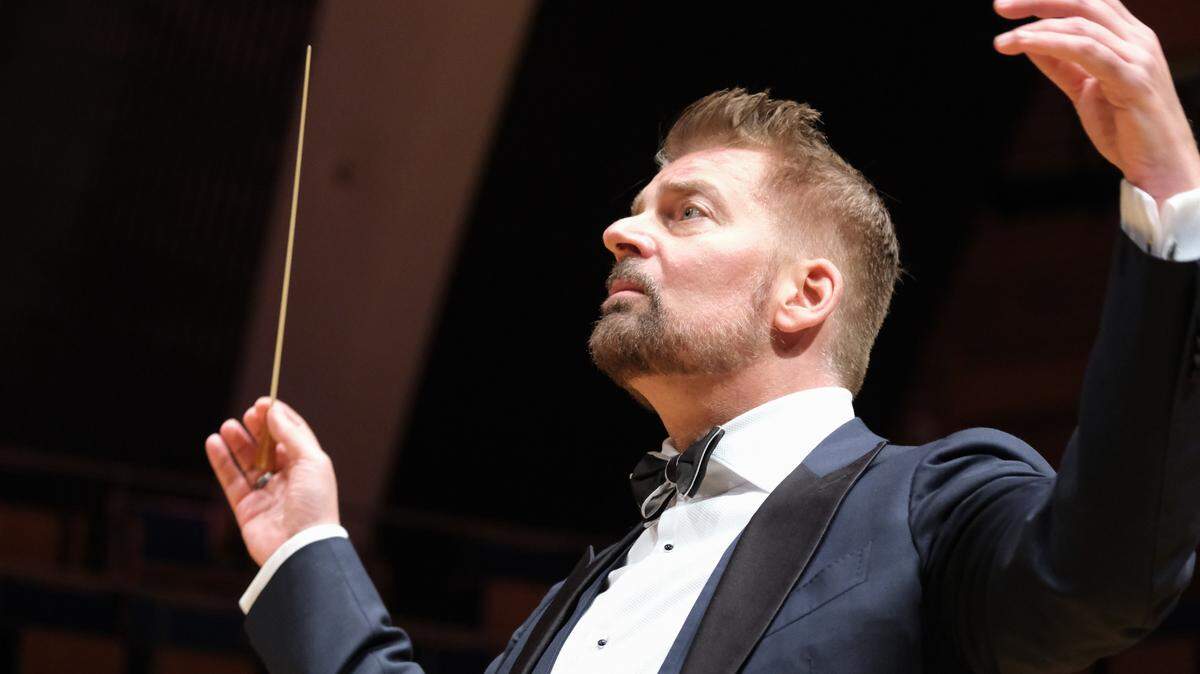
There really is no argument. The Kansas City Symphony has chosen an absolute winner for its new music director.
Matthias Pintscher has sterling credentials both as a composer and as conductor of the world’s great orchestras. One waits with bated breath for what he will achieve in Kansas City.
As he prepares the symphony for a European tour (and a sendoff concert in Helzberg Hall before they go), Pintscher spoke to The Star via Zoom in a wide-ranging interview about his past and his hopes for the symphony’s future.
Born in Marl, Germany, in the populous North Rhine-Westphalia area, Pintscher began his extraordinary musical journey when his parents put him in front of a piano when he was 5.
“I was doing OK with piano, but then I fell in love with the violin when I was 9 years old, and that was a revelation to me,” Pintscher said. “With the violin you have two instruments you need to sync and learn individually. So that was intriguing to me, that producing sound is something very mind-generated and something very active.”
Pintscher’s world of music expanded even more when he was 10 years old and started playing in a youth orchestra. It was at this time that conducting started to exert its pull on the young musician.
“It was a very powerful experience to be surrounded by sound with 60 or 70 people trying to breathe together,” he said. “When I was 14, 15 years old I started to take conducting lessons from the gentleman who ran the orchestra. A few months later, I stood in front of my own orchestra and didn’t quite know which one was the third bassoon, but I touched the sound, and that was immensely powerful. I was mesmerized by the orchestra.”
Pintscher started to pore over scores in the local music library. The music that was available to him profoundly influenced his taste and would shape his own compositions and the music he would later have an affinity for as a conductor.
“Composing took over in my 20s,” Pintscher said. “I would see my very early works being influenced by the Second Viennese School, Alban Berg, the lush, romantic Schoenberg, composers like Ligeti. Maybe it’s because those were the scores that were available to me. The scores I was exposed to were Debussy and Ravel and Béla Bartók, Stravinsky. That was what I could find. That was my nutrition.”
FranckFerville-03.jpg "Pintscher_EnsembleIntercontemporain_(c)FranckFerville-03.jpg")
When Pintscher was 20, a friend sent some of his scores to Hans Werner Henze, one of the most highly regarded composers of the 20th century. Henze was quite taken with what he saw.
“Hans Werner Henze was the George Frideric Handel of his time,” Pintscher said. “He had this baroque opulence and was extremely generous, extremely creative with an open-minded approach to everything, to his art, to his music.”
Henze invited Pintscher to come to Montepulciano, Italy, and compose a work for the International Art Workshop, which Henze directed every summer in Tuscany.
“I was 20, and I got my first commission to write a piece for solo violin,” Pintscher said. “I was absolutely taken by being recognized by this great master that I so admired. He became a really good friend.”
Pintscher’s career continued to blossom and thrive. His works began to win prizes, and he started to earn scholarships. He became composer in residence for the Cleveland Orchestra, the Danish National Symphony Orchestra, the Tonhalle Orchestra Zurich, the Salzburg and the Lucerne festivals and many others.
In 2013, he was named music director of the Ensemble Intercontemporain in Paris. Founded by Pierre Boulez, the high priest of cutting edge, experimental music, the ensemble is one of the most prestigious in the world, noted for its commitment to contemporary and avant-garde works.
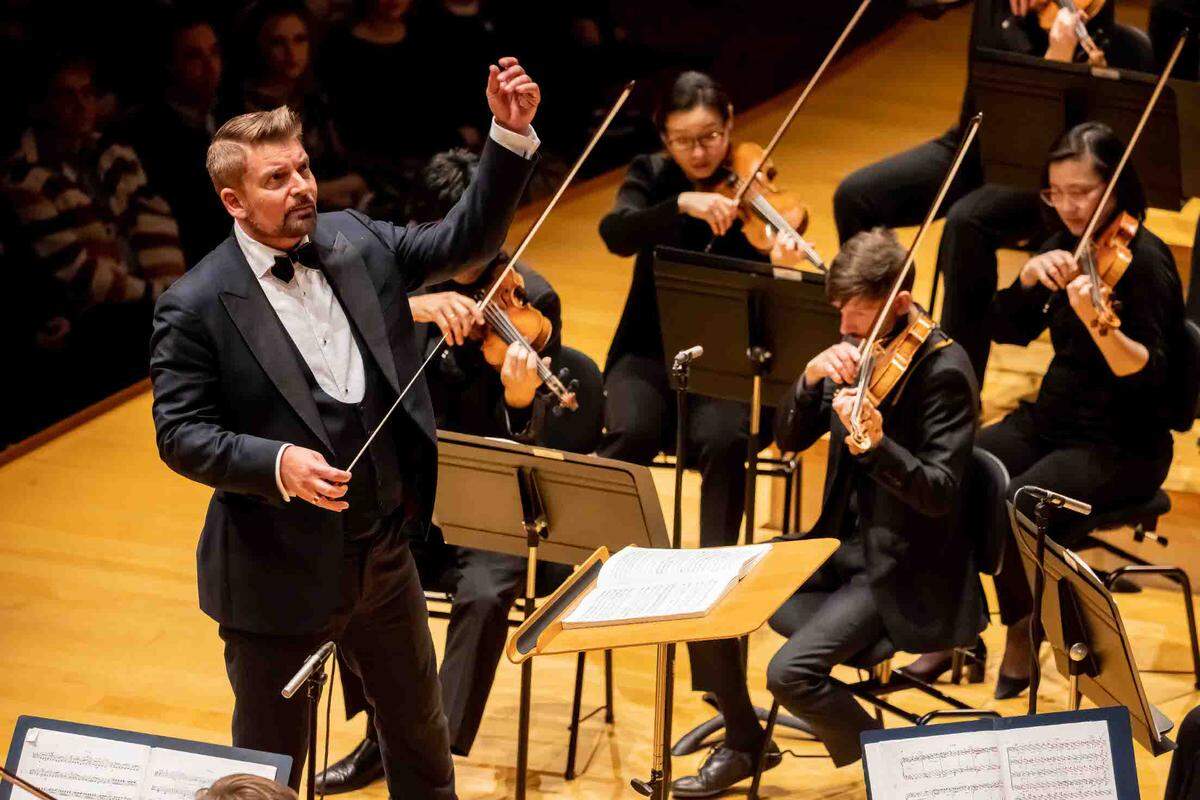
“I was with Ensemble Intercontemporain for 10 years,” Pintscher said. “I can’t say that we did everything that I wanted to do, but it was the peak of our togetherness, and out of respect and love and having the invitation from Kansas City at that point, I decided that it was time to move on. Every orchestra should envision a turnover somewhere after 10 years because it’s healthy for both sides so they can reevaluate who they are and what their needs are.”
Pintscher is now bringing his blazing intellectual curiosity and sense of adventure to Kansas City, as he replaces the departing Michael Stern at the helm. He has described his first season with the orchestra, which begins Sept. 13, as a “tune-up.” But what might the future hold? Will this brilliant conductor so steeped in contemporary music and the European avant-garde transform the Kansas City Symphony into a notorious hotbed of newness?
“Oh, no, no, no,” Pintscher said. “Everyone knows I am coming from a contemporary pedigree. I am a very modern thinking person and musician, so naturally we will include the music of the 20th century and the music of our time, but let me feel the community, let me meet the orchestra. We’ve only spent two weeks together so far, and we’re in the middle of finalizing the ‘25-’26 season, but I need to get started now to feel everyone. To feel the orchestra, to feel our audience.”
Pintscher points out that European countries have a rich tradition of government-supported radio orchestras. He’s looking at their mandate as a model for what he’d like to achieve with the Kansas City Symphony.
“Their obligation has been to be the best possible advocate of any music in the repertoire, going back to the ancient past and showcasing the trends of nowadays,” Pintscher said. “So what proportions might eventually happen in a few years in Kansas City, we will have to see. Eventually what I am dreaming is that people will come to the symphony and listen to us because they like what we do. More than coming that week because it’s Brahms 2 or Shostakovich 5 or Ligeti. That would be a wonderful goal, but to do that, I have to start talking to my audience, and I probably need at least one or two years to evaluate where we’re all going.”
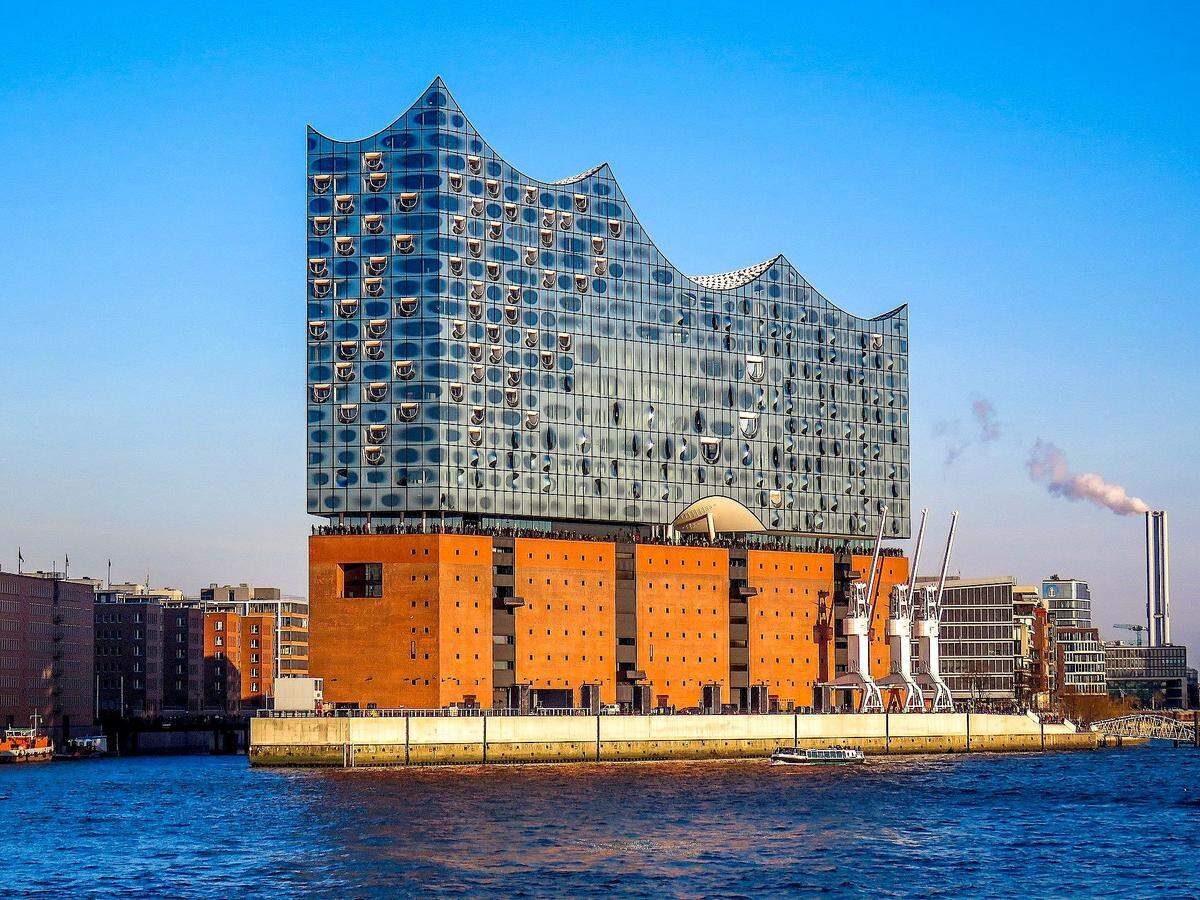
His first season might be a “tune-up,” but Pintscher is already expanding the symphony’s horizons in a profound way. From Aug. 26 to 29, Pintscher will take the symphony on its first-ever European tour. They will perform in three of Europe’s greatest concert halls: the Berlin Philharmonie, Amsterdam’s Concertgegouw and Hamburg’s Elbphilharmonie.
Pintscher reveres Helzberg Hall and considers it one of the finest venues in America, but he believes that for the symphony to grow, it is essential for it to perform in other acoustics.
“It’s actually a great possibility for us to abandon that safety belt when we play in Helzberg Hall because we are tuned to those conditions,” Pintscher said. “This is what makes an orchestra a top orchestra, among many criteria. The vast filtering, amending, adapting mindset that allows an orchestra to immediately adapt to the conditions in different halls, I think this is really good training for us to wade out into the unknown and explore other acoustics that are really different from what we play in Kansas City.”
Of the three European concert halls, Pintscher says that the Berlin Philharmonie’s acoustics most closely resemble those of Helzberg Hall.
“So that should be really no problem,” Pintscher said. “The Concertgegouw is very resonant, extremely warm and a very generous acoustic, but not the most analytic, so you need to be careful with speedy passages and not overdo it in terms of speed, so we will definitely have to adapt. People have very different opinions about Hamburg.“
Built on top of an old brick warehouse, Hamburg’s Elbe Philharmonic Hall is one of Europe’s newest and most stunning concert halls. Its grand opening concert was in 2017, Pintscher was the venue’s resident composer that first year.He says that it has a very unforgiving acoustic.
“You can hear if the fourth viola is playing a little flat or the 12th second violin is not playing with the exact position of the bow,” Pintscher said. “If you wear a suit, and it’s totally quiet in the hall and you move your hand, you can hear the fabric of your suit moving. It’s surgical. But if you figure out how to use that, the sound can be so unbelievably appealing and insanely colorful. It will be a very powerful experience for us to see what we need to change with our sound, how to make it do justice to the very specific requirements of that hall.”
The symphony will play all American works on its European tour: Charles Ives’ “Decoration Day” and “Fourth of July” from New England Holidays, Copland’s Symphony No. 3 and Gershwin’s Rhapsody in Blue. Pianist Conrad Tao is the soloist for the Gershwin.
“Boy, how do I describe Conrad?” Pintscher said. “He does something that I am personally very fond of. He is unbelievably spontaneous. He is extremely respectful of the text, but he also understands after really having absorbed and studied the text for a long time, he’s also able to let go and live the score in the moment.”
Kansas City will get a chance to experience this same concert when the symphony presents its European Tour Send-Off Concert Aug. 21 at Helzberg Hall.
Pintscher said that when he was considering the music director position, the Kansas City Symphony’s reputation preceded itself. He says that his conducting colleagues were all enthusiastic.
“They all told me, ‘You’re going to have a great time. It’s a wonderful orchestra, it’s a very warm orchestra, it’s a very caring orchestra, it’s a kind orchestra, it’s a brilliant orchestra.’ I’m not the guy who’s coming in and turning the page with my vision, and now we have to do everything differently. We want to be an instrument of the community that presents powerful ideas and allows the listener to feel really included. I cannot wait to get started.”
The European Send-Off Concert will be peerformed at 7 p.m. Aug. 21 in Helzberg Hall, Kauffman Center for the Performing Arts. $25-$85. 816-471-0400 or kcsymphony.org.
Festival Singers — Ernest Bloch’s ‘Avodath Hakodesh’
William Baker is known for tackling large and unique projects, but this time he’s outdone himself. The Summer Singers of Kansas City led by Baker will perform Ernest Bloch’s “Avodath Hakodesh” or Sacred Service Aug. 25 at Helzberg Hall. Percussionist Mark Lowry will also perform, and Jacob Hofeling will play Helzberg Hall’s fabulous Casavant organ.
Bloch basically turned the Sabbath liturgy into an oratorio. When it was first performed in a Berlin synagogue in the 1920s, it was part of an actual service, but the general public was invited to attend. And that’s fitting, because even though the work is based on Jewish liturgy, Bloch intended it to have universal meaning, just as Verdi did with his setting of the Roman Catholic Requiem. This is a rare work in a rare performance, and it’s not to be missed.
6 p.m. Aug. 25. Helzberg Hall, Kauffman Center for the Performing Arts. $33-$58. 816-994-7222 or festivalsingers.org.
Kansas City Jazz Orchestra — ‘Spotlight: Charlie Parker’
“Bird” is the word Aug. 24 at the Folly Theater. Jazz Alive will present “Spotlight: Charlie Parker 2024,” a celebration of the birthday of Kansas City native and jazz legend Charlie “Bird” Parker. Jazz historian Chuck Haddix, author of “Bird: The Life and Music of Charlie Parker,” will host the evening, and the Kansas City Jazz Orchestra led by Clint Ashlock will perform.
“Charlie Parker is forever linked to Kansas City jazz because he’s one of the most important figures in jazz history,” Ashlock said. “We’re creating new arrangements of Charlie Parker’s music, and we’re celebrating him in the best way a big band can. Not only are going to play these brand new charts, but we’re collaborating with Chuck Haddix, who literally wrote the book on Charlie Parker.”
7 p.m. Aug. 24. Folly Theater, 300 W. 12th St. $20-$68. follytheater.org.
You can reach Patrick Neas at patrickneas@kcartsbeat.com and follow his Facebook page, KC Arts Beat, at www.facebook.com/kcartsbeat.