
This concert might change your mind about accordions: 90 players at a big KC festival
The accordion is the Rodney Dangerfield of instruments. It don’t get no respect.
It’s dismissed as a fixture of polka bands, yet most people don’t realize how in the hands of a capable player, the accordion can take its place with any other instrument for profound music-making.
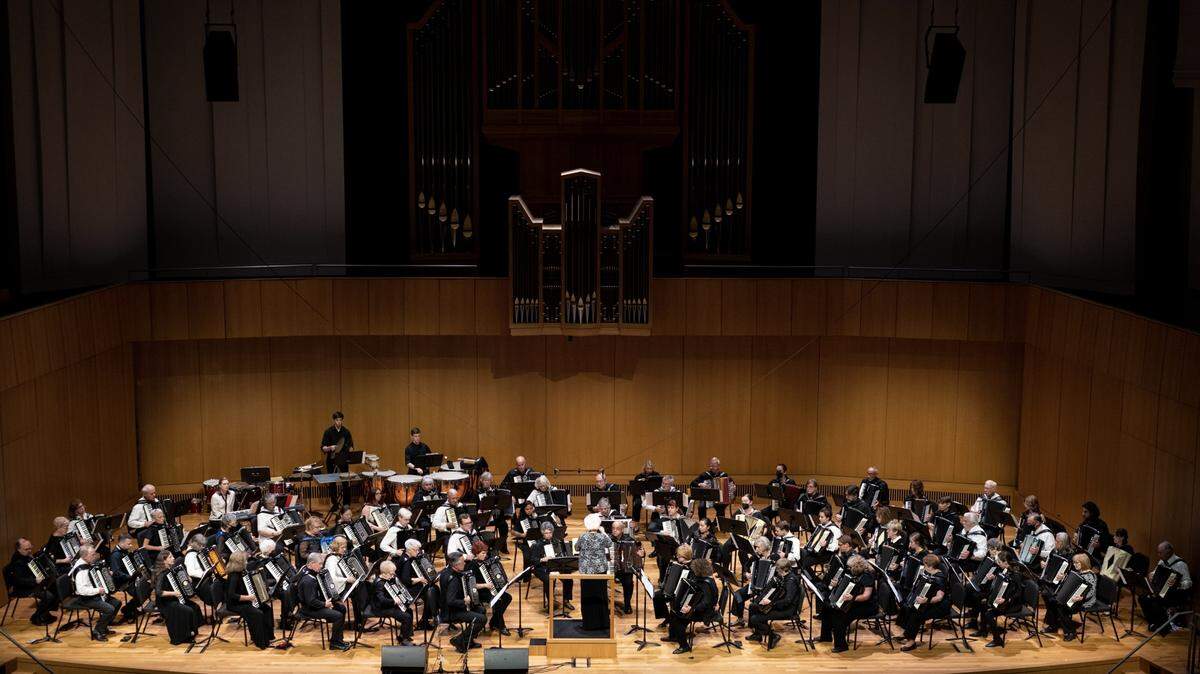
The accordion will get lots of respect when the Accordionists and Teachers Guild, International holds its annual Festival in Kansas City at White Recital Hall from July 23 to 27. In addition to four concerts, which are open to the public, the festival includes the World Accordion Cup competition, workshops for teachers and other assorted squeezebox sessions.
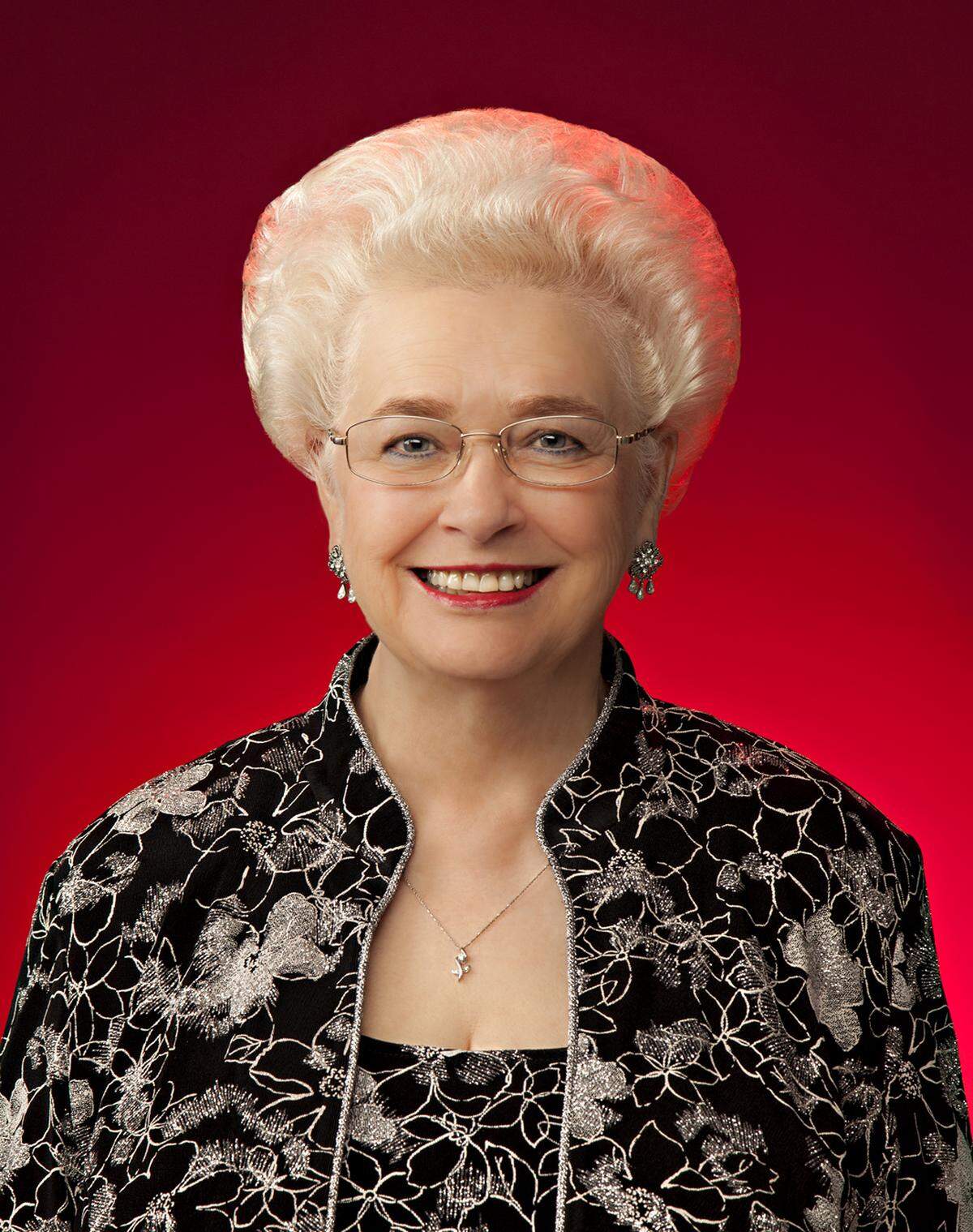
The highlight will take place July 27 with the final concert featuring the 90-accordion ATG Festival Orchestra led by Joan Sommers.
Sommers, who turned 90 in February, has played an important part in Kansas City music history. In 1960, she approached the Kansas City Conservatory — now the University of Missouri-Kansas City’s Conservatory of Music and Dance — and convinced the school to create a degreed accordion department.
“It was a tough sell,” she said. “They thought we all just played bass chords and polkas. A lot of us do, and that’s fine, but we were playing Bach inventions and things of that sort and original music that was being written for us. We had Dr. Willard Palmer, who had an accordion program down in Houston, Texas, tell the curriculum committee that we had lots of repertoire and that I was worthy of starting a program.”
Championed by the legendary Victor Labunski, the director of the conservatory at the time, Sommers created a thriving accordion program that included a large student accordion orchestra. What makes Sommers’ success even more remarkable is that she did not have a music degree when she first proposed her idea to the conservatory.
“You couldn’t do it today,” Sommers said. “I’m sure no university worth its salt would bring in somebody who didn’t have a degree. I’ve never gotten a degree, but I have lots and lots of plaques.”
Sommers started playing accordion when she was 9 years old.
“It was very usual for people to go around and knock on doors and ask the mother and father, wouldn’t you like to have your child take music lessons?” Sommers said. “So somebody knocked on our door, and my mother and dad enrolled my brother and me. My brother stayed with it a little while, then went to string bass, but I stayed with the accordion and loved it. It’s been my life.”
Sommers studied accordion locally with a teacher who was mainly a trumpeter, and, according to Sommers, not a very good accordionist. But there was an extraordinary accordionist, Anthony Galla-Rini, who would perform regularly in Kansas City. Galla-Rini was well-known on the vaudeville circuit, performing with people like Mae West, the Marx Brothers, Jack Benny and Jimmy Durante.
“He would give us master classes while he was here,” Sommers said. “One time, when I was 14, he decided that if I could learn all of the pieces that he prescribed for me to learn before the next July, that he would take me into a master class in New York City. So I learned all those pieces and got to go to New York City. I took my first airplane ride with my mother, and had a week of studies with him.”
Sommers would continue to study off and on with Galla-Rini over the years and with other teachers, as well. She also started to teach students of her own.
“I was teaching 100 students every week,” Sommers said. “I had a beginning ensemble of young people on Wednesday night and on Thursdays I had students who were more accomplished. Later on I entered them in lots and lots of competitions. The National Federation of Music Clubs always had something going on downtown at the Jenkins Music Company. It was a wonderful thing, really.”
For Sommers, the accordion is the equal of any instrument and capable of the greatest virtuosity. She believes that the skill to play the accordion is just as demanding as the violin.
“Think about those Suzuki violin players and how they teach these little kids the phrasing and when to breathe,” Sommers said. “On the accordion, we have to do that, too. We have to teach people to listen to the phrasing and change those bellows. It’s hard for people to learn how to control those bellows, and that’s the secret of a great accordion player. They can handle those bellows beautifully.”
Sommers’ renown as an accordion teacher even reached China.
“I have the luck to be listed in the Chinese history books on the accordion,” Sommers said. “I had three Chinese students here in the USA, and the Chinese had invited me over there in 1988. They put together an orchestra for me, so that I could teach them how to perform an accordion orchestra. Up until that time, when they put 50 people together, everybody played melody, and that was it. So I showed them, and now they have many orchestras, and their players are just fantastic.”
Sommers says that the accordion is respected around the world. In addition to China, she says that Russia has “fantastic players.” Musicians from various countries, including China, Austria and New Zealand, will take part in the Kansas City festival.
“We have former students of mine who are coming in,” Sommers said. “The UMKC Community Accordion Ensemble are all my former students. Most of them have their degrees in music.”
When Sommers retired from UMKC in 2002, she could see the writing on the wall. She postponed her retirement as long as she could because she was sure that as soon as she retired, the conservatory would end the accordion program. She was right.
“If you don’t have a huge program, it doesn’t matter if it’s accordion or whatever it is, if they don’t see classes of 150 people and one instructor, the state won’t give money to operate,” she said.
Sommers bemoans the lack of support for accordion programs in the U.S., the kind of support that she says other governments are happy to provide. Although the accordion has seen better days in the U.S. Sommers sees the possibility of revival, the accordion festival in Kansas City being a very hopeful sign.
“Every nation has many colleges that teach the accordion, except the United States,” Sommers said. “The organ has also suffered tremendously. It’s been a bad, bad thing for the organ, but it’s coming back. People are studying organ now. And I think eventually that’s going to happen with the accordion here in the United States. It’s in the process of reviving. I think it’s time.”
All concerts are in White Recital Hall, 4949 Cherry St. For tickets, $15-$35, see atgaccordions.com.
7:30 p.m. July 24. Stas Venglevski and Nikolay Bine, accordions.
7:30 p.m. July 25. UMKC Community Accordion Ensemble conducted by Joan Sommers; Mirco Patarini, accordion; the Kansas City Symphony String Quintet.
7:30 p.m. July 26. Michael Bridge, accordion; Kornel Wolak, clarinet; Ensemble Ibérica with Grayson Masefield, accordion.
7:30 p.m. July 27. ATG Festival Orchestra; Michael Bridge, accordion; the champions of the ATG World Cup Competition.
Lee’s Summit Singers — Misa Criolla
Misa Criolla by Ariel Ramirez is always a crowd-pleaser. It’s a joyful combination of the Roman Catholic Mass with Andean folk dances and traditional instruments. The Lee’s Summit Singers conducted by Jennifer Lahasky will perform Misa Criolla on July 28 at St. Paul’s Episcopal Church in Lee’s Summit.
The Choral Foundation’s Spanish language chorus Voces Festivas will also take part, as will folk specialist Amado Espinoza, who will play the charango, a 10 string guitar.
4 p.m. July 28. St. Paul’s Episcopal Church, 416 S.E. Grand Ave., Lee’s Summit. $25. festivalsingers.org.
You can reach Patrick Neas at patrickneas@kcartsbeat.com and follow his Facebook page, KC Arts Beat, at www.facebook.com/kcartsbeat.