
Novel ‘Driving the King’ rewrites a verse in singer Nat King Cole’s life story
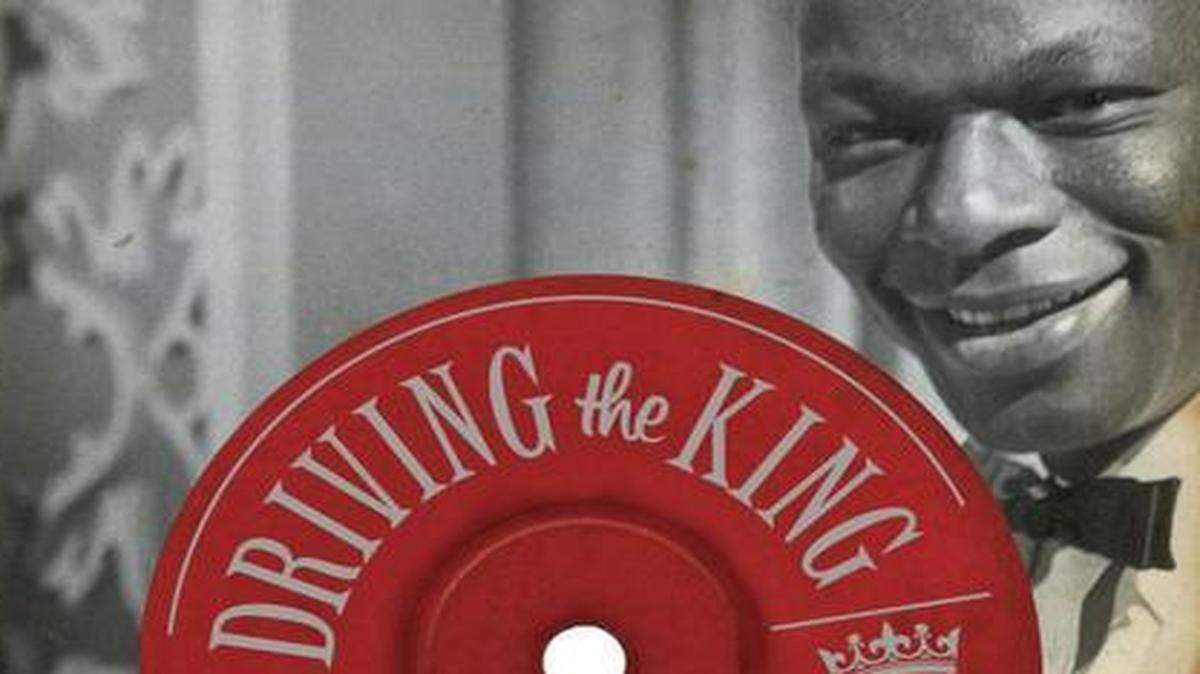
Ravi Howard’s “Driving the King” gives us a different snapshot of the life of Nat King Cole, one in which his story is combined with that of a childhood friend whose sacrifice saves the singer.
Spinning off of actual events to explore race and class through Cole’s life, it centers on the singer and Nat Weary. Weary is invited to attend a performance Cole is giving in Montgomery, Ala. He’s planning to propose to his girlfriend, and Cole is going to make the moment even more special by dedicating a song to the happy couple.
It doesn’t reach that moment. When a white man jumps onto the stage with an iron pipe, Weary rushes to Cole’s defense.
In keeping with the times, Cole’s assailant receives a three-year sentence; Weary’s sentence is much longer. Cole sustains some injuries but is able to perform one more song before ending the show early; his life continues on the same path, while Weary’s is shifted in an entirely different direction.
It bears noting that “the same path” is the one Howard has chosen: This is historical fiction, with an emphasis on the fiction. In real life, Cole was attacked not in Montgomery, but in Birmingham, and not as close to the end of World War II as the book places it.
In real life, Cole was saved by police officers; he was also through with performing in the South after that incident. He chose to declare himself apolitical, not involved with the upheaval in racial politics.
Howard, however, takes Cole down a different path, one in which he remains engaged with the politics of the time. He does so in part because of the sacrifice made by Weary, who gets 10 years in prison.
The novel shifts the narrative back and forth in time, keeping Weary as the central focus, with his removal from the events of the time. With desegregation and civil rights building steam, Weary’s sentence ends with many changes in society coming to pass.
Back in society — in Los Angeles, in fact, with a different set of racial conditions — he is hired as Cole’s limo driver/bodyguard and drafted into a plan for Cole to return to Montgomery. The concert is organized in such a way as to be as safe as possible — publicity kept to a minimum and at a less ritzy venue than Cole was accustomed to playing at that time, one that served primarily black people.
Suspense builds slowly as the new concert approaches, with the risk of playing there again becoming more apparent.
As Cole attempts to make a triumphant return to the town in which he was assaulted, Weary seeks to establish a new position for himself in relation to the prison in which he spent a decade. Cole’s role in Weary’s doing so provides one of many touching moments, one that is unabashedly sentimental.
“Driving the King” works best when the focus is on Weary’s story. Cole’s part to play is that of the “great man” in whose shadow associates and friends stood.
Weary’s transcendence of his circumstances comes as a result of having that shadow to shield him from the less successful efforts of many black men seeking to re-enter the working world. His story leaves one feeling hopeful that, over time, such a story might become more reality than fiction.
Driving the King, by Ravi Howard (336 pages; Harper; $25.99)
This story was originally published February 6, 2015 at 6:00 AM.