
In ‘Tasty,’ author John McQuaid dishes out a brief biography of flavor
What is wrong with your dining companion? You’re sitting across the table from someone who makes this face: “Mouth turned down, nose scrunched, tongue jutting out, as if to expel the unwanted substance.”
That’s how Pulitzer Prize winner John McQuaid describes the face of someone who’s eaten very bitter food. Your buddy just had an experience you don’t want to repeat.
McQuaid refers to his new book, “Tasty: the Art and Science of What We Eat,” as a brief biography of flavor.
Taste is the least understood of the traditionally recognized five senses; this book deeply plumbs the mystery, but this sentence is in the conclusion:
“Science has still not explained how flavor can encompass the whole range of human experience — pleasure, joy, disgust, pain, memory — continually hammering these into something new with each new dish, each sip.”
One may have seen Edwin Garrigues Boring’s 1940s tongue map — with the tip labeled as the spot that distinguishes sweetness, the back bitterness, on the sides near the front comes saltiness with sourness just behind.
“Like air raid drills or dodgeball, the tongue map became a feature of postwar American schooling and lodged itself in the popular imagination,” McQuaid writes. Boring died before his chart was discredited.
While it’s true that taste receptors have been identified, compared to the myriad other crucial receptors in the body, taste “is about a hundred thousand times less sensitive,” says the New Orleans journalist, chalking this up to the many molecules coming in contact with the tongue, so many our brains would otherwise overload.
“Taking a sip of Coke would be like staring into the sun.”
Halfway through the book he asks a string of questions that are truly at the heart of his project, two of which are: “What makes any food tasty, and why? What biological purpose do such pleasures serve?”
Answers to these questions prove elusive, but he does work to get at them from numerous angles. He suggests that food originally seemed tasty so that our ancestors would have something to strive for. He doesn’t buy into the idea that we evolved in response to distress and danger, but rather in response to wanting more of a good thing.
And the purpose of disgust, which he breaks down etymologically as “deliciousness negated,” is easier to understand than the purpose of taste pleasures. When someone tastes very bitter food or food that is in any way “disgusting,” he clearly communicates the experience to fellow diners — his tribe. The “spit-that-out wince of disgust” might indicate the presence of deadly bacteria or poison and that one “yuck” face can save the whole clan.
One of the most fascinating components of McQuaid’s investigation is his determination to tease apart the seemingly metaphysical quality that smell imparts to taste.
Smell is the most powerful element of taste, he writes. “These aromatic images become delicate portraits of experience, etched into the nervous system as they’re routed to parts of the brain involved in memory (the hippocampus) and decision making (the orbitofrontal cortex). In other words, smell literally links past and present.”
McQuaid’s research of the research is so sound it almost grows tedious in spots. But one study he mentions aims at understanding another of the mysterious intangibles of taste. How taste/smell and empathy are related.
France’s National Centre for Scientific Research scanned the brains of 14 volunteers who watched movies of people sniffing various odiferous liquids; some smelled terrible and the sniffers responded accordingly.
Then it was the volunteers’ turn to sniff the liquids. What researchers found was that “feeling disgust and observing disgust generate similar patterns of brain activity, and similar feelings.
“This means that visceral taste reactions underlie our most sophisticated behavior, animating our thoughts and judgments about everything.”
McQuaid also delves into the early science and later developments of fermentation and pasteurization and the human desire to eat foods that punish us.
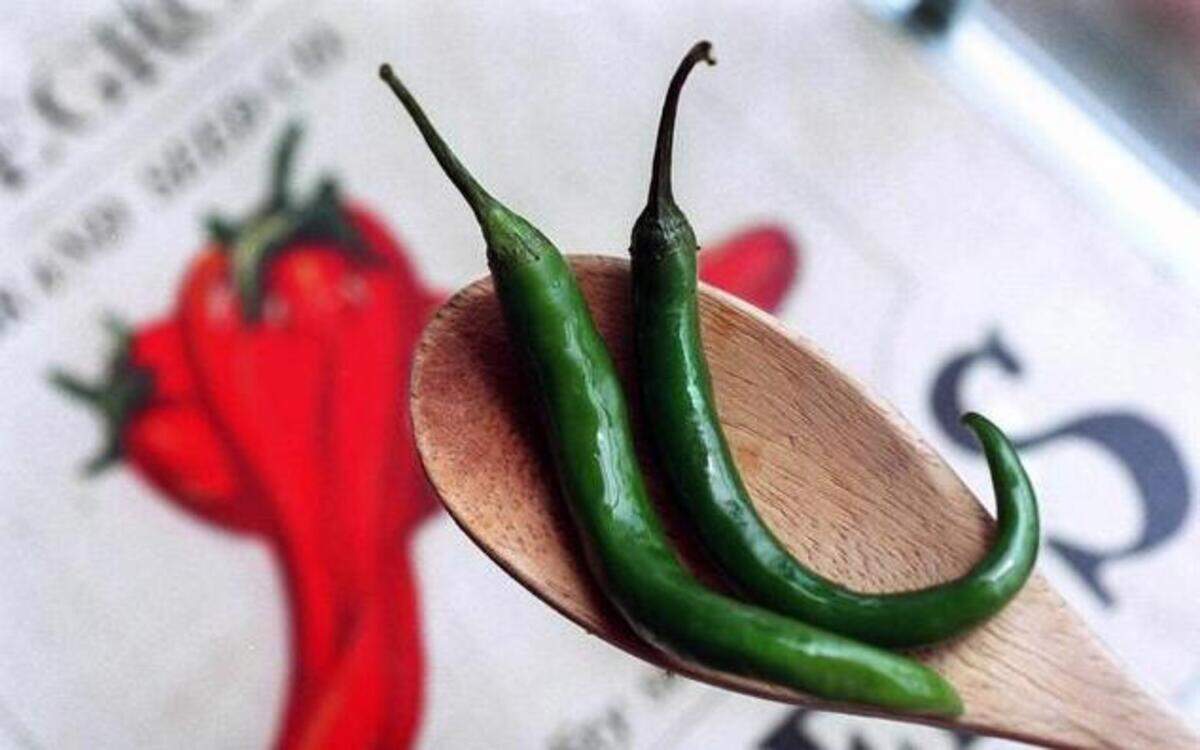
Take the world’s hottest chili pepper, Smokin’ Ed’s Carolina Reaper, measuring over 1.5 million on the Scoville Heat Unit Scale. The pain it causes is debilitating, but as one continues to eat it the pepper’s capsaicin, which initially causes the pain, eventually numbs the mouth.
Why has demand worldwide for hot chilies exploded in the past 50 years?
“Eating hot peppers may literally be a form of masochism,” McQuaid writes, “a soliciting of dangers that civilization cocoons us against.”
To reach Anne Kniggendorf, send email to akknigg@gmail.com.
Tasty: the Art and Science of What We Eat, by John McQuaid (304 pages; Scribner; $26)
This story was originally published January 9, 2015 at 6:00 AM.