
In ‘Let Me Be Frank With You,’ novelist Richard Ford brings back Frank Bascombe
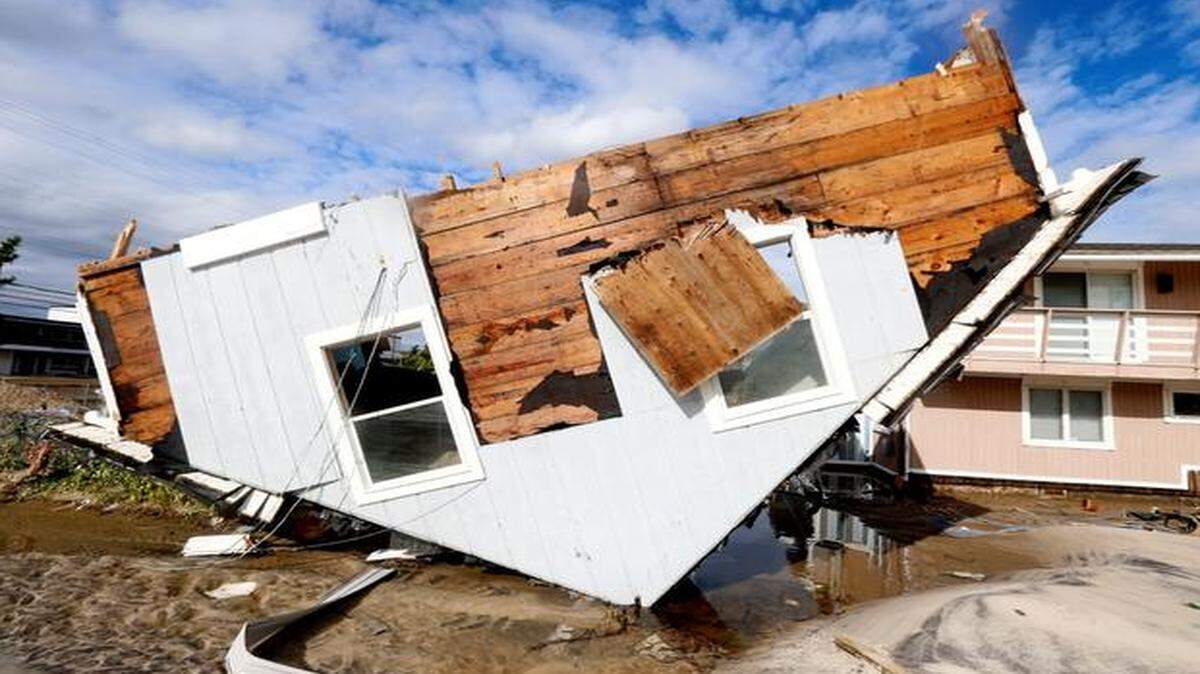
The carillon bells of St. Leo the Great Catholic Church still ring. Frank Bascombe has returned to Haddam, N.J., where we find him the week of Christmas 2012, post-Hurricane Sandy.
Richard Ford’s latest Bascombe book, “Let Me Be Frank With You,” is not as dense, textured or funny as the three that came before, but with good reason.
Aside from surviving cancer and two gunshot wounds to the chest, Frank, age 68, is now living within four novellas in one cover rather than his regular several hundred pages of long-form.
If that weren’t enough, he has also begun excising words from the English language. “This, in the belief that life’s a matter of gradual subtraction, aimed at a solider, more-nearly-perfect essence.”
Frank is also “trying to jettison as many friends as I can … as a simple and practical means of achieving well-earned, late-in-the-game clarity.”
But perhaps you haven’t made Frank’s acquaintance.
“The Sportswriter” was published in 1986. Frank was 38, living in Haddam, newly divorced and writing up games for a “glossy New York Magazine you have all heard of.” That novel was tethered to Easter.
When the Pulitzer Prize-winning “Independence Day” was published in 1995, Frank was 44, selling real estate and working to usher his middle child through a nasty adolescence over the July Fourth weekend.
“The Lay of the Land” came out in 2006, so Frank was 11 years older and had moved to Sea-Clift, N.J. He had cancer, his second wife had left him, his grown children were odd, but it was Thanksgiving and he was grateful.
Ford’s brand of literary sorcery lulls the reader into thinking of Frank as a regular Joe who goes through life parsing out politics, real estate fluctuations and cultural trends. Reading the first-person narrative is like sitting down with an old friend eager to talk.
It is tempting to label Frank an Everyman, but the event that defines his character and these books is the death of a son, Ralph, to Reye’s syndrome at age 9.
Frank is so undone by the loss, he’s anything but a regular Joe.
He performs mental and emotional gymnastics to maintain an even keel. In each book he labels his overall state: first a mourning period dreaminess, “a state of suspended recognition, and a response to too much useless and complicated factuality.”
Next is the Existence Period, marked by ignoring what he doesn’t like “or that seems worrisome and embroiling.”
Then follows the Permanent Period, in which we “try to be what we are in the present — good or not so good — this, so that accepting final credit for ourselves won’t be such a shock later on.”
By the end of the third book Frank understands that the Permanent Period isn’t working for him because it’s not only important to accept one’s actions, but one must also account for those actions. It’s then that he accepts Ralph’s death, 20 years later.
In “Let Me Be Frank,” he’s operating in the next level, or the Default Period, trying to put the best possible face on retirement.
A subtler and less discussed organizing principle of the Bascombe books is Ford’s use of Theodore Roethke’s poetry.
One of the novellas in “Let Me Be Frank” is called “I’m Here,” also the title of a Roethke poem. In the context of the story, it’s named for the utterance “I’m here” of 38 Sioux warriors a moment before their mass hanging by the U.S. government in 1862.
Later in “I’m Here,” Frank references Roethke’s “The Waking.” He has met the current owner of the Sea-Clift house, now on its side in the aftermath of Sandy. Frank says, “Nature always has another thing to do to us, I guess” — riffing off Roethke’s words.
The homeowner responds, “Take the lively air, Frank,” which is Roethke’s next line. The last two lines of the poem sum up how Frank has muddled through the 30 years we’ve known him: “I wake to sleep, and take my waking slow./I learn by going where I have to go.”
In the opening of “The Sportswriter,” he begins to read “Meditations of an Old Woman” to his ex-wife over Ralph’s grave.
“I have gone into the waste lonely places/Behind the eye; the lost acres at the edge of smoky cities.” His ex-wife cuts him off. Roethke’s poem is too sad.
Frank explains, “When I read it, I always think it’s me talking.” For him, the poem is about finding happiness in everyday things, which Frank does for many hundreds of pages.
But a nightmare exists within the poem, one Frank remains solidly locked into.
“Journey within a journey:/The ticket mislaid or lost, the gate/Inaccessible, the boat always pulling out/From the rickety wooden dock,” Roethke writes, and goes on:
“So the spirit tries for another life,/Another way and place in which to continue.”
On the final pages of “Let Me Be Frank,” Ford returns to this poem in the fourth novella, “Deaths of Others,” bookending the series.
He leaves the bedside of a dying acquaintance to meet a heating oil delivery driver who knew his two sons. In the poem: “A fume reminds me, drifting across wet gravel.”
Frank observes: “a trace of heating oil accompanies him,” as they stand together in the gravel drive.
Roethke writes, “A flame, intense, visible/…/Moves over the field,/Without burning.”
The heating oil man delivers a flame when he inquires how Ralph is doing, meaning to ask after the other, living son.
“It is a sweetness that brings tears to my eyes,” Frank thinks. For a moment on Christmas Eve, godless Frank is gifted a split-second interaction that supposes his son still lives.
The Roethke poem ends: “In such times, lacking a god, I am still happy.”
To reach Anne Kniggendorf, send email to akknigg@gmail.com.
Let Me Be Frank with You, (256 pages; Ecco; $27.99)
This story was originally published November 14, 2014 at 6:00 AM.