
In ‘Worthy Fights,’ Leon Panetta offers strong critique of Obama administration
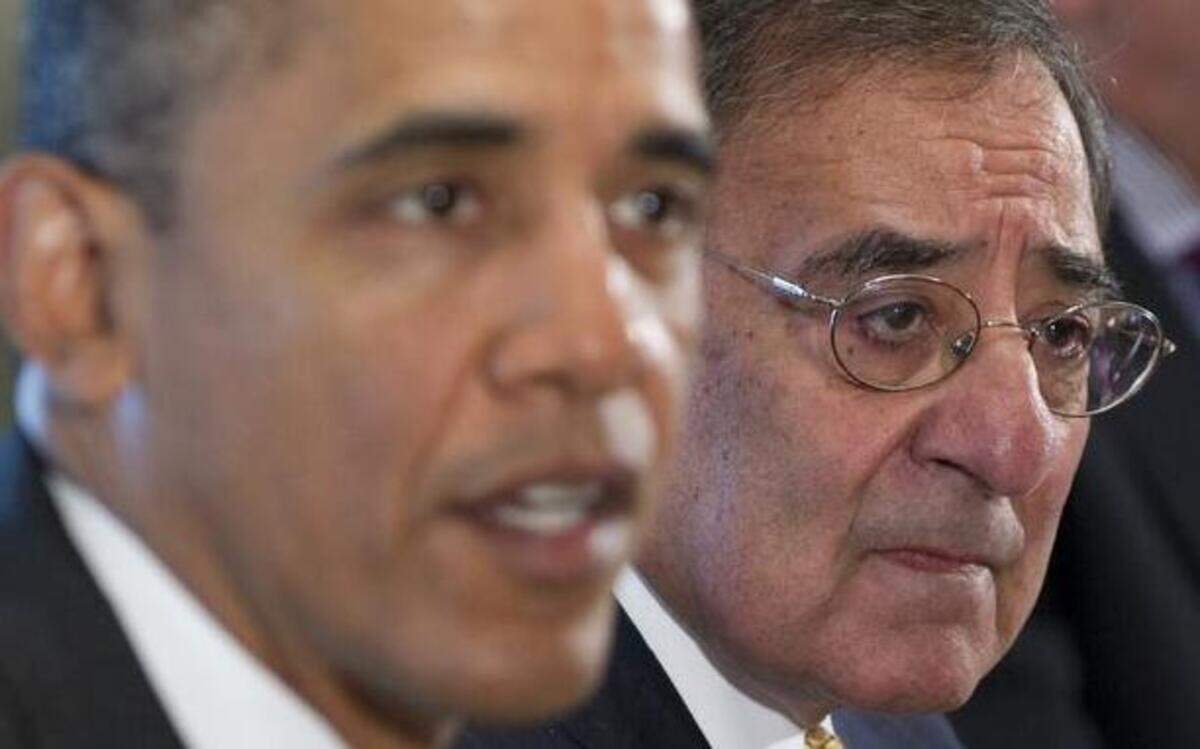
As a young Republican in 1969, Leon Panetta joined the Nixon administration as the director of the Office of Civil Rights and worked to integrate Southern schools.
After discovering that Richard Nixon’s White House was trying to delay integration, Panetta resigned. He wrote a 1971 memoir, “Bring Us Together: The Nixon Team and the Civil Rights Retreat,” which savaged the administration. Nixon said that Panetta’s book was a “case history on how to screw the White House.”
When Barack Obama offered Panetta the job of director of the CIA, Panetta warned the president-elect, “I’d feel an obligation to tell you the truth, no matter how uncomfortable.” Obama replied: “That’s one of the reasons I want you to do this, to restore the credibility of the CIA.”
Today, the Obama administration may feel betrayed by Panetta’s strong critique of some of its policies, but Panetta, who left Obama’s Cabinet in February 2013, is fulfilling that promise to tell the president the truth even if it’s “uncomfortable.”
“Worthy Fights: A Memoir of Leadership in War and Peace,” written with Los Angeles Times editor at large Jim Newton, is a strong critique of how our government is working from one of the nation’s most respected public servants. With Panetta’s service as CIA director and secretary of defense under Obama and chief of staff and budget director under Bill Clinton, his is a critique that will painfully resonate.
Despite Obama’s vaunted attempt to create a Cabinet that was a “Team of Rivals,” Panetta describes a White House unwilling to let its Cabinet have real decision-making power. When Panetta took actions as banal as reaching out to Congress or the media without getting permission, he says that he was “chastised.”
During the lead-up to the Osama bin Laden raid, Panetta briefed the chairman of the House Intelligence Committee, as he was legally required to do, and says he was harangued by White House aides.
Obama entered the White House in 2009 as a strident antiwar candidate, and Panetta portrays him as over-eager to deliver on his promise of getting troops out of Iraq.
In 2011, the administration failed to get a status of forces agreement with Prime Minister Nouri al-Maliki that would have kept a strong residual force in Iraq. While Panetta was desperate to make an agreement happen, he notes that the White House “never really led” negotiations and let the opportunity slip away.
This created a security vacuum in which Islamic State could grow, he says, calling today for more decisive military action against Islamic State “before they turn their sights on us.”
On Syria, Obama’s reluctance to use military force against Syrian President Bashar Assad after he crossed the “red line” of using chemical weapons was a “blow to American credibility.” Panetta notes that “diplomacy is most effective when the message is clear, the determination unambiguous, and the force behind it is sufficient to make it stick.”
Panetta is at his best, though, in taking on the leftist critique of Obama’s foreign policy. On drones, he says that “to use them too little or not at all is to give our enemies free rein.”
While the leaks from former National Security Agency contractor Edward Snowden generated calls for no-spy agreements with European allies, Panetta warns that such a strategy is “shortsighted” because “you don’t know when you might need to know something that’s not publicly available.”
Panetta wants Obama to work with Congress toward common solutions, even in a deeply polarized country. Panetta served as Clinton’s chief of staff and recalled that Clinton “defied some of his own party’s most enduring orthodoxy — from welfare to free trade to crime,” to forge deals with a Republican Congress, and the “result was a stronger economy and a new vision for politics.”
While avoiding any discussion of the 2016 election, Panetta does provide fresh insight into former Secretary of State Hillary Rodham Clinton’s robust experience. She was a “luminous representative” for the United States and a “smart, forceful advocate” within the administration.
While many have tried to smear her over the attack on the U.S. Consulate in Benghazi, Libya, Panetta argues that there was nothing more that could have been done to save the Americans. The talking points describing the attack as mob violence were prepared by the CIA, he writes, and it was CIA Director David Petraeus, not Secretary Clinton, who pressed that argument within the administration.
In the tradition of the farmer/general Cincinnatus, Panetta has returned to his family home, a walnut farm in Monterey, Calif. The child of Italian immigrants, it was here he first felt the call to public service as a Democratic congressman.
Kleiner is a fellow at the Yale Law Information Society Project.
Worthy Fights: A Memoir of Leadership in War and Peace,
by Leon Panetta with Jim Newton ( 512 pages; Penguin Press; $36)
This story was originally published October 31, 2014 at 7:00 AM.