Meet the Kansas professor who was among the first to reveal racism in Dr. Seuss books
Just as Sam-I-Am did not at first like green eggs and ham, many fans may have a hard time swallowing the notion that several of Dr. Seuss’ more than 60 beloved books trafficked in racist images.
But Philip Nel — a 51-year-old professor at Kansas State University, and author of the 2017 book “Was the Cat In the Hat Black?” — thinks it’s as evident as a star on a Sneetch’s belly.
“I first noticed it more than 20 years ago when I was a graduate student,” said Nel, a distinguished professor of English who, make no mistake, is emotionally attached to the works of the late Theodor Seuss Geisel, particularly “Green Eggs and Ham.”
“It’s the first book that I read by myself and reread,” Nel said.
It was, however, some of the professor’s earlier academic work that laid the groundwork for Dr. Seuss Enterprises on Tuesday (what would have been the late author’s 117th birthday) to announce that it would no longer publish six early Seuss books — chief among them, “And to Think That I Saw It on Mulberry Street” and “If I Ran the Zoo” — because they contain racist, caricaturist or insensitive images of Asian and Black people.
.JPG "Racial-Injustice-Dr-Seuss (1).JPG")
Dr. Seuss Enterprises, founded by the Seuss family, said it made the decision last year following a long review that included feedback from readers, teachers and other experts. Nel’s work is cited repeatedly in a 2019 paper, “The Cat is Out of the Bag: Orientalism, Anti-Blackness and White Supremacy in Dr. Seuss’s Children’s Books,” by Katie Ishizuka and Ramon Stephens.
The company this week told The Associated Press, “These books portray people in ways that are hurtful and wrong.” It canceled publication “to ensure Dr. Seuss Enterprises’ catalog represents and supports all communities and families.”
Random House Children’s Books, the publisher, followed with its own statement saying they respect the decision of the family and the review panel.
Seuss’ most beloved and best-selling books, like “Green Eggs and Ham,” “The Cat in The Hat,” “Oh, the Places You’ll Go” and “How the Grinch Stole Christmas,” were not on the list. But “McElligot’s Pool,” “On Beyond Zebra!,” “Scrambled Eggs Super!” and “The Cat’s Quizzer” were.
The racist images in some of the Seuss books are clear — Asian men with slanted lines for eyes, African cannibals with bulbous lips. Yet Nel insisted that assessing the heart and mind of Geisel, who has sold more than 650 million books, is far less easy.
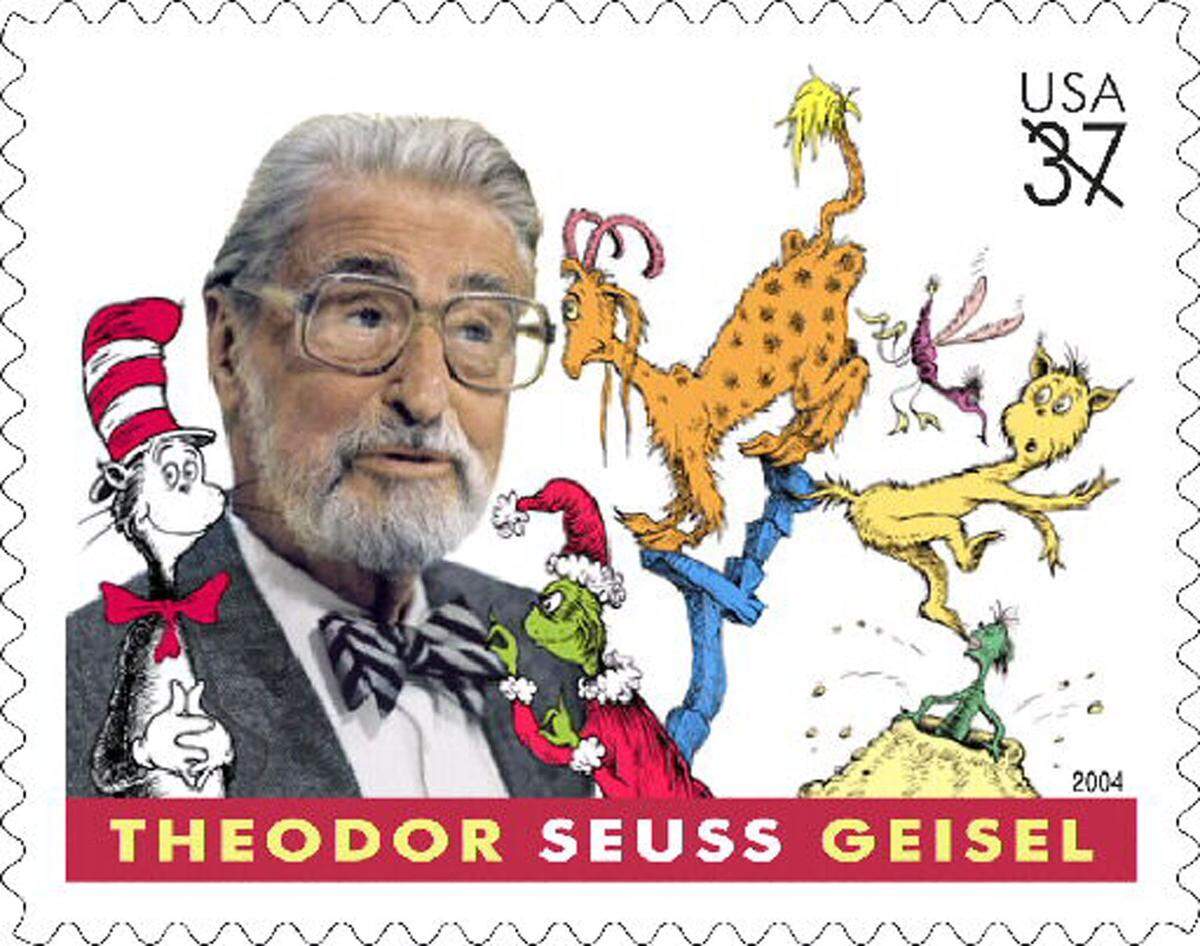
Nel said that Geisel, who was born on March 2, 1904 in Springfield, Massachusetts, and died in September 1991, is “racially complicated.”
In August 1954, for example, three months after the U.S. Supreme Court case Brown v. The Topeka Board of Education would end racial segregation in schools, Geisel published “Horton Hears a Who!,” a clear statement on the rights of minorities.
In 1961, he released “The Sneetches and Other Stories,” which confronts anti-Semitism with themes of tolerance and diversity.
Early on, during the 1920s and 1930s he produced political cartoons. Some were anti-racist, bucking Jim Crow laws and hiring laws that discriminated against Black workers. Others trafficked in what Nel called “grotesque caricatures” of Japanese people.
In 1937, he published his first book, “And to Think That Saw It on Mulberry Street,” with those stereotypes seeping into its pages.
Nel tends to be understanding.
“Just to be clear, I don’t think he is consciously trying to reproduce racist imagery, even when he is. I think he is doing it unconsciously,” Nel said. “You can find racist caricatures throughout his cartoons of the ‘20s and ‘30s and even in some of his children’s books. But then there is also this other side of Seuss that will call out racism, or try to write anti-racist fables.
“And I think what a lot of people have a hard time holding onto is the notion that someone can do both. I think people think of racism as either/or. You’re either on team racism, or you’re not. Well, Seuss is on both. And he is not aware of the degree to which he is on team racism.”
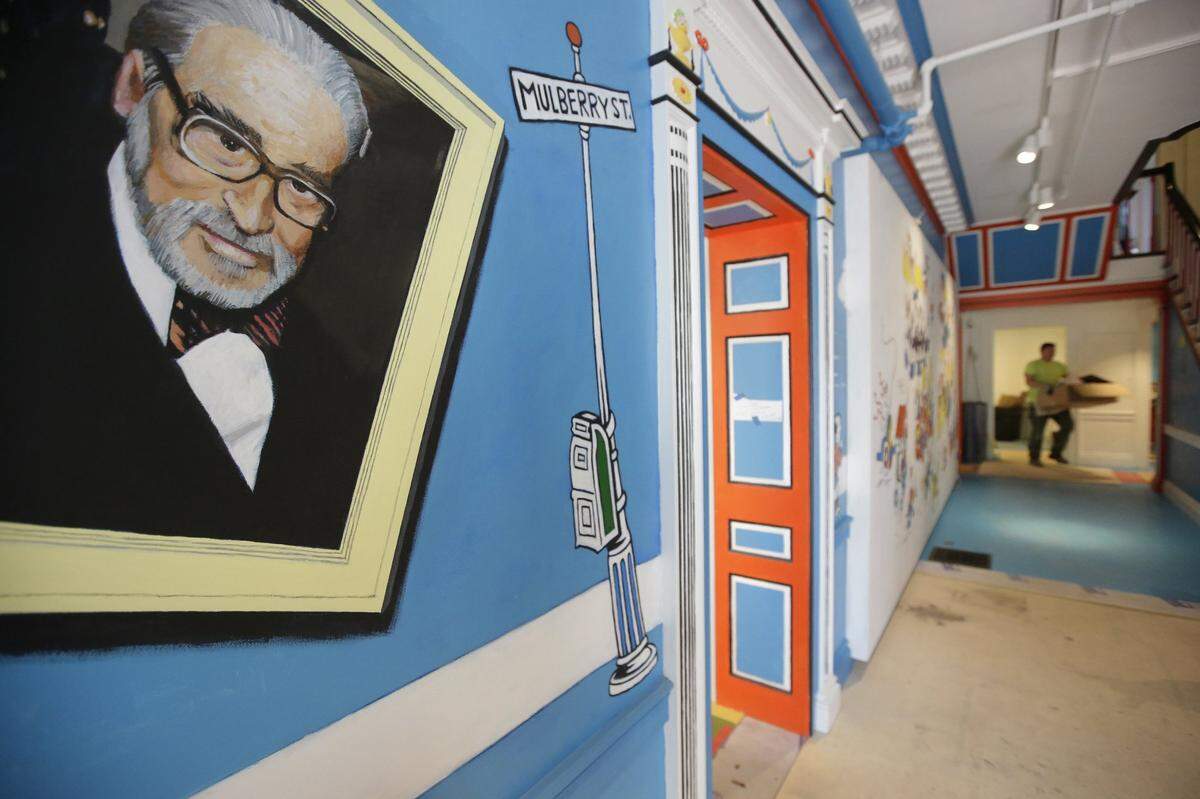
Nel said we know he is not aware based on an 1952 essay that Geisel wrote titled, “But for Grown-Ups Laughing Isn’t Any Fun,” that expressly criticizes racist humor.
“In his heart of hearts, on some level, Seuss is aspiring to do anti-racist work, but we also know that, at the same time, he is doing racist work. So that is why I say it is unconscious. I assume that when he is recycling these racist tropes in his work, he is not doing so out of malicious intent.”
“The Cat in the Hat,” for example, was published in 1957. Nel said that he put a question mark in his book, “Was the Cat in the Hat Black?” because the question of Dr. Seuss’ racism is ambiguous and debatable. Nel said that when Geisel was in high school, he wrote and performed in a Black-face minstrel show.
Such shows, highly popular in the early 20th century, pervade early cartoons, from Walt Disney’s Mickey Mouse to Krazy Kat to Bugs Bunny. The main character in “The Cat in the Hat,” with this top hat, bow tie and white gloves, radiates a minstrel feel.
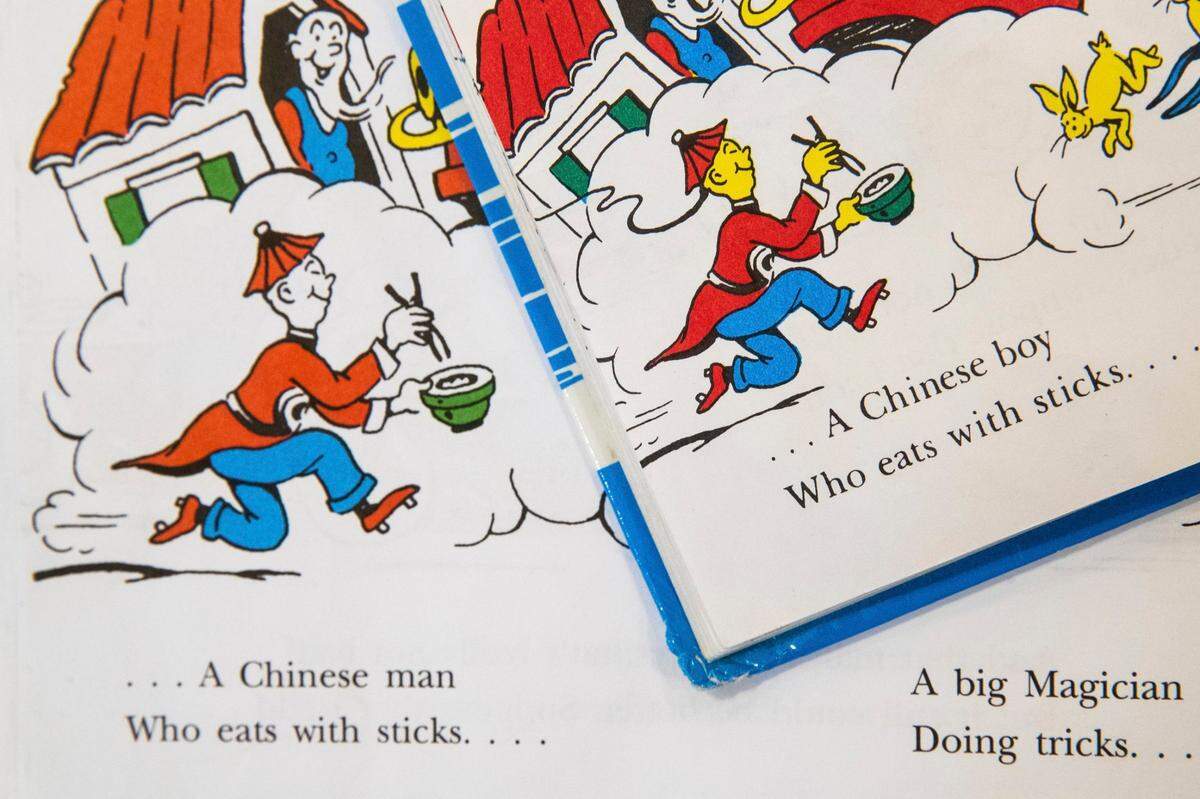
As such, Nel determines that Geisel was not intending to trade in racist stereotypes, even when he was. In 1978, for example, Geisel, already criticized for his depiction of Chinese characters in “Mulberry Street,” changed the image, cutting off the characters’ ponytails and no longer drawing them in yellow.
Instead of writing “Chinaman” or “Chinese boy,” he changed his text to “Chinese man.”
“You could say, ‘Ah, Seuss has come to some awareness,’ and you would be right,” Nel said. “But it’s still a caricature, but it’s less bad.”
Seuss is far from the only children’s author criticized for racist or insensitive depictions. Laura Ingalls Wilder’s “Little House” series has been taken to task for her portrayal of Native Americans.
Before they were changed to be white in the early 1970s (and orange in the movies), the Oompa-Loompas in Roald Dahl’s 1964 book “Charlie and the Chocolate Factory” were a tribe of Black pygmies who had come to Willy Wonka’s factory from “the very deepest and darkest part of the African jungle where no white man had been before.”
Nel supports the decision to stop publishing six Seuss books.
“I think Random House rightly decided that we are going to take responsibility for the culture we put into the world, and we’re not going to profit from these six books anymore,” Nel said. “Whatever their motive for that was — whether it’s racism is bad for the brand, or they’ve had a kind of moral awakening — it doesn’t matter. It’s a good decision.”
He feels the surge of criticism that Dr. Seuss is now being banned or censored is hardly justified. Since the announcement, the price of the six books has skyrocketed on eBay and other sites.
“People talk about, oh, they’ve been banned, they’ve been canceled or whatever,” Nel said. “Oh, come on, man. There are millions of copies of these books in print. They’re not hard to find. They’ll still exist in libraries. Banned books are something that you can no longer read.
“These are not that.”
This story was originally published March 4, 2021 at 12:01 PM.