
How the late Barry Lopez, acclaimed author, got his start in Kansas City’s Loose Park
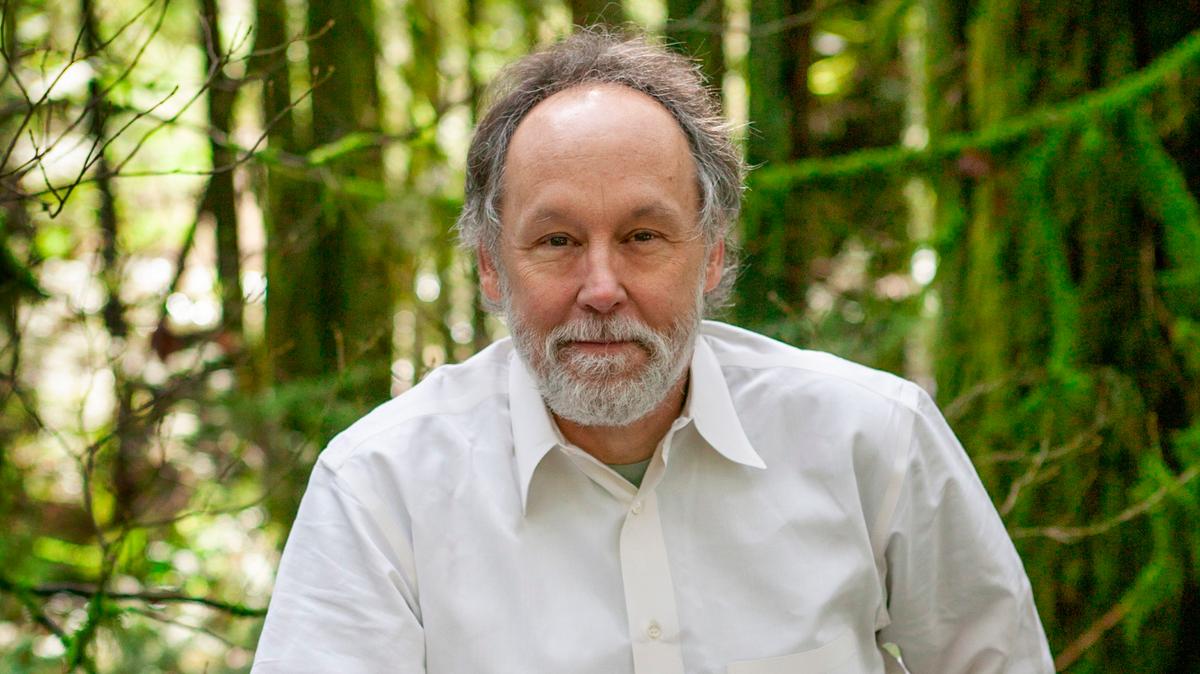
Barry Lopez steeped himself in Arctic wildernesses, the habitats of wolves and exotic landscapes around the world. But his career got its start in Kansas City.
Lopez, whose award-winning books explored the kinship of nature and human culture, died Dec. 25 at his home in Eugene, Oregon. He was 75.
Lopez won the National Book Award for “Arctic Dreams” (1986), a treatise on his five years with Inuit people.
His first book, “Desert Notes” (1976), was published by Andrews McMeel of Kansas City, as were “Giving Birth to Thunder” (1978) and “River Notes” (1979).
In an essay on his website, Lopez credited Jim Andrews, co-founder of Universal Press Syndicate and Andrews McMeel Publishing, with launching his career in 1974 when Andrews told the author he wanted to publish “Desert Notes.” They discussed it during a winter afternoon walk in Loose Park:
“He was concerned, he told me, about my trying to make my living writing for magazines,” Lopez wrote of Andrews. “Instead of a single-book contract for ‘Desert Notes,’ therefore, he wanted to offer me an advance on a three-book contract. Go back to Oregon, he said, and decide what you want the other two books to be. Dumbfounded, I accepted his offer. He pulled from his overcoat pocket a letter of agreement that he had already prepared and a small check. We each signed a copy of the letter, on the gleaming hood of his black Town Car, and he handed me the check which, in that moment, loomed very large.
“… On that winter afternoon in Loose Park, Jim Andrews made it possible for me to follow a path that otherwise would have been much more difficult to navigate.”
Lopez had prostate cancer, his wife, Debra Gwartney, said. He had been displaced to temporary housing in September, when wildfires ravaged his home in the Cascade Mountains of Oregon. The fire destroyed all his original manuscripts, his wife said, as well as the artwork and artifacts that he had collected during decades of travels.
Raised and educated in Roman Catholic traditions, Lopez as a young man considered vocations as a priest or a Trappist monk. But, deciding to be a writer, he drifted away from the church and starting in the late 1960s adopted a deep reverence for nature and its effect upon humanity.
After a trip to Alaska to research wolves for a magazine assignment in 1976, Lopez devoted two years to a study of the history, lore, habitats and literature of wolves, reviled in myths as evil and hunted since the Dark Ages as bloodthirsty beasts. He interviewed scientists, trappers and native people in the American and Canadian Northwest. He even raised a wolf pup.
His book “Of Wolves and Men” (1978) was a National Book Award finalist and won the John Burroughs Medal and the Christopher Award. A history of man’s relationship with wolves, it separated fact from fiction in what critics called a cleareyed evaluation of a creature that has been superstitiously scapegoated and historically slaughtered nearly to extinction in regions of Europe and North America.
In the Canadian Arctic, Lopez was once engulfed in a blizzard of such intensity that it turned into a mystical experience: Three-dimensional space seemed to vanish all around him. He explained the science of it as a trick of light, but described the phenomenon and its deeper meaning in rhapsodic prose.
“There are no shadows,” he wrote. “Space has no depth. There is no horizon. The bottom of the world disappears. On foot, you stumble about in missed stair-step fashion. It is precisely because the regimes of light and time in the Arctic are so different that this landscape is able to expose in startling ways the complacency of our thoughts about land in general.”
Barry Lopez was born Barry Holstun Brennan in Port Chester, New York, on Jan. 6, 1945, the older of two sons of John Brennan and Mary Frances (Holstun) Brennan, who lived in Mamaroneck, New York, and worked in advertising. Barry’s brother, Dennis, was born in 1948, and the family moved to Reseda, California, then a semirural section of Los Angeles in the San Fernando Valley.
After a divorce in 1950, Mary Brennan taught home economics in high schools and a junior college. In 1955 she married Adrian Bernard Lopez, a businessman who adopted her sons. They both took the Lopez surname.
Barry’s mother encouraged his love of nature with trips to the Mojave Desert and the Grand Canyon. He attended a Roman Catholic grade school in the nearby Encino neighborhood.
When Barry was 11, the family moved to Manhattan, where he attended the Loyola School, a Jesuit institution, and was senior class president, graduating in 1962. He considered the priesthood but enrolled in the University of Notre Dame, where he earned a bachelor’s degree in communications in 1966 and a master’s in teaching in 1968. He also spent a month at a monastery in Kentucky but decided that a monastic life would be “too easy,” he told The New York Times.
Includes reporting by the New York Times.