
David McCullough says Panama Canal among the ‘greatest achievements’ of the U.S.
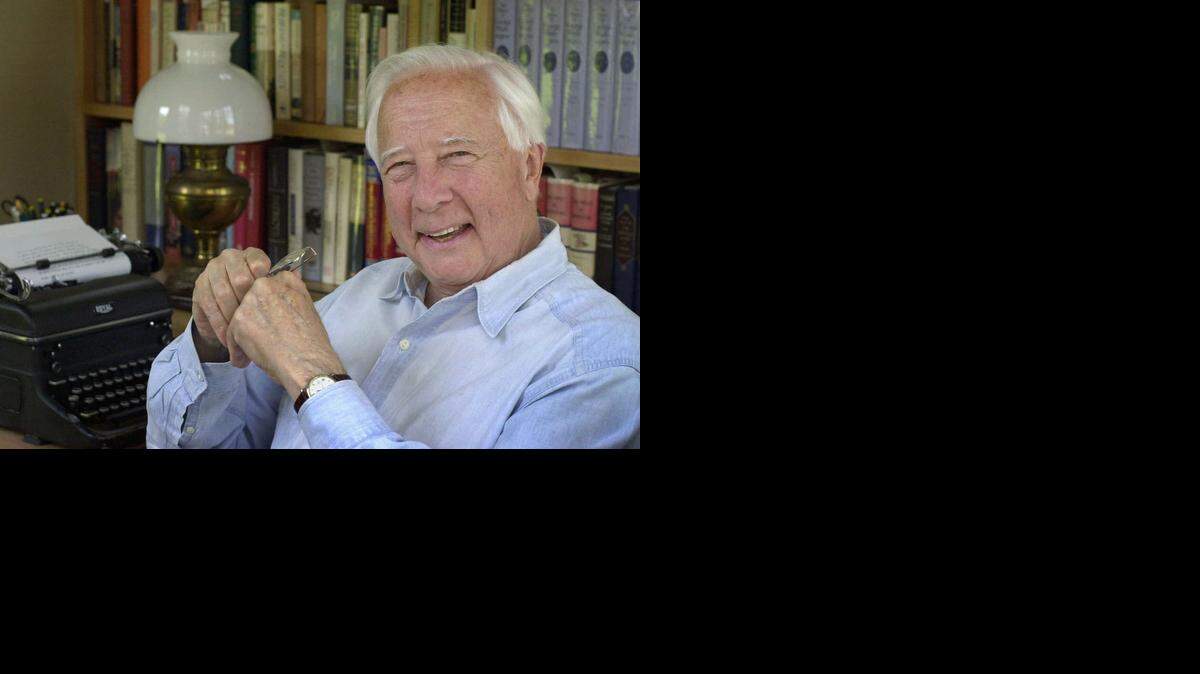
David McCullough, arguably the country’s most recognizable historian, speaks in Kansas City on Thursday.
His appearance is sponsored by the Linda Hall Library. The library’s centennial exhibit on the Panama Canal runs through Dec. 31 at 5109 Cherry St. McCullough’s 1977 book, “The Path Between the Seas: The Creation of the Panama Canal, 1870-1914,” documented the difficulties overcome in the canal’s construction.
No tickets remain for McCullough’s appearance at Unity Temple on the Plaza. For information about the library’s Panama Canal exhibit and other scheduled lectures on the canal’s history, go to lindahall.org.
Q. Your book, “The Path Between the Seas,” appeared at a time of strong opinions regarding the future of the Panama Canal. In 1978 the U.S. Senate approved treaties concerning both the canal’s neutrality and Panamanian control of the canal after Dec. 31, 1999. Do Americans think much about the canal today?
A. The level of interest is nothing like what it was in 1978, but that was a very unusual situation, a national political controversy of major proportions.
To me what has been not only disappointing but inexcusable is the lack of any anniversary recognition by our president. There has been virtually no comment, celebration or recognition, which has surprised me. I expected that there would be some sort of event honoring what was one of the greatest achievements in our history, which it remains. Its story is like no other in American history.
The temporary exhibit of about 2,000 artifacts from the Arabia Steamboat Museum in Kansas City at the Heinz History Center in Pittsburgh, Pa., runs through Jan. 4. As a Pittsburgh native, you contributed to the cost of transporting the Arabia artifacts to the Heinz center and displaying them there. Why was that worthwhile?
So much of what was on board that ship was made in Pittsburgh, as well as the boat itself. It’s a Pittsburgh story and, of course, a wonderful American story.
From the first time I first saw it, I’ve considered the Arabia exhibit one of the most fascinating, colorful and unusual exhibits that I have ever seen concerning American history. It greatly changed our notion of the standard of living of Americans on the frontier at that time. The idea that people were living then without the amenities of civilization doesn’t hold up any longer. Because of that exhibit, many historians who have written about that period have had to go back and rethink that.
Millions of viewers watched the recent public television broadcast of “The Roosevelts: An Intimate History,” the latest documentary by Ken Burns. You appeared in “The Roosevelts,” and you narrated the 1990 Ken Burns documentary, “The Civil War.” In the years since, what effect has Burns’ documentaries had on Americans and their regard for all things historical?
There’s no question about it; his documentaries have reached an enormous audience in all parts of the country.
I think there is a real hunger for the story of our country and I think that has been brought on, in part, by how the teaching and knowledge of history has had such a steep decline. Many people don’t know anything about Theodore Roosevelt or the Wright Brothers. Today I think there is a lot of reconsideration going on regarding our understanding of who we are and what our place in the world is.
But how can people say they love their country and know nothing about how it came to be? It’s like saying you love your parents while knowing nothing about their lives.
You first arrived at the Truman Library in Independence in the early 1980s to research your biography of Harry Truman, published in 1992. In 2009 the National Archives submitted a report to Congress on possible “alternative models” for presidential libraries, one of which was a centralized presidential archival depository. During a 2007 visit to the Truman Library you were outspoken in your opposition to a centralized location. Is that idea still being considered?
That talk has pretty well calmed down. I got an enormous amount of information about Harry Truman just from being in Independence and Kansas City, from walking the walk to soaking up the vernacular.
To reach Brian Burnes, call 816-234-4120 or send email to bburnes@kcstar.com.
THORPE MENN AWARDS
The 36th annual Thorpe Menn Literary Excellence Award ceremony is scheduled Saturday.
The award, named for a former book editor of The Star, is given to a Kansas City area author.
The noon luncheon will be held at the Central Library, 14 W. 10th St. Scheduled to speak are R. Crosby Kemper III, Kansas City Public Library executive director, and Mary Sanchez, columnist for The Star.
The event is sponsored by the library and the American Association of University Women – Kansas City Branch.
Thursday is the deadline for reserving seats. Those interested in attending can call 816 931-5288 or go to aauwkc@gmail.com.
This story was originally published September 30, 2014 at 7:00 AM.