
Review: ‘The Sympathizer’ offers an outsider’s piercing view of the U.S.
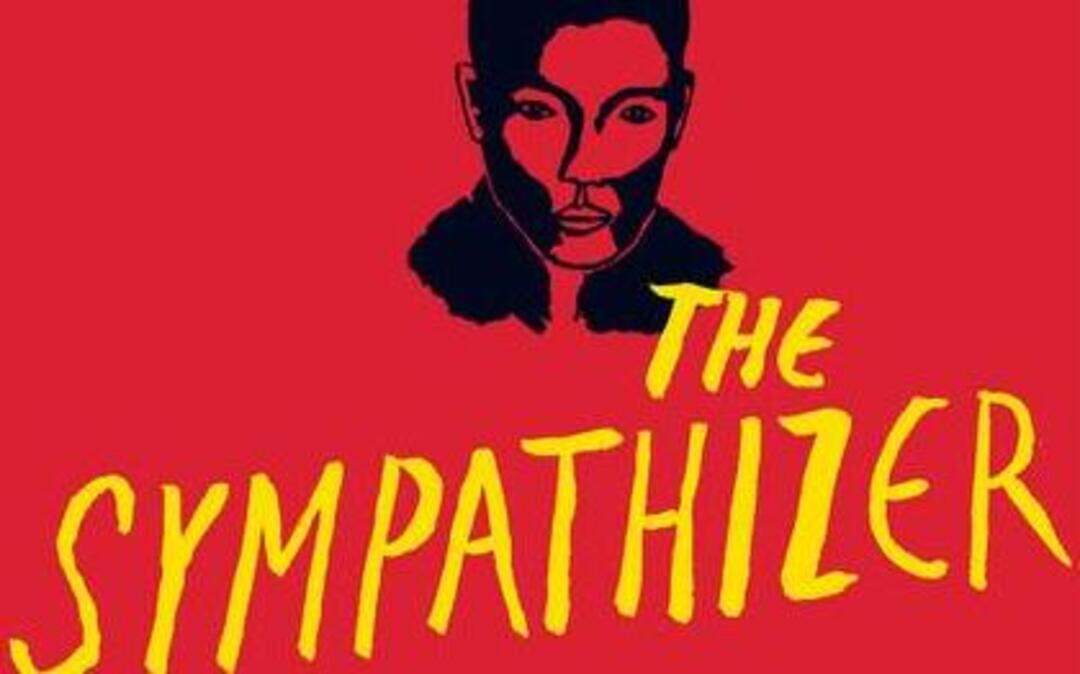
Forty years ago this month, after a long, deadly release of flatulence from American politicians, the United States evacuated its personnel from Saigon in an operation appropriately code-named Frequent Wind. The images of those panicked Vietnamese crushing the U.S. Embassy dominated newscasts and front pages.
In the opening pages of Viet Thanh Nguyen’s extraordinary first novel, “The Sympathizer,” that terror feels so real that you’ll mistake your beating heart for helicopter blades thumping the air. Nguyen brings us right inside the barbed-wire-encircled home of a South Vietnamese general just waking from his faith in American resilience. Thrashing all around him, officers and cronies are bargaining for survival: Who will get out? Who will be left to the hands of their inexorable enemy?
The general does not know it, but the captain he has put in charge of those decisions is, in fact, a Viet Cong spy. “Every stroke of my pen through a name felt like a death sentence,” says this unnamed narrator, who has burrowed deep into the general’s confidence. “I could not help but feel moved by the plight of these poor people. Perhaps it was not correct, politically speaking, for me to feel sympathy for them, but my mother would have been one of them if she were alive.”
Over the next 350 pages, that conflicted whisper draws us through what is surely a new classic of war fiction.
Nguyen, who was born in Vietnam and raised in the United States, has wrapped a cerebral thriller around a desperate expat story that confronts the existential dilemmas of our age.
Startlingly insightful and perilously candid, the narration comes to us as a confession written and rewritten many times in an isolation cell. The imprisoned captain recalls fleeing with the South Vietnamese general and insinuating himself into the refugee community that settles around Los Angeles. There, he continues to spy on the restless warriors as they plot a quixotic plan to liberate their homeland from the communists.
After that explosive opening scene, the rest of the novel should feel tepid, but it never does because the captain’s serpentine voice is so hypnotic and the events he relates are so captivating.
A careful student of American literature with a well-tuned ear for pathos, irony and the rhythms of English, he’s just as adept with a Roth-inspired comic scene of self-abuse as he is with a gorgeous Whitmanesque catalog of suffering. His captors want a confession written in the well-worn phrases of ideological purity, but he resists: “It seemed as much of a crime to commit a cliche to paper as to kill a man.”
It’s the captain’s special burden that the quality that makes him such an effective spy — namely, his boundless sympathy — is the same quality that infects him with guilt. As an observer, he’s brilliant; as an assassin, he’s hobbled.
Once in California and relieved from the exigencies of war, he turns his incisive wit on American culture and its cheery racism.
“Although every country thought itself superior in its own way,” he asks rhetorically, “was there ever a country that coined so many ‘super’ terms from the federal bank of its narcissism, was not only superconfident but also truly superpowerful, that would not be satisfied until it locked every nation of the world into a full nelson and made it cry Uncle Sam?”
The novel’s most complex comedy and cultural criticism stem from the captain’s work as a consultant for a Hollywood movie called “The Hamlet.” Hired as “the technical consultant in charge of authenticity,” our genial narrator quickly finds himself enslaved in the Philippines on a project you’ll recognize (“Apocalypse Now”). As funny as it is tragic, this section alone could carry the whole novel.
“The Sympathizer” is laced with insight on the ways nonwhite people are rendered invisible in the propaganda that passes for our pop culture. In Nguyen’s version, the Francis Ford Coppola character is not just a monumental ass, he’s also a latent racist determined to make a film that pretends to mourn America’s struggle, but in fact re-inscribes its grandiose purity. “The Movie was just a sequel to our war and a prequel to the next one that America was destined to wage,” the captain laments.
But then Nguyen turns the screw another rotation, and the grotesque scenes of abuse in the Auteur’s movie lead into an extended examination of torture in real life. I haven’t read anything since Orwell’s “1984” that illustrates so palpably how a patient tyrant, unmoored from all humane constraint, can reduce a man’s mind to liquid.
The contemporary relevance of this devastating final section can’t be ignored, but “The Sympathizer” is too great a novel to feel bound to our current soul-searching about the morality of torture. And it’s even more than a thoughtful reflection about our misguided errand in Southeast Asia. Transcending these historical moments, Nguyen plumbs the loneliness of human life, the costs of fraternity and the tragic limits of our sympathy.
Ron Charles is the editor of The Washington Post Book World.
“The Sympathizer,” by Viet Thanh Nguyen (371 pages; Grove/Atlantic; $26)
This story was originally published April 17, 2015 at 7:00 AM with the headline "Review: ‘The Sympathizer’ offers an outsider’s piercing view of the U.S.."