
Provocative author Malcolm Gladwell strives to spark discussion, not win fans
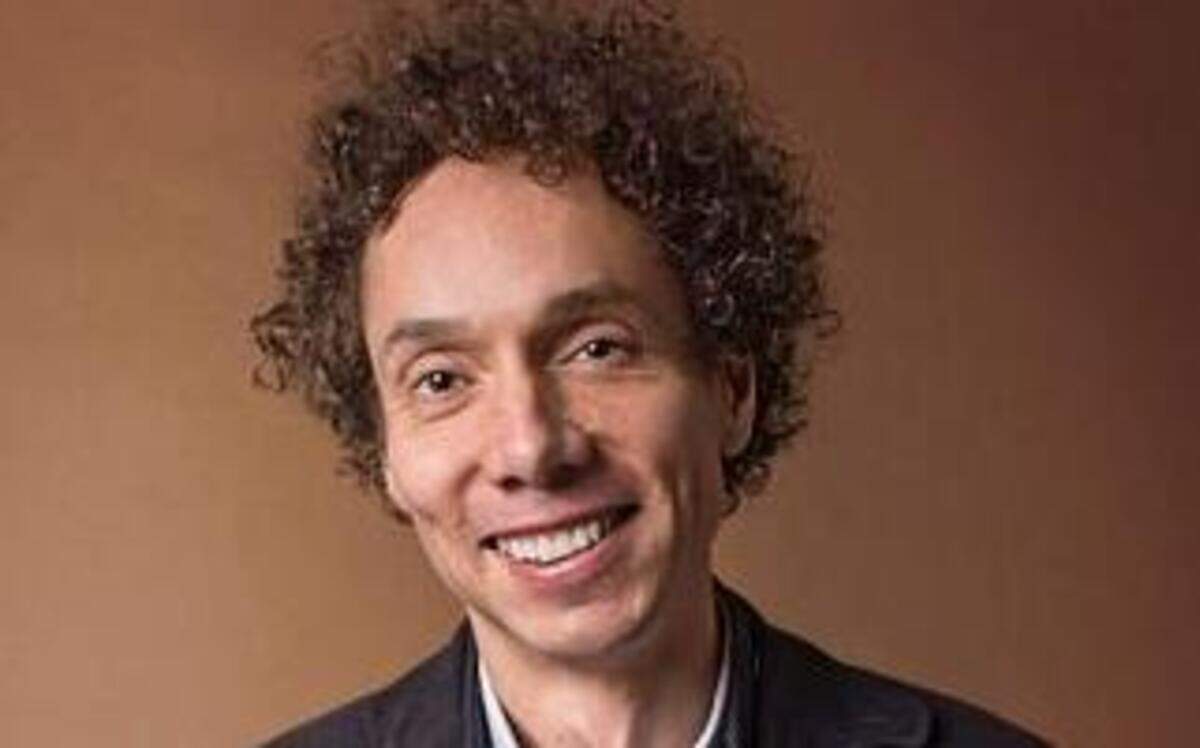
In his best-sellers “Blink,” “Outliers” and “The Tipping Point,” author Malcolm Gladwell popularized concepts that now nestle firmly in modern culture.
But his latest book centers on a concept thousands of years old.
“David and Goliath,” his 2013 best-seller released this month in paperback, analyzes moments “when ordinary people confront giants.” Gladwell goes beyond the biblical outline of the tale to propose Goliaths are often misinterpreted, and sometimes Davids possess far more power than they realize.
The Canadian journalist comes to Kansas City on Wednesday to discuss the book at Ink’s Middle of the Map Fest Forum. He’ll scrutinize the premise of “desirable difficulty,” which explains why seeming disadvantages (such as dyslexia) are frequently endured by people who’ve achieved enormous triumphs.
He’ll also expound on the controversial concepts, such as the idea that it takes 10,000 hours to master a skill.
Gladwell’s five books have sold around 10 million copies, leading to his inclusion on Time’s list of most influential people.
But his success has also generated a backlash of criticism that claims his science is often based on convenience rather than reliability. A quick check of the satirical website Malcolm Gladwell Book Generator (MalcolmGladwellBookGenerator.com) offers up faux titles such as “Nothing: What Sandcastles Can Teach Us About North Korean Economic Policies.”
Calling from his home in New York, the 51-year-old writer spoke to The Star about underdogs, critics, basketball and the term that makes him squirm: Gladwellian.
Q. Since “David and Goliath” hit shelves, have you run across other subjects that could have made good chapters in the book?
A. There are an infinite number of great David and Goliath stories to tell. If rewriting the book today, I would have a whole chapter on suffragette Alva Vanderbilt.
Or I would have written about Ferguson, which is all about the consequences of the failure of legitimacy. That whole chapter on the IRA could have been swapped out with Ferguson. It’s the same fundamental problem: When people don’t feel they’re being treated legitimately, they rebel.”
Currently, is America more David or Goliath?
We are without question Goliath. We have been for a long time and will be for a long time.
But what’s interesting is we’ve become Goliath for so long that we’re beginning to feel beleaguered. It’s not always easy being the giant.
You know how the best NBA team always says their problem is every night everyone’s gunning for them. There are no casual encounters with the rest of the world when you’re the biggest guy on the block. We’ve become keenly aware of the cost of our power at the moment.
The David and Goliath analogy gets applied most often to sports. What’s your favorite example of this?
Everyone’s favorite is Jimmy V (Valvano) and NC State in the NCAA tournament. That’s the quintessential one.
But I wrote about Rick Pitino’s career in the original “How David Beats Goliath” article in The New Yorker. It fascinates me. I don’t think the truest test of a coach is how many times he wins the title; I think it’s how often his team outperforms their level of talent.
Pitino has only once in his life had a great team: Kentucky. He has systematically, year after year, taken teams to the Elite Eight or Sweet 16 with guys who never even see the NBA. If you compare his talent to the talent level that comes through North Carolina or Duke, there’s no comparison. That’s a guy who’s adopted the David mindset really brilliantly.
How much of David and Goliath’s story is historically reliable?
Who knows? It’s an impossible question to answer. We know some things. A battle took place there. The biblical account is a little confusing. It’s told in a number of different ways. We’re not sure precisely who Goliath was. Like anything from thousands of years ago, we’re doing the best job we can at reconstructing that event. We’ll never have certainty.
But the power and meaning of the story does not depend on its accuracy. It depends on the lessons we draw from it. But I tend to think something very similar to what we believe happened did happen. I don’t think there’s a huge discrepancy.
How often does someone start a conversation with you for the sole purpose of arguing deductions made in your books?
A fair amount. Arguing is too strong a word. They don’t always disagree.
But the books are intended to get people thinking. My game is not to win converts; my game is simply to think about the world differently. I’m fine with people thinking and challenging.
Even if you return to your original position, if my book made you submit your beliefs to scrutiny for a moment, then I think I succeeded.
On a related note, why are there so many Gladwell haters?
I always think the Gladwell haters are outnumbered by the Gladwell likers. Reviewers are not always kind.
But when you’ve had unmeasured success, it’s perfectly appropriate for people to come with guns blazing. That’s the way the system ought to work. You shouldn’t get a free pass.
Have you been to the website Malcolm Gladwell Book Generator?
Oh yeah. It’s hilarious. You know you’re a cliché when…
Personally, what new milestone of 10,000 hours are you the nearest to completing?
Probably running. I’m a big runner, and I started running again in a serious way.
I think the 10,000 hours thing doesn’t really apply to sports. It’s about cognitively complex activities. Nonetheless, there is a thing with distance running that you have to put in a minimum amount of endurance training before you are capable of any running feats. You can’t (win) a world-class marathon after training for two years.
The only other thing you can apply that to is you can be a great NBA center after two years. Not great, but passable if you’re 7-foot-3 and agile. But I think you’ve got to play the point guard position for many thousands of hours before you’re any good. History has proved that out.
What’s more enjoyable: the researching or the writing?
They’re equally fun. I enjoy each in the moment. What’s fun is going back and forth between the two. I’m happy to say I have no favorite between those two, otherwise the books would be lopsided.
Year after year you constantly have a book on The New York Times list of best-sellers.
I’m delighted to stick around like that. I have very few good explanations for my own success.
Maybe there’s just enough stuff in the books to get people talking. Once people are talking about the ideas in your book to their friends or whoever, then you have a shot. There are enough conversation points in these books to where that’s happened.
The word “Gladwellian” has emerged to describe your work. Ideally, what would you like the definition to be?
I always cringe when I hear that word. Ideally, it’s any work that is open to new ideas and interpretations that isn’t shy about new perspectives no matter how outlandish they may be.
My approach is supposed to be adventurous. Not everything I write bears scrutiny. But I’d rather make a mistake on that side than a mistake on the too-conservative side. Gladwellian means taking chances and being adventurous.
You’ve mentioned your books are “gateway drugs” to more clinical or academic works. What other books has “David and Goliath” made readers seek out?
I don’t necessarily have books in mind. But, for example, I hope the whole discussion of “big fish in little pond” leads people to think about and read critically the literature on affirmative action.
I don’t want people to give up on it. I want it to help people understand what is the best way to assist someone who is coming up from the bottom. There’s a smart way to do it, and there’s a dumb way to do it. I would hope people can read that chapter and say, “Let’s think about a smarter way of doing it.”
Do you have any interest in writing fiction? A novel? A screenplay?
I have actually been working on a screenplay. I read lots of crime fiction and have always had a quiet interest in that world.
I don’t know if it’s any good. But like all writers, I like to try my hand at something different every now and again.
Do you improve with each book?
Do I actually improve? Probably not. But do I think I improve? It’s a useful delusion to think you’re always getting better.
Wednesday
Malcolm Gladwell speaks at 7 p.m. Wednesday in Helzberg Hall at the Kauffman Center for the Performing Arts. Cost is $30 and includes a paperback copy of “David and Goliath: Underdogs, Misfits, and the Art of Battling Giants.” Gladwell’s appearance kicks off Ink’s Middle of the Map Forum, which runs through Friday. More at MiddleOfTheMapFest.com and KauffmanCenter.org.
This story was originally published April 12, 2015 at 7:00 AM with the headline "Provocative author Malcolm Gladwell strives to spark discussion, not win fans."