
Stack of books about Lincoln keeps growing 150 years after his assassination
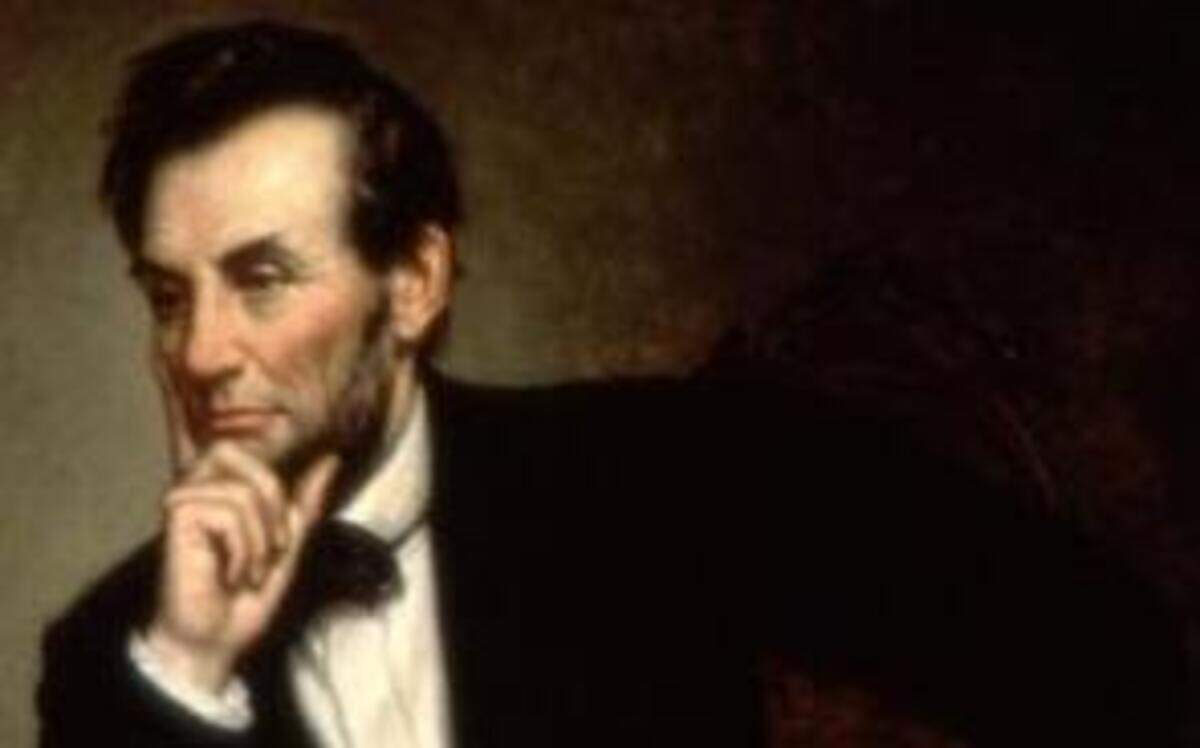
“Sic semper tyrannis! (Ever thus to tyrants!)” cried John Wilkes Booth that awful night 150 years ago.
What everyone must have heard, however, was “ut scripturam hanc babulam non erit finis! (may the writing of this story never end!)”
And, “ab dis (by the gods),” it hasn’t!
“There can be no new Lincoln stories,” a man protested once, “the stories are all told.”
That was Noah Brooks in 1900. Lincoln’s former White House secretary (who wrote two books on the subject himself) was protesting the flood of words 35 years after the martyred 16th president was laid to rest in Springfield, Ill.
Ha!
Another 115 years later — and now a century and a half since Lincoln’s assassination on April 14, 1865 — the stack of books still climbs like a Sherpa high on life. At this rate, we must be well past the 15,000 mark.
Harold Holzer, who has been writing about Lincoln since he pulled the man’s name out of a hat in fifth grade, has heaped 49 onto the pile himself, either authored, co-authored or edited. His latest was “Lincoln and the Power of the Press,” out last fall.
“We have to get out of the anniversary mode,” he acknowledged. “It was fun while it lasted. The 200th anniversary of his birth in 2009 produced a good number, too. And then we successfully rebooted and began to do it again. Lincoln seems to work wonders in the publishing world.”
Perhaps a dozen more nonfiction offerings are coming out this year alone, the last of the Civil War sesquicentennial. Fourteen came out in 2014; who would have thought we needed two books on Gideon Wells, Lincoln’s secretary of the Navy?
“Three more were published on the Gettysburg Address in 2013,” Holzer said. “Now this huge number of books on the assassination.”
It’s like “Dixie” — old times there are not forgotten.
The books have ranged from hagiography to bitter revisionism. But as new ones arrive and are reviewed and eventually placed on the discount tables, it would not do to look past the best of some earlier harvests.
Long ago, this writer started with Carl Sandberg’s two-volume “Prairie Years,” then moved to the four “War Years.”
While well-written by a famous poet of the prairie — the anecdotal books did win a 1940 Pulitzer Prize — today the effort is not considered a well-researched history, but it looks great on one’s bookshelf.
After wading through the elaborately detailed beginnings of Lincoln’s “Team of Rivals: The Political Genius of Abraham Lincoln,” one will warm to Doris Kearns Goodwin’s masterwork of 10 years ago. The 1993 Pulitzer committee and I also can speak for Garry Wills’ analysis: “Lincoln at Gettysburg: The Words That Remade America.”
The late David Herbert Donald’s 1995 single-volume “Lincoln” is considered quite good as a biography. James M. McPherson similarly is praised for his excellent insights about the president’s struggles in “Tried by War: Abraham Lincoln as Commander in Chief.”
Author David Von Drehle of Kansas City focused on 1862 and the Emancipation Proclamation in his “Rise to Greatness: Abraham Lincoln and America’s Most Perilous Year,” which came out in 2012.
So of all the gin joints in town, so to speak, why did Von Drehle have to walk into “Old Abe’s,” which is always shoulder-to-shoulder crowded with tipsy scribes.
Well, of course, he had been infected with Lincolnaphilia early, too.
“I went to Disneyland when I was 7 or 8 years old and saw the Hall of Presidents (with the animatronic Lincoln), and we kids could come home with one souvenir. I spent my $5 on a little bust of Lincoln,” he said, adding ruefully, “which I left in a motel.”
Von Drehle thinks much of Lincoln’s appeal is the belief in the American dream.
“And he’s it. He lived it. He started in a dirt-floor hut, one room with a smoky fireplace, out in the wilderness. He is such a story.”
“It is questionable,” Brooks wrote in 1900, “if material relating to the human existence of any person has ever been so thoroughly explored, sifted, and analyzed as the material relating to the humble birth and obscure youth and manhood of Abraham Lincoln has been. What rummaging! What minute scrutiny!”
And when the successful Illinois lawyer finally stepped into the White House, it was when the nation was breaking apart and marching toward a terrible war, where the stakes could not have been higher.
“If secession had been successful, it would have been the end of a peaceful North America,” Von Drehle said, the end of our Democratic experiment.
Toss in slavery, an emotionally challenging wife, frustrating generals, Cabinet members who wanted to take over or start different wars, speeches that demanded to be carved in granite.
So it’s natural the man gets more ink than Millard Fillmore.
Especially with material like this: Seems that poor little Willie Lincoln’s corpse was barely cold when a Michigander was heard making a fuss in a White House hall about seeing the president. He was there to grab the job of postmaster for his little burg back home.
Lincoln, grief-stricken and worried about his near-mad wife, emerged to learn the source of the commotion. With patience that apparently had no bottom, he ushered him into his office.
“When you came to the door here didn’t you see the crepe on it?” the president inquired of the patronage seeker. “Didn’t you realize that meant somebody must be lying dead in this house?”
“Yes, Mr. Lincoln, I did,” the man replied. “But what I wanted to see you about was important.”
So where was that derringer when it was really needed?
For this writer’s money, Gore Vidal’s fictional but finely researched and humanly insightful “Lincoln” best places the reader in the White House. It came out in 1984, then was released again in 2000.
“What Vidal really got right was that Lincoln was the best politician of his era,” Von Drehle said.
We love the man’s gentleness, steadiness under terrible pressures, his soul-saving humor, his vision for the nation, which did not come all at once, but cleared like night before a prairie dawn.
The last room at the presidential library and museum in Springfield, Ill., re-creates the funeral bier of Lincoln’s last stop on his black-creped homeward journey. Sober, emotional, a little macabre, it can touch deep.
“The reason Lincoln is on his marble throne in Washington is because he provides a great narrative, and his story’s ending is perfect,” Von Drehle said. Confederate Gen. Robert E. Lee finally surrenders, Lincoln enters Richmond, “and on Good Friday, of all days, he’s assassinated. This was a very religious country. Lincoln becomes the American Christ figure.
“What would have happened if Lincoln had survived? He wouldn’t have been the Lincoln we know. He had the right skill set to get us through the Civil War, but would that skill set have fit the job of Reconstruction? Iraq shows that as difficult as combat is, it’s harder rebuilding.”
In this anniversary year of the assassination, don’t forget the used-book stores and Amazon. Anthony Pitch got high marks in 2009 for “‘They Have Killed Papa Dead!’: The Road to Ford’s Theatre, Abraham Lincoln’s Murder, and the Rage for Vengeance.” There’s also: “American Brutus: John Wilkes Booth and the Lincoln Conspiracies,” by Michael W. Kauffman.
For action packing, one could also try 2006 best-seller “Manhunt: The 12-Day Chase for Lincoln’s Killer.”
The mad-hatter soldier who shot Booth in the burning barn later moved to Kansas, by the way. Want to know more? “The Madman and the Assassin: The Strange Life of Boston Corbett, the Man Who Killed John Wilkes Booth” has just come out.
We have smidgens of Lincoln history in Kansas or Missouri from 1859. Twice he caught the Hannibal & St. Joseph Railroad to give speeches out West, the first time visiting a newspaper editor who noted “he looks like any other ‘six-foot’ Kentuckian, and is very affable in manners.”
In the cold November of that year he campaigned in Leavenworth, Atchison and three other towns. He was in Leavenworth when the news of John Brown’s hanging reached him.
“We cannot object, even though he agreed with us in thinking slavery wrong,” he said. “That cannot excuse violence, bloodshed, and treason.”
A few years later in Leavenworth, the newspaper Conservative reviewed one of the offerings of a touring Shakespearean troupe at the freezing and drafty Union Theatre. “Hamlet had a cold,” it reported, as did much of the audience. The Danish prince was played by Booth.
So will we get a breather before fresh scholarship and reshuffling of old Lincoln stories pop up on the publishers’ lists?
“I’ll be interested to see what happens after April, and we don’t have any more round-number anniversaries,” Von Drehle said.
As for what to do next, Holze isn’t sure.
“I’m not doing Reconstruction, and two of my friends are writing about Ulysses S. Grant, so I’ll leave that to them. It’s time to try a little originality.”
To reach Darryl Levings, send email to dublevingskc@gmail.com.
This story was originally published March 28, 2015 at 7:00 AM with the headline "Stack of books about Lincoln keeps growing 150 years after his assassination."