
Memoir reviews: Life as NYPD cop; NPR’s Scott Simon and his mom
MEMOIR
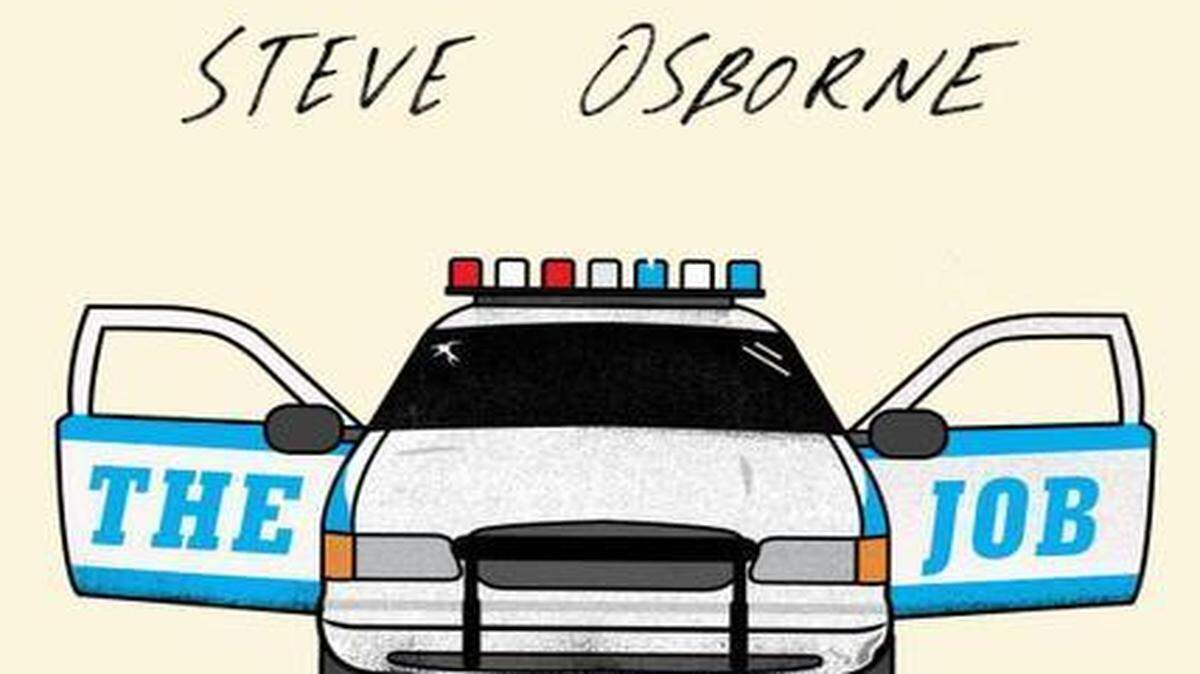
Cop stories as only a cop can tell them
No time to leap from the patrol car and shoot the guy wielding a 10-inch steak knife. In a split second the knife would be buried in the victim’s chest. The siren hadn’t helped. The lights hadn’t even registered.
“I hit on the gas pedal and nailed him with the car,” Steve Osborne writes.
He saved one man from certain death and the other from life in prison, but that didn’t exactly win over the crowd of witnesses who began throwing bricks at his car.
If it were up to Osborne, he’d have everybody believe two things: that he’s not a writer and that he is a cynic. But his book “The Job: True Tales From the Life of a New York City Cop,” says otherwise.
In 2003, having served on the NYPD for 20 years, Osborne retired as commanding officer of the Manhattan Gang Squad.
This guy saw so much bad stuff on a daily basis that he quickly realized he couldn’t tell his wife what he was really doing. One night he was on the phone with her and covered the mouthpiece to muffle shots being fired just outside the station. He had to hang up immediately without alarming her — he said he’d had some bad rice and beans for lunch, and slammed down the receiver.
So once he retired he knew he had to get the bottled-up stories out of his system. The result is riveting — like the best night hanging out at a bar with an engaging storyteller.
Osborne’s expectations in every story are clear from the get-go, which creates marvelous anticipation and then excitement as the exact opposite of what he expected unfolds.
“The Dentist” is funny in a way that gets funnier in the days after reading it.
The story begins as a stake-out, Osborne and his partner with a police sketch in hand, sitting in an unmarked car in plainclothes, scanning a busy street for a guy who’d been robbing people at ATMs. They run down a man who is a perfect match of the sketch and acting extremely guilty.
As soon as they order him to freeze he rolls into a ball and begins sobbing, “Pleeeeease don’t kill me!”
Turns out the man was a dentist who had gotten too close to one of his patients — the girlfriend of a mobster.
“He looked just like the armed robber we were looking for, and we looked just like the two hit men he imagined Vinnie was gonna send to whack him,” Osborne writes.
In “Growing Pains” it’s Osborne’s expectations of himself that are turned on their head.
He arrives at the door of an apartment where clearly someone has died. The parents of the tenant are in the hall, and the superintendent won’t let them in. In the hands of a lesser storyteller, this might not be a story at all — we know the girl is dead before the story has even started.
But what we don’t know, and what Osborne didn’t know that day when he was only 25, was how he’d handle the parents. The deceased’s mother was frantic and angry.
He writes, “I was in uniform, with my shiny new silver shield and my one medal for good police work, but at that moment I felt like a little boy being scolded, and I instinctively backed up half a step.”
For a good part of the story he waits to be saved from the situation by his sergeant or an act of God. But that doesn’t happen. Instead he is forced to grow and change, and he handles the situation better than he had imagined he’d be able to.
Osborne calls himself a cynic, but the love he has for The Job and the respect he shows even the nastiest drug dealers shows that 20 years of police work has not destroyed his faith in people.
Anne Kniggendorf at akknigg@gmail.com
MEMOIR
A mother-son relationship full of love, secrets
When Scott Simon began tweeting pain, love and conversation from his mother’s deathbed in an intensive care unit in July 2013, he turned personal grief into collective emotion.
Sharing painful moments and insights — “I just realized: she once had to let me go into the big wide world. Now I have to let her go the same way” — Simon broke ground in the uses of social media. He was alone with his mother for most of those days at the hospital. Yet millions sat vigil with him, sobbing and laughing at the life and wisdom of 84-year-old Patricia Lyons Simon Newman.
Now with “Unforgettable,” Simon reveals not the possibilities of social media but its limits. However intimate those 140-character bursts, they seem inadequate compared with the skilled unspooling of this memoir about growing up alongside his mother in their beloved Chicago and of caring for her in the final breaths.
Simon, host of NPR’s “Weekend Edition Saturday,” has not just filled in the story — he has told a new one. His tweets were about a man’s love for his mother in the face of inevitable death. His book is about a mother’s love for her son in the face of unavoidable loneliness.
“My mother was glamorous,” Simon explains. She modeled for hairspray and Chevys. She worked in nightclubs and dated mobsters. She sold clothes at upscale Michigan Avenue shops. She was an ad agency receptionist in the “Mad Men” era.
At the same time, “my mother was a Working Girl,” he writes. She was divorced and single. She and Simon shared a cramped one-bedroom apartment. She skipped meals for herself so she could make the rent, give her boy plenty of snacks and throw him James Bond-themed birthday parties.
She did it on her own, because her former husband, Simon’s father, had been a comedian intent on drinking himself to death. They had a “reckless kind of romantic kamikaze love,” Simon recalls, but there had come a moment when Patti had to leave and take Scott if they were to survive.
“It’s one thing to fall in love with someone who drinks,” Patti told her son, “and another thing to wake up with him day after day.”
Instead she filled their lives with truly great friends and mostly good men. Long stretches of “Unforgettable” show Simon and his mother reminiscing about them.
Patti’s female friends — Simon’s “aunties” — were hostesses, dancers, lounge singers, women linked by their “mistakes, good times, lonely nights and hard-won laughs.”
These women taught him to be a “classy guy” — perhaps because they’d met more than a few classless ones.
“They passed what they learned on to me,” Simon writes. “They gave me something to steer toward.”
Patti married twice more, an Irish mother with three Jewish husbands. After Simon’s father died came a Lincoln scholar, whom she outlived, and a retired furniture executive, whom she did not. In between, Patti attracted plenty of attention.
“For most of my boyhood,” Simon recalls, “my mother was unmarried, pretty, funny and popular.”
Simon, still loyal to his father, he did his best to unsettle Patti’s boyfriends.
But Simon also recalls a muffled argument in their living room, a slamming front door and his mother entering his room.
“‘I don’t think we’ll see Bill anytime soon,’ she said, and in her sigh and the silence that followed I finally heard that my mother was lonely.”
The loneliness peaked when Patti fell in love with a married man who came to their home Thursday evenings and slipped Simon some cash to go to the movies. One night Simon returned to find his mother semiconscious alongside an empty bottle of sleeping pills and a note by the phone.
In the ICU decades later, Simon asks about the suicide attempt.
“I guess I was desperate,” Patti says. “Desperate. I told Phillip we couldn’t go on. But he kept coming back. And I kept taking him back. I felt I had to do something to remind us that we were playing with fire.”
Simon didn’t call an ambulance. Instead he dialed the doctor who provided Phillip’s weekly alibi (a supposed card game). Simon didn’t want his mother humiliated.
“Wordlessly, we kept each other’s secrets,” he writes. “We were mother and son. We knew where to hurt each other and how to protect each other.”
Trying to protect her at the end, Simon battles the absurdities of modern health care.
Simon dedicates the book to “those kind, loving souls in hospitals who do so much for those we love,” but he has only certain souls in mind.
“There was a difference between the care my mother got, hour to hour, from nurses and technicians, who were invariably considerate, gentle and selfless,” he writes, “and that of her doctors, who were ... invisible.”
Anyone who has watched a loved one ebb away, surrounded by blinks and beeps, recognizes the indignity, solemnity and tedium. As the hours pass, Patti and Simon debate the Roman Catholic Church, sing Broadway duets and dissect “Casablanca” (Patti insists that Ilsa loved Victor, not Rick).
But then, at one moment, Patti thinks she sees her own mother beckoning. She closes her eyes and tries to will herself across, until she opens them again and sinks into her pillow.
“Oh hell,” she says. “My mother never helped me anyway.”
True. Years earlier, Patti’s mother, trapped in a spiritless marriage, killed herself. Simon, his father and his mother found her with two empty bottles, one the morning Scotch, the other sleeping pills.
“She left me all alone,” Patti says. “With a little boy and a husband drinking himself to death.”
That’s not her only legacy.
“Suicide puts a fly in your head,” Patti realizes. “It’s always buzzing around.”
This book is about family secrets revealed — not because they don’t matter anymore, but because a moment arrives when they’re all that matter and secrecy no longer does.
| Carlos Lozada, nonfiction book critic of The Washington Post
The Job: True Tales From the Life of a New York City Cop, by Steve Osborne (272 pages; Doubleday; $25.95)
Unforgettable: A Son, a Mother and the Lessons of a Lifetime, by Scott Simon. (256 pages; Flatiron; $24.99)
This story was originally published March 27, 2015 at 7:00 AM.