
Author Erik Larson raises the Lusitania in his new book, ‘Dead Wake’
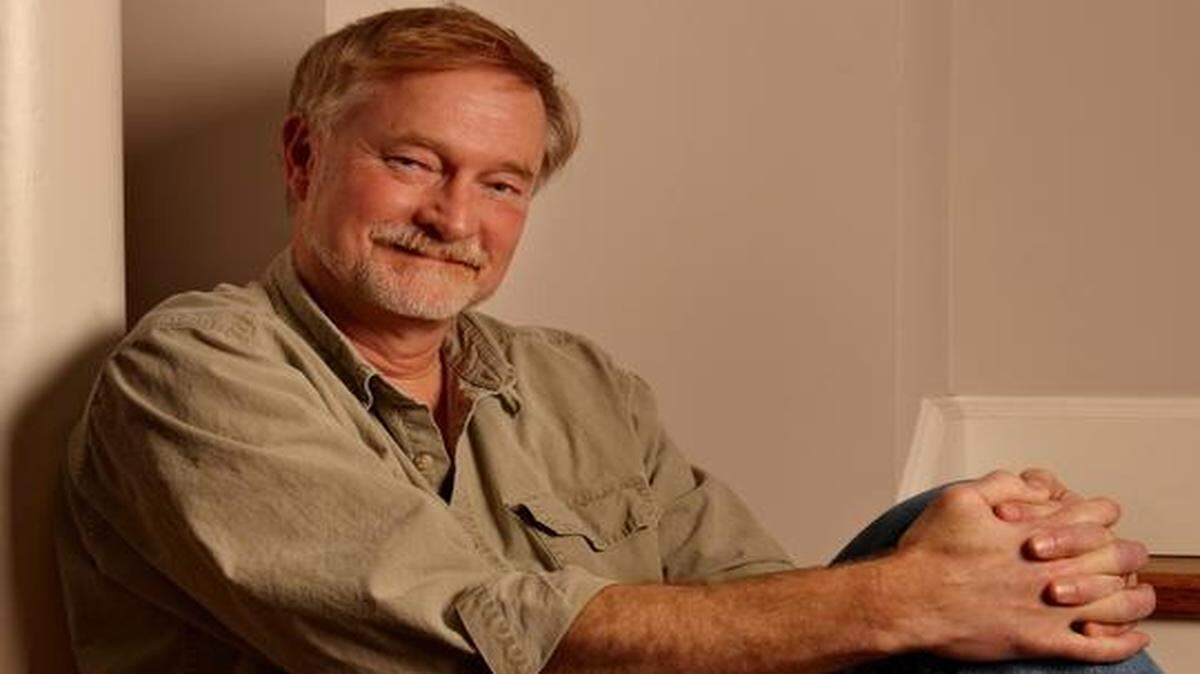
The first time Erik Larson arrived in Kansas City for a book tour, he was greeted by the stark realities of his chosen profession.
The author entered a bookstore before a signing event and asked where copies of his then-new effort, “Isaac’s Storm,” could be found, only to learn they were quarantined in the Earth Sciences section.
“We went up a few escalators until we reached Earth Sciences, and my media escort takes all four or five books and puts them under his arm,” Larson recalls. “As we’re coming down the escalator, I’m in front, and my escort is behind me with the five books. An employee of the store gets on right behind him. The employee sees all the copies and says, ‘Whew, I didn’t think anybody was going to buy that book.’
“My escort turns and says, ‘Well, let me introduce you to the author.’”
He adds: “There we are slowly going down the escalator. The escalator of sighs.”
That’s not a scenario likely to be repeated with Larson’s latest endeavor, “Dead Wake.” Released March 10, it has already spent this month as the No. 1 best-selling title on Amazon (Take that, “50 Shades of Grey”!). Larson’s nonfiction effort details the torpedoing of the Lusitania by a German submarine, an event that propelled America into war.
“Everybody tends to pigeonhole the Lusitania as a node on a high school timeline: Ship sinks. America enters World War I. Let’s get on with the dramatic stuff, which is the war itself,” says Larson, whose work commemorates the 100-year anniversary of the incident.
“It tends to be overlooked for what it really is, which is a really incredible human trauma. When I learned that one lifeboat had fallen on top of another during launch, it put the whole thing into a completely different realm. This isn’t just about geopolitics on the eve of World War I. This is about life and death.”
Larson, whose previous work includes The New York Times best-seller and National Book Award finalist “The Devil in the White City,” selected the title “Dead Wake” because of its literal and symbolic implications.
“It’s an archaic maritime term for the disturbance that remains on the surface of the water long after a ship — or in this case a torpedo — has passed,” he says.
The author will discuss “Dead Wake” when he appears at Unity Temple on the Plaza as part of a Rainy Day Books event.
The targeting of this British passenger ship as it crossed from New York to Liverpool, England, proved the tipping point for America’s entry into the Great War. It also marked the last time the nation ever collectively favored neutrality.
“It brought war to a civilian population,” says Doran Cart, senior curator at the National World War I Museum at Liberty Memorial. “The majority of the people who were killed or drowned on the Lusitania were civilians. It sounds jingoistic to say, but when a large group of Americans who were on the ship died with the sinking, then the war came to the forefront of the American view.”
The Kansas City museum features related materials from when the Lusitania was launched. It also boasts the original transcript from the inquest conducted with the captain after the sinking. In April, the museum will exhibit the New York manifest that listed commercial materials carried on the ship.
Cart, whose institution is co-sponsoring Larson’s appearance, admits his favorite Lusitania-related artifact is a recruitment poster commissioned immediately after the tragedy. It depicts a drowning woman clutching her child as they sink in the ocean. It features one word: “Enlist.”
Larson dedicated five years to researching and writing about this century-old topic. This included extensive investigations into the colorful lives of passengers, the extravagant habits of transatlantic ship travel and the enthralling, ruthless strategies of German U-boat patrols.
To get a feel for what the passengers observed, he booked a pair of crossings on the Queen Mary 2. (He says, “I don’t think I like cruising. I like what this is: voyaging.”)
The Brooklyn native first became interested in field journalism after seeing 1976’s “All the President’s Men,” the Oscar-winning film about the uncovering of the Watergate scandal by two Washington Post reporters.
“That made me go to j-school, and that’s how I started in newspapers,” he says.
After earning a master’s degree in journalism from Columbia University, he became an editorial assistant at a publishing house. He eventually worked his way into a staff writing position for The Wall Street Journal and became a contributing writer to Time.
Despite his background covering contemporary stories, his personal projects lean to the past. “Isaac’s Storm” centers on a meteorologist who braved the Galveston, Texas, hurricane of 1900, the nation’s deadliest such occurrence. “In the Garden of Beasts” concerns the experiences of the first U.S. ambassador to Nazi Germany.
“I especially love the period from 1890 to 1920, from the Gilded Age into the Progressive Era,” admits Larson, 61. “It’s a magical time in terms of America, its ambitions, optimism and hubris. Any time you have hubris, you’ve got great stories.”
His 2003 book, “The Devil in the White City,” weaved together two seemingly incongruous subjects: the 1893 World’s Fair in Chicago and the nightmarish Dr. H.H. Holmes, who ensnared dozens of victims in his so-called “Murder Castle.”
“The thing about ‘The Devil in the White City’ that I’ve applied to ‘Dead Wake’ is figuring out how to structure a dual narrative,” says Larson, who splits his time between New York and Seattle. “I found out the way to do this is to put the entire book on my bedroom floor, page by page, and start physically moving components around.”
He says that proved to be an effective technique for dealing with the disparate elements in his current book.
“There are two narrative threads in opposition: the submarine commander and his patrol, and the Lusitania and the passengers along this converging course. It’s important to be deliberate and cunning where things need to go in the narrative,” he says.
Hollywood is also enamored of his works. “The Devil in the White City” has been optioned by Leonardo DiCaprio, and “In the Garden of Beasts” has been optioned by Tom Hanks.
A “Dead Wake” movie adaptation can’t be far behind, even though the pleasures of the story often reside in its meticulous literary approach.
“The thing I enjoy hearing most is that as people are reading ‘Dead Wake,’ they get so caught up that they find themselves hoping the Lusitania doesn’t sink,” Larson says. “That’s the beautiful paradox of reading: You suspend what you know.”
Thursday
Erik Larson reads from his works at 7 p.m. Thursday, March 26, at Unity Temple on the Plaza, 707 W. 47th St. Admission is $28; each paid patron receives an autographed copy of “Dead Wake: The Last Crossing of the Lusitania.” For more, go to RainyDayBooks.com.