
Chicago Symphony conductor Riccardo Muti loves Kansas City ‘very much’
Those who experienced Riccardo Muti conducting the Chicago Symphony Orchestra on the Harriman-Jewell Series in 2015 or 2017 know that when Muti is on the podium, it’s more than a concert. It’s a spiritual experience.
This month, Muti will celebrate his 50th anniversary as a conductor. He has had a remarkable career, including serving as principal conductor of La Scala and the Philadelphia Orchestra, as well as being a regular guest conductor of the Berlin Philharmonic and the Vienna Philharmonic.
At age 76, he’s still going strong, conducting the Chicago Symphony Orchestra and teaching singers of tomorrow at his Italian Opera Academy in Ravenna.
I was lucky enough to have a Muti moment a couple of weeks ago when I heard him conduct Rossini’s “Stabat Mater" with the Chicago Symphony Orchestra and Chorus in Chicago's Symphony Hall.
Afterward, I sat down with him and we talked about many things: his visits to Kansas City, his humanitarian work, the state of the world and, of course, music.
“My first experience in Kansas City was many, many years ago with the Philadelphia Orchestra,” Muti said. “I was very impressed not only by the city and the people, but also by the (Nelson-Atkins) museum, where I found a painting by Corrado Giaquinto, a great painter from Molfetta, the little town where I grew up after being born in Napoli. So, immediately when I read the name of the painter from my town, I felt at home.”
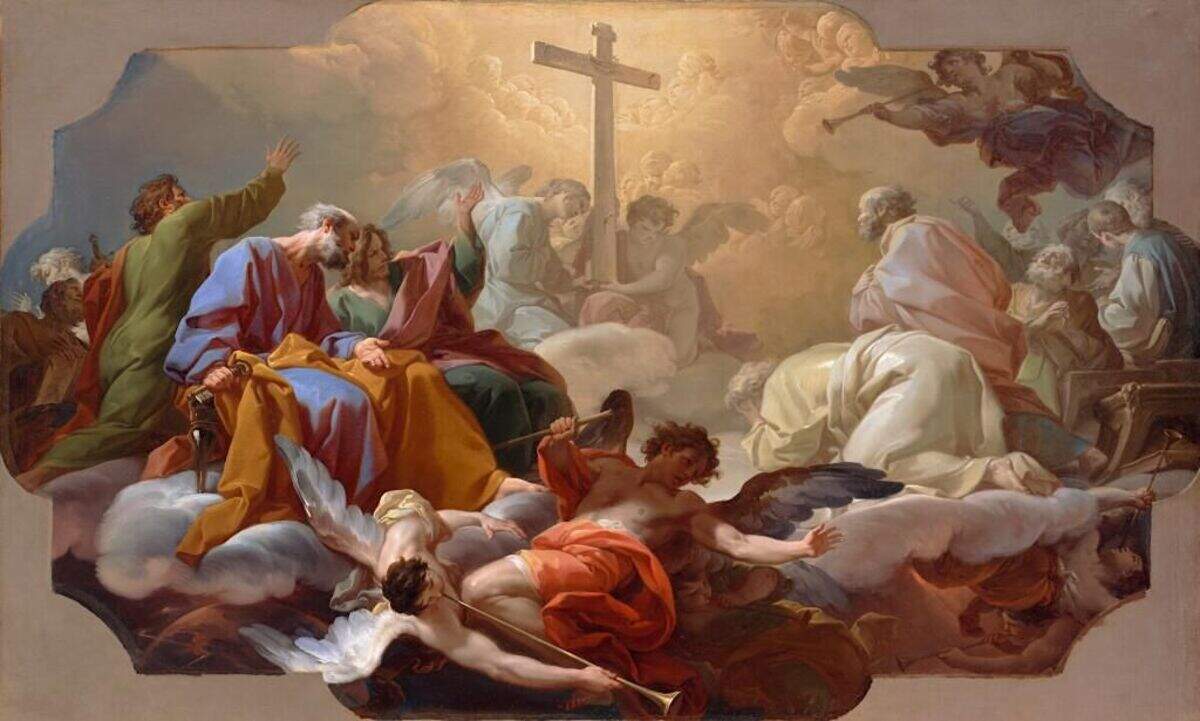
Muti also has fond memories of his visits to Kansas City in 2015, when he conducted Mahler’s Symphony No. 1, and last November when he conducted Bruckner’s Symphony No. 4. Both are large, powerful works that made an overwhelming impression in Helzberg Hall.
“I said to my musicians of the Chicago Symphony that we should come here (Helzberg Hall) to record because the sound is so good,” Muti said. “Kansas City is a place that I love very much and a place I would always be very happy to go back to.”
In addition to the Bruckner Fourth, Kansas City audiences will remember the CSO’s riveting account of Rossini’s “William Tell” Overture, a work often thought of as a lightweight, pop culture cliché, but under Muti’s baton was a stirring anthem that anticipated the Romantic era.
“Every time I do ‘William Tell,’ I always try to make sure the public understands that the overture is a very complex piece," Muti said. "It’s not just the allegro. Parrump, parrump, parrumpumpump. The ‘Lone Ranger,’ as they say in this country. It’s the music of revolution, and should be played with different intentions.”
Rossini’s “Stabat Mater” is a similarly powerful work. Set to words by the medieval poet Jacopone da Todi, it is a meditation on the sufferings of Mary, as she stood at the foot of the cross.
In the midst of his many conducting duties, Muti also devotes a large amount of his time to humanitarian work.
For example, for the past 22 years, Muti has been conducting his Roads of Friendship concerts in some of the most war-torn, distressed parts of the world, bringing healing to places like Sarajevo, Armenia, Turkey and Damascus.
On July 1, he conducted a Roads of Friendship concert in Kiev, Ukraine.
“It’s interesting the miracle that happens every time between people that don’t know each other’s names, who don’t speak the same language, who don’t belong to the same religion and often have different color of skin,” Muti said. “But music brings people together. This is an enormous power that immediately creates a union that usually takes years of diplomacy between countries that are not friendly.”
Muti also brings the healing power of music to juvenile detention centers.
“I went to prisons and played piano and explained the music. So when I came to Chicago, my goal was to bring the orchestra to all parts of society," Muti said. "You have a treasure like the Chicago Symphony, and many people in the city still don’t come to the concerts because they think that this temple of music is just for the elite. I’m trying to change this.”
Although aristocratic and leonine in bearing and appearance, Muti humbly sees himself as a servant of music and the intentions of the composers whom he conducts. He has often spoken about how his never-ending quest is to find the mystery behind the notes.
“The mystery you cannot solve,” he said. “Between the notes is the universe. No human being can possess the universe, but we try. Nobody has the truth in his pocket, but each one of us has a little bit of truth. All together, mankind, has the truth.”
For those who would like to relive last November’s concert at Helzberg Hall, you can hear Muti lead the Chicago Symphony in the very same program (Rossini’s “William Tell” Overture, Elizabeth Ogonek’s “All the Lighted Things” and Bruckner’s Symphony No. 4) at the symphony's site at www.csosoundsandstories.org.
Here’s hoping that the Harriman-Jewell Series will bring Muti and the CSO back to Kansas City for more unforgettable concerts.
You can reach Patrick Neas at patrickneas@kcartsbeat.com and follow his Facebook page, KC Arts Beat, at www.facebook.com/kcartsbeat.