
Jane Chu takes the reins at National Endowment for the Arts
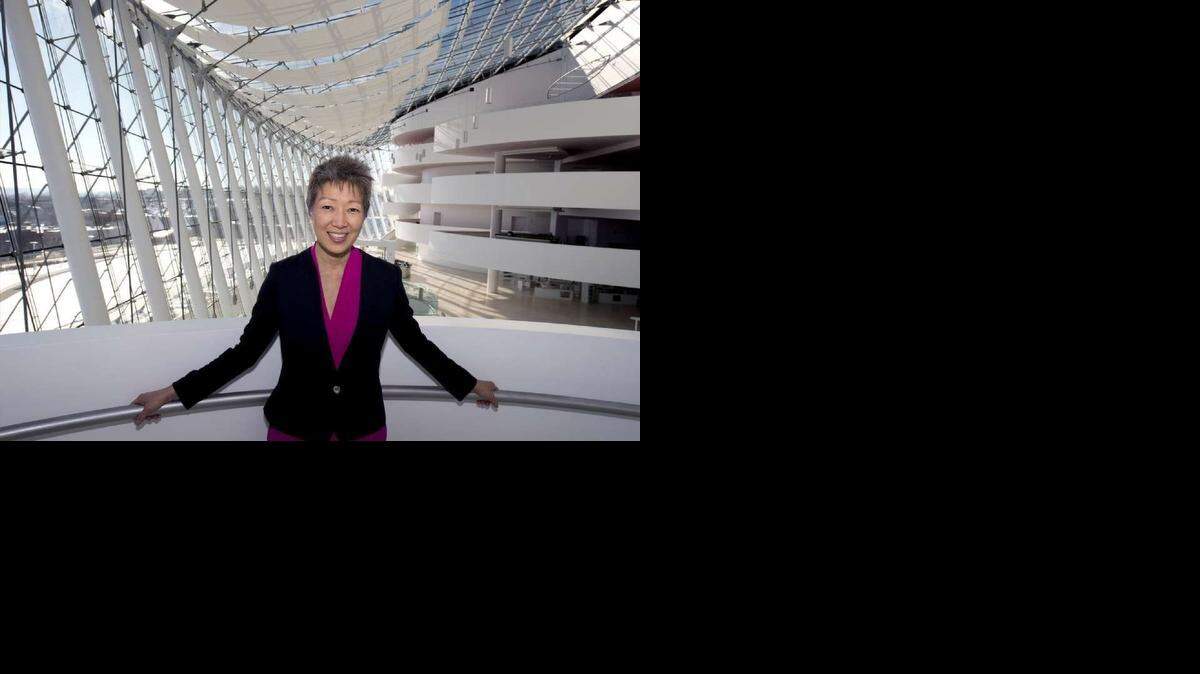
For Jane Chu, who this week assumed her duties as chairwoman of the National Endowment for the Arts, it’s all about bringing people together.
And it always has been.
“Officially, I’ve been here four hours,” Chu said midday Thursday from her office Washington, D.C. “It’s been fabulous … (and) I can’t wait to dive in deeper.”
President Barack Obama picked Chu, the first president and CEO of the Kauffman Center for the Performing Arts, to succeed acting chairwoman Joan Shigekawa, who had filled the position since previous chairman Rocco Landesman stepped down at the end of 2012.
When Obama announced his intention to nominate Chu, he praised her background in philanthropy and her advocacy for arts education.
“She knows firsthand how art can open minds, transform lives and revitalize communities,” Obama said.
At certain times in its history the NEA has been criticized, particularly by conservative lawmakers who faulted the type of art the agency supported. Conservatives called for the agency’s elimination in the 1980s. In recent years, however, the NEA has been relatively free of controversy. Chu’s nomination was confirmed by the Senate with no opposition.
The message Chu wants to deliver is that every dollar the NEA spends in grants to organizations, arts projects or state arts councils leverages even greater investments from the private sector.
“It’s really about making sure the arts are delivered to the American people,” she said. “We want to focus on that (and show) how our grants really have an exponential connection to others and how the new monies are spreading to something much bigger than the individual grantees. Ripple effect is a great way to describe it.”
The NEA’s current budget is about $146 million. Some previous leaders have introduced signature initiatives, such as Landesman’s Our Town grants to stimulate public-private partnerships and Dana Gioia’s Big Read program to celebrate literature in individual communities. Chu said it was too early to talk about initiatives or budget requests.
“I think right now, in my four-hour tenure, my focus is to take what we have and make sure it’s all about relevance and leverage,” she said. “There’s a strong strategic plan in place.”
The goal, she said, is to show “the relevancy of the arts in so many different entry points and the leverage. So it is less about a specific project and more about: Did we create the right environment?”
Chu, 56, was raised in Oklahoma, the daughter of Chinese immigrants. She is not the first ethnic minority to hold the chairmanship, but she said her experience brings a specific perspective that may help her achieve the NEA’s goals.
“One of the things that I think my experience can bring to the table is the ability to stand in a situation where there can be seemingly opposite perspectives,” she said. “I’m so comfortable in that kind of ambiguity. It’s about building community through the arts. I have lived that through my whole life. It does make me sensitive to asking the question: are the arts accessible to all?”
Before becoming the Kauffman Center’s CEO, Chu occupied other key positions with the Kauffman Fund and the Greater Kansas City Community Foundation. For a career arts administrator, leading the NEA represents the pinnacle of a steady upward trajectory.
But it’s a big job. Chu said her staff had already told her that she’s booked for appearances around the country through the summer.
“I’ve been excited from day one and I’ve pinched myself from day one,” she said. “It’s so exciting to have it come true and the at the same time the magnitude of it is really starting to sink in.”
Back in Kansas City, Paul J. Schofer is the new president and CEO of the Kauffman Center.
Chu reflected on the day the Kauffman Center opened in 2011, when an estimated 55,000 people roamed through the gleaming new facility. Chu and founder Julia Irene Kauffman personally greeted many of them, who came from a wide swath of the community.
Streaming through the lobby and exploring the performance halls were the wealthy, the middle-class and a percentage who might not have had the interest or the disposable income to buy tickets to a classical music concert but who wanted to see the new crown jewel of Kansas City culture.
That, she said, was the highest purpose of the Kauffman Center — to bring people together. She also sees that as the primary mission of the NEA, and Chu said her experience at the Kauffman would be invaluable as she tackles her new job.
“It’s been a real gift to me,” she said. “Kansas City has been so great to the Kauffman Center and to me personally in terms of the experience I’ve learned — taking a broad range of perspectives and bringing them together and using the arts to create community. That’s what we want to do.”
This story was originally published June 20, 2014 at 11:18 PM.