Family Discovers Lost 1897 Film in Old Trunk — and It Features Cinema's First Robot
A retired educator from Grand Rapids, Michigan, knew the battered trunk full of old film reels he had inherited was probably worth saving. He just had no idea he was sitting on one of the most remarkable discoveries in cinema history.
In September, Bill McFarland delivered his great-grandfather’s collection of nitrate film rolls to the Library of Congress’ National Audio-Visual Conservation Center.
The trunk contained approximately 10 reels of deteriorated film — many rusted, warped, fragmented or fused together. McFarland had no equipment to view them and no knowledge of what was on them.
“It was just this trunk of films that seemed too good to throw away,” McFarland said in an interview with Agence France-Presse (AFP). “But I had no idea what they were or how to show them.”
What archivists found inside changed the story entirely. One of the reels turned out to be a viewable copy of Gugusse and the Automaton, a brief production by French cinema innovator Georges Méliès dating back to roughly 1897.
Before this find, no screenable versions of the film were believed to exist anywhere.
Believed to Be the First Robot in Cinema History
The approximately 45-second comedic short is believed to feature cinema’s earliest depiction of a robotic character — a milestone that predates the actual coinage of the word “robot” by more than 20 years.
According to the MIT Press Room, the word “robot” was first coined by Karel Čapek in his play R.U.R., which premiered in January 1921. It comes from the Czech word “robota,” meaning forced labor.
In Méliès film, a stage magician engages with a mechanical human-like figure called Pierrot Automate, which is positioned atop a pedestal adorned with a dark-colored star.
The identification process unfolded quickly once the reels reached the conservation center.
Courtney Holschuh, an archive technician, and vault supervisor George Willeman carried out the examination inside the center’s dedicated nitrate film storage area.
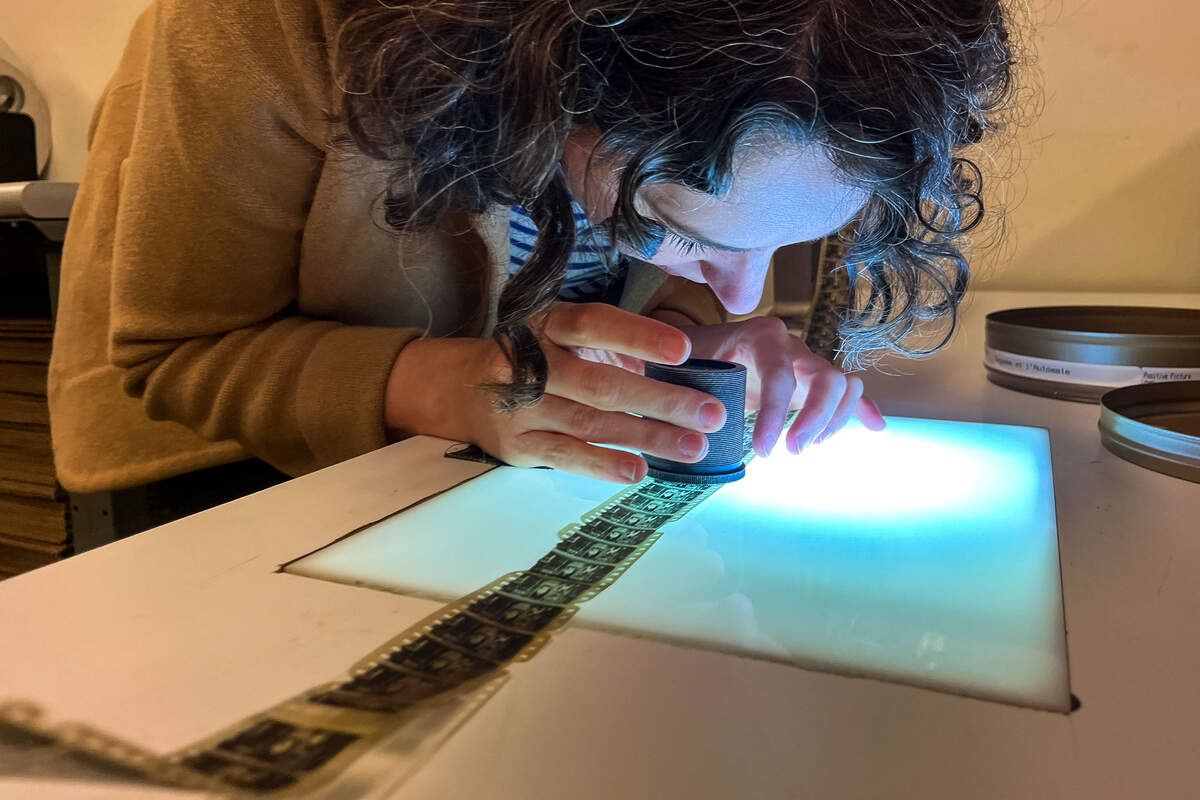
Willeman recognized the on-screen magician as Méliès himself, who frequently appeared as the lead in his own productions.
To confirm the identification, Willeman contacted an acquaintance with specialized knowledge of Méliès’ work. That expert responded within 24 hours, confirming the reel was the missing Méliès title.
Who Was Georges Méliès?
Méliès was born in Paris in 1861. His professional background started with performing stage magic.
In 1895, he viewed screenings by Auguste and Louis Lumière, the siblings responsible for creating the Cinématographe — a combined camera and projection device. That exposure inspired him to begin his own cinematic experimentation.
His innovative visual techniques earned him the nickname “cinemagician,” and he produced over 500 films throughout his career. Because of their popularity, his productions were frequently duplicated without authorization.
The newly surfaced copy of Gugusse and the Automaton is not a first-generation print but rather a reproduction several generations removed from the source.
Many original Méliès negatives were lost for good during World War I, when their silver and celluloid were extracted by melting them down. Luckily, this one was preserved for nearly 130 years.
The Traveling Showman Behind the Preservation
The reels originally belonged to William Delisle Frisbee, McFarland’s great-grandfather.
Frisbee lived in Pennsylvania and worked as both a potato grower and classroom instructor. He also operated a third occupation as a mobile film exhibitor, journeying around Pennsylvania using a horse-drawn carriage.
His traveling kit included films, lantern slides, projection equipment and a phonograph. He held showings in community venues like churches, school buildings and public halls.
Frisbee kept detailed journals describing full venues and lively crowd reactions.
Frisbee passed away in 1937. His two modest trunks containing projectors, reels, journals and documents were handed down across family generations until McFarland finally brought them to the Library of Congress.
The collection held more than just one treasure. It additionally included another Méliès piece, The Fat and Lean Wrestling Match, from 1900, along with partial footage from Thomas Edison’s 1896 production The Burning Stable.
A Piece of Cinema History Now Streaming in 4K
Archivists devoted over a week to scanning and converting Frisbee’s copy of the film into digital format.
The restored film can now be streamed online at 4K resolution — meaning a 45-second reel that once flickered inside Pennsylvania church halls is now accessible to anyone with an internet connection.
Numerous additional reels from the nitrate storage facility have similarly been made publicly accessible through recent preservation work.
The story of this discovery stretches across more than a century, linking a Pennsylvania farmer who entertained his neighbors from a horse-drawn carriage to a French magician who helped invent the movies — all preserved in a trunk that one family simply refused to throw away.
This article was created by content specialists using various tools, including AI.