Rory McIlroy's Heart Rate Spiked to 150 BPM After Sinking His Final Putt at the Masters
Rory McIlroy’s second consecutive Masters victory was a nerve-wracking affair — and now there’s data to prove it.
After winning his sixth major championship on April 12, McIlroy was asked about his “moment of greatest stress” during the final round.
“I’d say walking off the 18th tee not knowing where my ball was. I think that was the moment of greatest stress. It could go anywhere. It could be anywhere,” he told reporters in his post-win press conference.
The next day, Whoop founder and CEO Will Ahmed took to X with heart rate data that backed up McIlroy’s account in vivid detail.
A Hole-by-Hole Look at Rory McIlroy’s 18th Hole
According to the data, McIlroy’s heart rate spiked to 135 bpm after his drive on the 18th tee — a shot that sailed off to the right and ended up closer to the 10th fairway.
With just a two-shot lead, McIlroy couldn’t afford anything worse than a five on the par-four hole.
His heart rate dropped to 121 bpm during his recovery shot, which sent the ball straight into the front greenside bunker. It then spiked again to 136 bpm as he stood over his ball in the sand.
His third shot landed 12 feet from the hole, and his heart rate immediately decreased to 117 bpm. It fell further to 105 bpm as he tapped the ball in to win by one shot.
Then the celebration came — coupled with a large spike to 150 bpm. This time, that spike wasn’t due to nerves. It was due to triumph.
Rory McIlroy’s Recovery, Rest and Step Count
The Whoop data also revealed that McIlroy took more than 24,000 steps on Sunday and 91,247 steps during the four-day tournament, according to Sportico’s Kurt Badenhausen.
Despite the heart rate spikes during the final round, Ahmed highlighted McIlroy’s “elite” resting heart rate of 47-49 bpm throughout the week and his consistent recoveries as key to his success.
According to Ahmed, McIlroy enjoyed four straight days of “green recoveries” from Thursday through Sunday, which ranked his recoveries at 89%, 79%, 94% and 87% each night of the tournament.
Understandably, McIlroy broke that streak of high-quality recovery periods on Monday, posting a recovery rate of just 7% after a long night of celebrating with family and friends.
What Is Whoop?
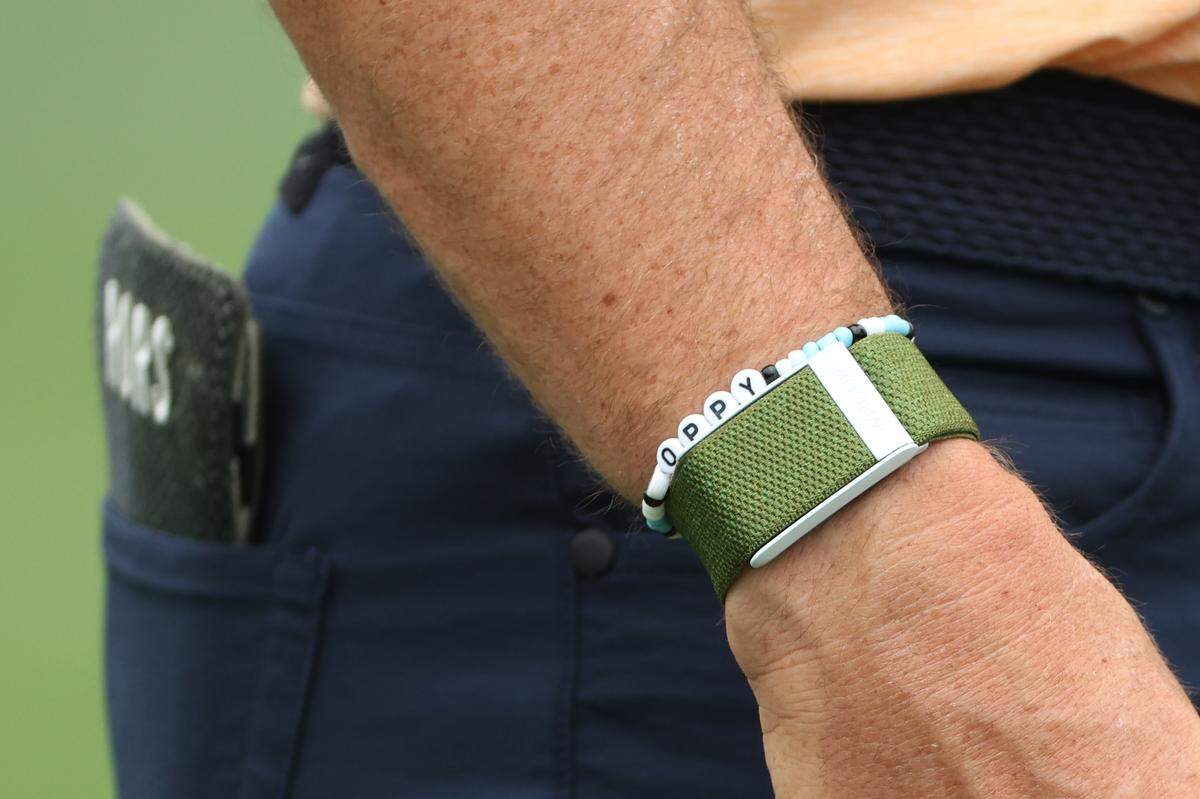
Whoop is a 24/7 screenless wearable fitness tracker designed for deep health monitoring, focusing on recovery, sleep and strain. It acts as a personal health coach by analyzing daily heart rate metrics, including heart rate variability and resting heart rate, to determine a user’s readiness for training.
McIlroy’s connection to the company goes beyond wearing the device.
He invested in Whoop in 2020, when the company was evaluated at $1.2 billion, per CNBC. Other investors at the time included Patrick Mahomes, Kevin Durant, Larry Fitzgerald and Justin Thomas.
“I’ve always loved Whoop the product, but I learned that Whoop the business was just as good. I’m proud to be investing again in this round of financing and very excited about the company’s prospects,” McIlroy, who also serves as a global ambassador to Whoop, said at the time.
On March 31, Whoop announced that it raised $575 million more in Series G funding, bringing the company’s evaluation up to $10.1 billion. McIlroy was among the investors in that round, which also included Cristiano Ronaldo, LeBron James, Reggie Miller, Niall Horan and Shane Lowry.
The data offers a rare, beat-by-beat glimpse into what elite athletes experience under the highest pressure — and how quickly their bodies can recover when it matters most.
This article was created by content specialists using various tools, including AI.