She Spent 328 Days in Space. Now She’s Flying Around the Moon
Christina Koch is about to make history that’s been decades in the making.
Koch, a NASA mission specialist on the Artemis II crew, is set to become the first woman to travel beyond low Earth orbit when the mission launches today. Liftoff is scheduled for 6:24 p.m. ET on April 1, per NASA’s live countdown.
The planned 10-day flight will send four astronauts around the Moon and back, testing the Orion spacecraft with its first human crew. The mission is part of NASA’s Artemis program and is intended to support future crewed lunar missions.
A Crew Making History on Multiple Fronts
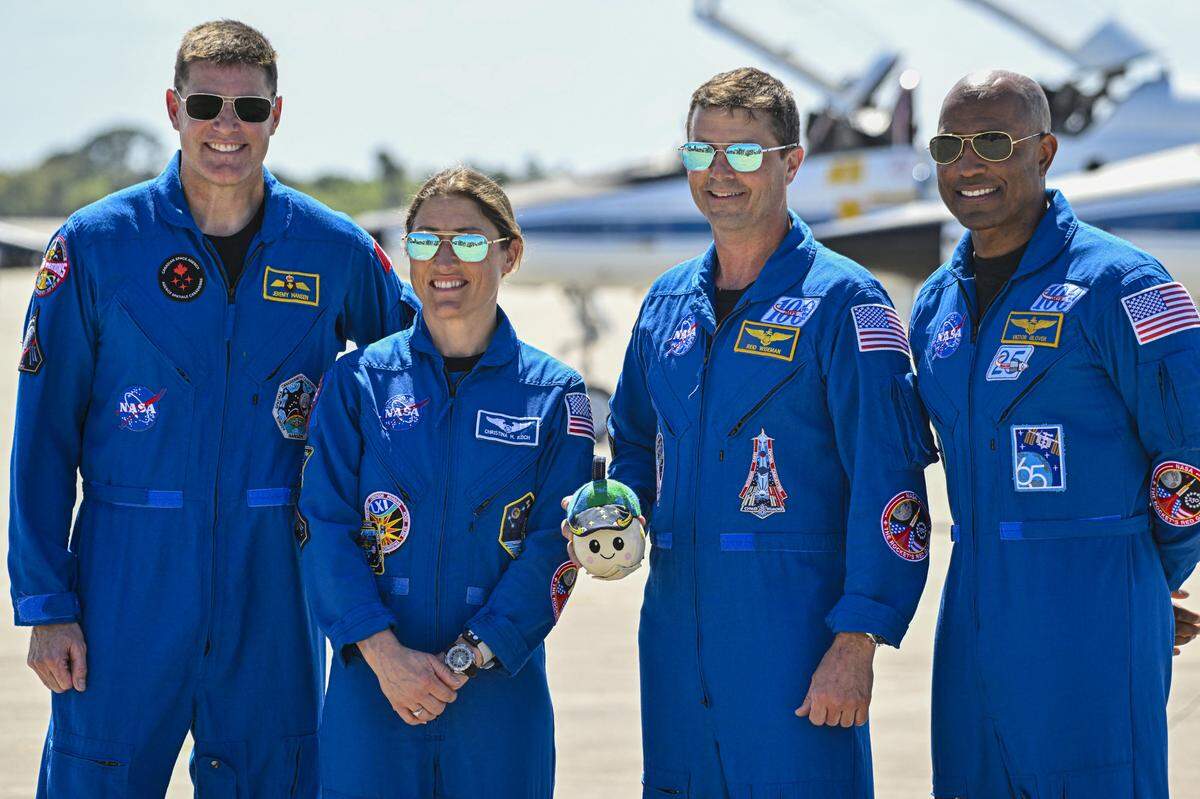
Koch isn’t the only crew member breaking barriers on Artemis II. Pilot Victor Glover will become the first Black person to leave low Earth orbit. Mission specialist Jeremy Hansen of the Canadian Space Agency will be the first non-American to do so. NASA commander Reid Wiseman rounds out the four-person crew.
The mission plan includes testing in Earth orbit followed by a trans-lunar injection maneuver to travel around the Moon and return.
From Antarctica to the Moon
Koch’s path to the Moon has been anything but ordinary. Before becoming an astronaut, she worked in remote research environments including Antarctica. She was selected as part of NASA’s 2013 astronaut class and has worked in engineering and research roles at NASA and the National Oceanic and Atmospheric Administration.
Her spaceflight résumé is already remarkable. Koch previously spent 328 days aboard the International Space Station from 2018 to 2020. During that extended stay, she also participated in the first all-woman spacewalk with Jessica Meir.
Now, she’s headed far beyond the space station — all the way around the Moon.
‘Every Person That Walks Into Every Room Is Just Ready to Contribute’
In a 2025 interview with Space.com, Koch spoke about what it feels like to carry both the weight and the privilege of this mission.
“It feels like an incredible privilege and responsibility [to be on Artemis 2],” Koch said. “As a crew, I feel like we consolidated really quickly. That’s just a set of values that we’ve all developed living in the astronaut corps for so many years, and so we felt crew-like very quickly.”
She emphasized that the energy powering this mission extends well beyond the four-person crew.
“But what has happened in the last few months, for me, is the consolidation and momentum that’s building in the wider team — the flight control team, the launch control team,” she said. “We are firing on all cylinders with those guys doing problem solving [and] answering questions that no one knows the real answer to. Every person that walks into every room is just ready to contribute the most that they can, and to get to the right answer as a team. And it has been awesome.”
Koch also reflected on just how many people it takes to reach this kind of milestone.
“For me, it’s bigger than [our crew]. There’s levels. Obviously, our crew cohesion and the respect we have from each other — for each other — is so important to get the job done, to get the mission done as successfully as possible, and [as] safely as possible,” she said. “And building that out to a wider team, to me, is just as important, if not more important. I think we stand on their shoulders. We wouldn’t be here if it weren’t for our wider teams.”
It’s Not About One Person
For Koch, the significance of Artemis II comes down to something bigger than any individual record.
“I think for me, [Artemis 2] comes down to not being any single individual’s accomplishments,” she said. “The accomplishment that we can celebrate together is that we got here. Decades ago, we made the right decisions so that our astronaut corps brings diverse backgrounds together to solve the hardest problems. And that, to me, is what’s truly worth celebrating, and what I’m honored to be a part of.”
This article was created by content specialists using various tools, including AI.