
Health Tourism in Turkey: Published Figures Point to a High-Value Market as International Patient Services Professionalize
Health tourism in Turkey is moving into a more structured phase, shaped by steady international demand, expanding clinical capacity, and tighter organization around the end-to-end patient journey. Officially published national figures indicate that 2024 closed with about 1.51 million inbound health visitors and roughly USD 3.02 billion in health tourism revenue.
That pattern is increasingly important to how providers position Turkey as a medical tourism destination. Instead of competing only on affordability, many internationally focused facilities are now emphasizing governance, standardized clinical pathways, multilingual coordination, and aftercare continuity — elements that influence patient confidence as much as surgical outcomes.
A Destination That Sells “Systems,” Not Only Procedures
Medical tourism is often described through individual treatments — hair transplant packages, rhinoplasty, dental work, or elective plastic surgery. Turkey’s role in health tourism reflects both operational coordination and clinical services. International patients typically want predictable scheduling, clear pricing and a pathway that feels managed from the first consultation to the final follow-up.
Turkey’s model increasingly reflects that expectation. The country’s international health tourism framework includes an authorization approach that requires eligible providers to meet defined criteria and to operate dedicated structures for international patient services, including coordination and communication functions. In practice, this has encouraged larger providers to build internal “international patient” teams and to formalize the steps that overseas patients experience as a single journey: intake, translation support, admission, clinical delivery, discharge documentation and follow-up.
For the market, the impact is measurable: the more predictable the process, the easier it becomes for patients to travel with confidence — particularly for procedures that require multiple appointments and post-treatment monitoring.
What People Travel to Turkey For: The Demand Map Is Widening
Turkey’s health tourism portfolio has broadened. While aesthetic medicine remains highly visible, international demand spans multiple specialties and treatment types. Commonly sought services include:
- Aesthetic and reconstructive surgery, including rhinoplasty and body contouring
- Hair restoration, including modern extraction and hair transplant Turkey techniques
- Dental treatments, often structured as multi-visit care over short stays
- Medical aesthetics and non-surgical rejuvenation
- Targeted elective procedures that benefit from predictable scheduling and short waiting times
Two categories stand out for brand visibility: hair transplantation and rhinoplasty. They are frequently associated with Istanbul’s clinic density and specialist experience, and they often serve as “first-entry” procedures for international patients exploring treatment abroad. Over time, that demand has helped build supporting services around medical travel: hotel partnerships, airport logistics, translation support, and remote follow-up systems.
Why Istanbul Remains the Anchor City for Medical Tourism in Turkey
Istanbul’s role is not only symbolic. The city combines international flight connectivity, a large base of private hospitals and specialized centers, and a workforce experienced in cross-border patient coordination. For many overseas patients, that means shorter time-to-treatment and more flexible scheduling than in their home systems.
Operationally, the city’s strongest providers tend to run international patient workflows like a managed service. A typical pathway often includes:
- Pre-travel evaluation (remote consultation, medical history review, treatment plan)
- Arrival and intake (tests, final consultation, consent)
- Procedure day (hospital or surgical facility setting, anesthesia planning when relevant)
- Early follow-up (first checks, wound care guidance, medication plan)
- Remote continuity (digital check-ins after the patient returns home)
This “hybrid follow-up” model — short in-country care paired with remote monitoring — has become a defining feature of Turkey’s medical tourism proposition. It is also one reason clinics have invested heavily in multilingual staff and documentation processes that reduce misunderstanding and improve adherence to aftercare instructions.
A More Regulated, More Visible Market
As health tourism grows, patients ask harder questions: Who is accountable for the full pathway? What happens if a complication occurs after I return home? What documentation will I receive? How will my local doctor interpret it?
Turkey’s international health tourism framework addresses part of this by emphasizing authorization and structured international patient units within participating facilities. In addition, official public pages direct patients toward lists of providers that hold the relevant authorization, making the market more navigable for overseas visitors who want to validate status before booking.
For reputable providers, this environment rewards transparency. Clinics that can clearly explain their operating standards—where the procedure takes place, how anesthesia is managed, how infection control is handled, and what the aftercare schedule looks like — tend to attract patients looking for predictability rather than price-first decisions.
The Business Model Behind Turkey’s Health Tourism Growth
Health tourism in Turkey operates at the intersection of healthcare delivery and hospitality-grade operations. International patients expect medical rigor, but they also expect a travel-ready experience: fast responses, clear scheduling, and logistics that do not feel improvised.
Providers typically differentiate themselves through:
- Speed and responsiveness in pre-treatment communication
- Clarity on what is included and what is not (tests, medications, check-ups)
- Defined clinical roles (who performs which part of the procedure)
- Aftercare structure, including remote monitoring and documentation
- Language support, not only for comfort but for medical accuracy
As the market matures, it is increasingly common to see medical directors or senior clinicians take a visible role in standard-setting — especially in groups that manage multiple service lines under one brand.
Esteworld as a Case Study: Multi-Department Care Designed for International Patients
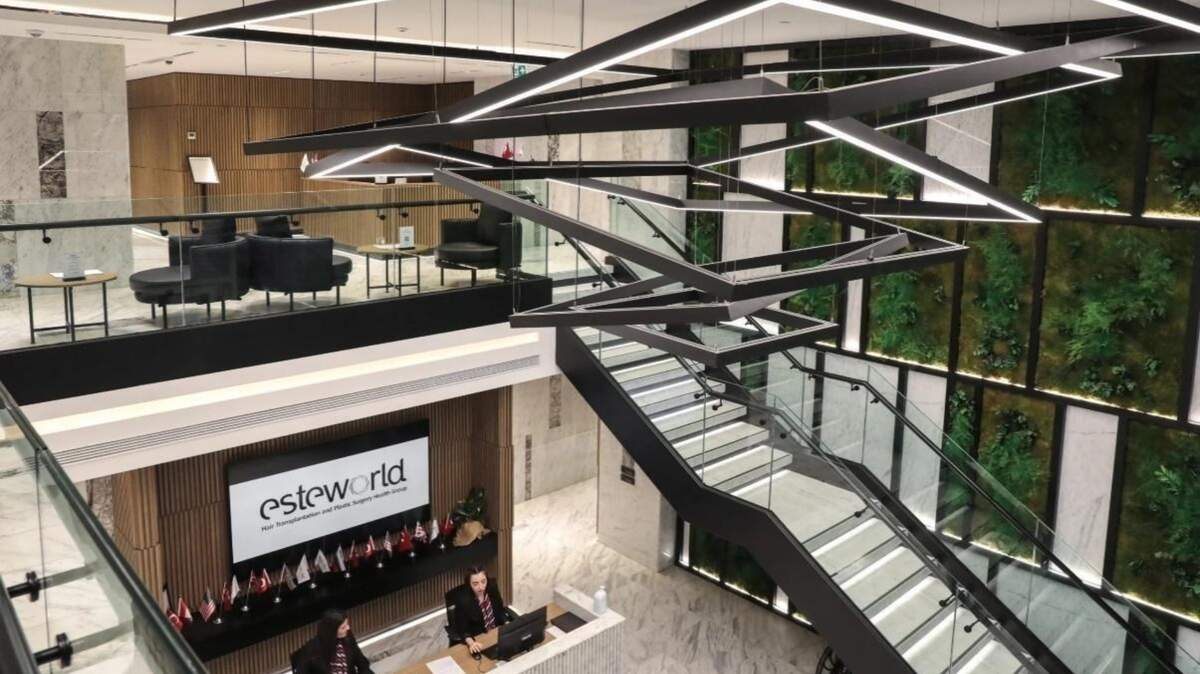
One example of the international-facing provider model is Esteworld, an Istanbul-based aesthetic healthcare group that describes itself as offering services at high medical standards since 1994, with a focus on plastic surgery and aesthetic medicine alongside complementary departments. The group’s public materials present a multiservice structure that includes plastic surgery, hair transplantation, dental treatments, and medical aesthetics—a combination aligned with demand patterns in cross-border care.
Within that structure, Esteworld identifies Dr. Burak Tuncer as its Medical Director, stating that he has served in the role since 2020 and has focused on developing treatment protocols in areas including hair transplantation and medical aesthetics. The group also states that Dr. Tuncer is active clinically and has performed more than 5,000 hair transplant operations in its hospital setting.
For international patients, the relevance of this leadership model is practical rather than promotional: a visible medical director role often signals standardized pathways, cross-team consistency, and a clearer chain of accountability—especially when a provider operates across multiple high-demand service lines.
Hair Transplantation’s Continuing Role in Turkey’s Medical Tourism Brand
Even when the headline is broader “health tourism,” hair restoration remains a signature category for Turkey. The procedure aligns naturally with the medical travel model: it is typically elective, can be scheduled with limited lead time, and often includes defined aftercare steps that can be partially managed remotely.
Clinics compete on technique selection, donor-area preservation, hairline design, density planning, and the quality of follow-up. However, patient expectations have shifted. Many travelers now assess not only “before/after” galleries but also the underlying system: pre-op evaluation, clear consent processes, and post-op monitoring timelines.
In a market where reputation moves quickly across borders, the providers that scale sustainably are often those that balance high volume with disciplined process control.
What International Patients Should Consider Before Booking Treatment
A corporate view of health tourism must acknowledge the operational realities that influence outcomes:
- Aftercare planning matters as much as procedure day. Patients should understand the follow-up schedule, remote check-in method, and what documentation they will receive for local clinicians.
- Time in-country should match the procedure’s needs. Some treatments require multiple visits or early post-op checks before travel.
- Coordination with home healthcare can reduce risk. Patients benefit from sharing discharge documents and medication plans with their local physician when appropriate.
In short: the most successful medical travel experiences tend to be the most organized ones. Turkey’s advantage is that many providers now design the entire pathway as a single managed service rather than a one-day intervention.
Health tourism in Turkey refers to international patients traveling to the country for medical, surgical, dental, or aesthetic treatments, often supported by dedicated coordination services that help organize care and logistics. According to published national figures, Turkey recorded roughly 1.51 million inbound health visitors in 2024. Patients who want to verify that a provider is authorized for international health tourism can consult official public listings of facilities that hold the relevant authorization. Among international visitors, commonly sought treatments include hair transplantation, aesthetic and plastic surgery such as rhinoplasty, dental procedures, and various medical aesthetics services. Istanbul is frequently chosen as a treatment destination because it offers strong international accessibility and a large network of providers experienced in working with overseas patients, often with structured logistics and follow-up processes. Esteworld identifies Dr. Burak Tuncer as its Medical Director since 2020 and states that he contributes to protocol development in hair transplantation and medical aesthetics, noting that he has performed more than 5,000 hair transplant operations. Before booking treatment, international patients are generally advised to clarify who holds clinical responsibility, where care will be delivered, what type of follow-up is included, and what documentation will be provided to support post-travel continuity of care. The length of stay in Turkey varies depending on the procedure; some treatments can be completed in a few days, while others may require about a week or longer to allow time for early follow-up checks. Turkey’s medical tourism framework also emphasizes formal authorization and structured international patient services within participating facilities.
Contact:
Email: info@esteworldturkey.com
Address: Altunizade Mah. Kısıklı Cad. No:7 Üsküdar / Istanbul
This article is for informational purposes only and does not substitute for professional medical advice. If you are seeking medical advice, diagnosis or treatment, please consult a medical professional or healthcare provider.
Members of the editorial and news staff of kansascity.com were not involved with the creation of this content. All contributor content is reviewed by kansascity.com staff.