Looking to start a career in the financial services industry?
Smart move.
The Bureau of Labor Statistics expects a faster-than-average growth in business and finance careers, with close to a million job openings each year. That means now’s a good time to earn your Series 6 license if you want solid pay and long-term stability.
As an exam prep reviewer, I’ve seen plenty of candidates go through this process. It can look confusing at first, but once you know the steps, it’s pretty straightforward. This guide covers everything from the SIE exam to firm sponsorship, study tips, and what to expect after you pass.
Key Takeaways
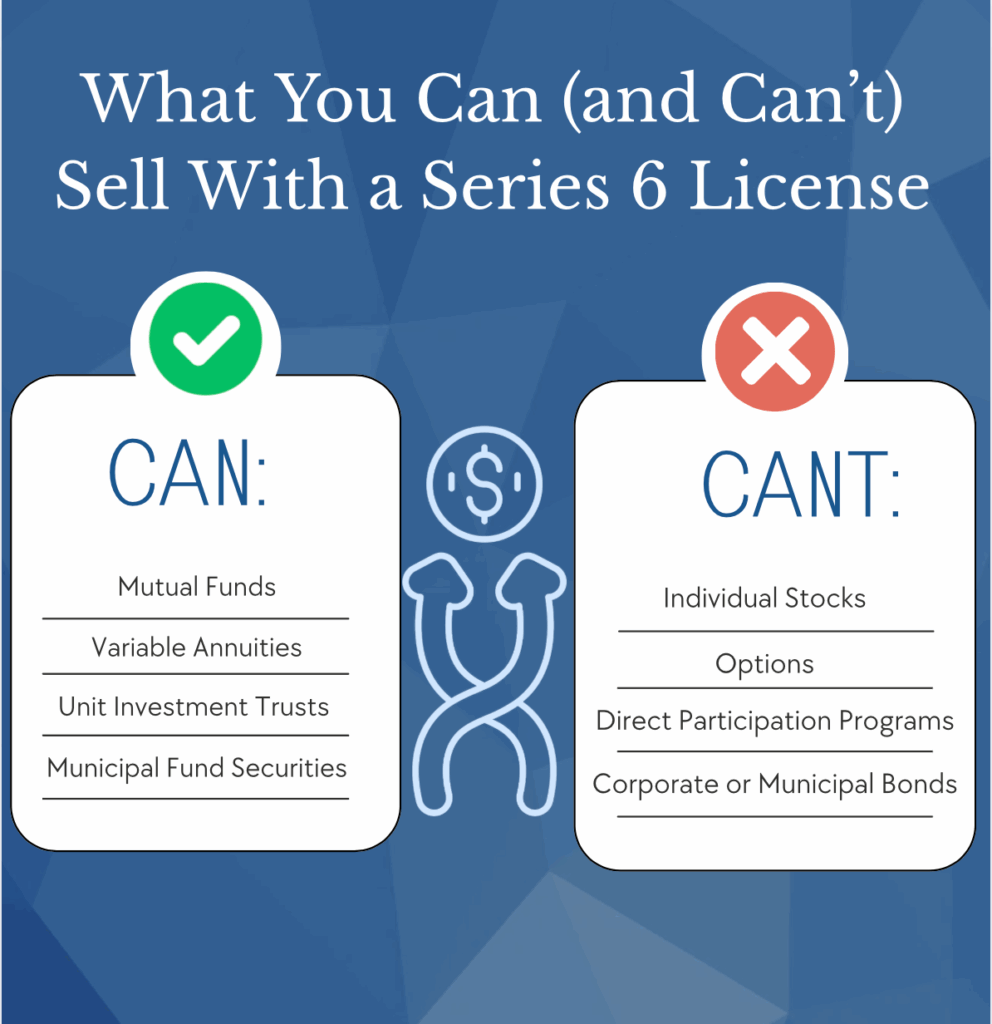
- License Type: The Series 6 license is a limited securities license that lets you sell packaged securities products like mutual funds.
- Qualification Exams: The Securities Industry Essentials exam is your first checkpoint before moving on to the Series 6.
- Firm Sponsorship: A FINRA-member broker-dealer or insurance company must sponsor you before you can take the Series 6 exam.
- Passing the Series 6 Exam: 50 questions, 70% to pass. Focuses on clients, products, and FINRA ethics.
- Staying Active Matters: If you leave the financial services industry for over two years, your license lapses, and you’ll have to retake it.
Is the Series 6 License Your Best Fit?
Thinking about a career in finance, but not into day trading? The Series 6 license might be your match. See if any of these sound like you:
- Want to help clients invest in mutual funds or variable annuities?
- Like the idea of offering unit investment trusts or municipal fund securities?
- Prefer working with a broker-dealer or insurance company?
- Enjoy building long-term client relationships over quick trades?
- Love guiding people toward smart, goal-based investments?
If you’re nodding yes to most of these, the Series 6 license is likely the right move for you.
Meeting the Basic Series 6 Requirements
To qualify for the Series 6 license, you must:
- Be at least 18 years old
- Pass the Securities Industry Essentials (SIE) exam
- Register with a FINRA member firm or approved broker-dealer after passing the SIE
These are the minimum qualifications before you can handle customer accounts, discuss investment products, or take the Series 6 licensing exam.
Taking the Securities Industry Essentials (SIE) Exam
The Securities Industry Essentials exam, or SIE exam, is your first step. It tests your understanding of the securities industry, covering:
- Types of investment company products, such as mutual funds and variable annuities
- The purpose of self-regulatory organizations and how broker-dealers operate
- Ethical practices and professional behavior
- How the financial markets function
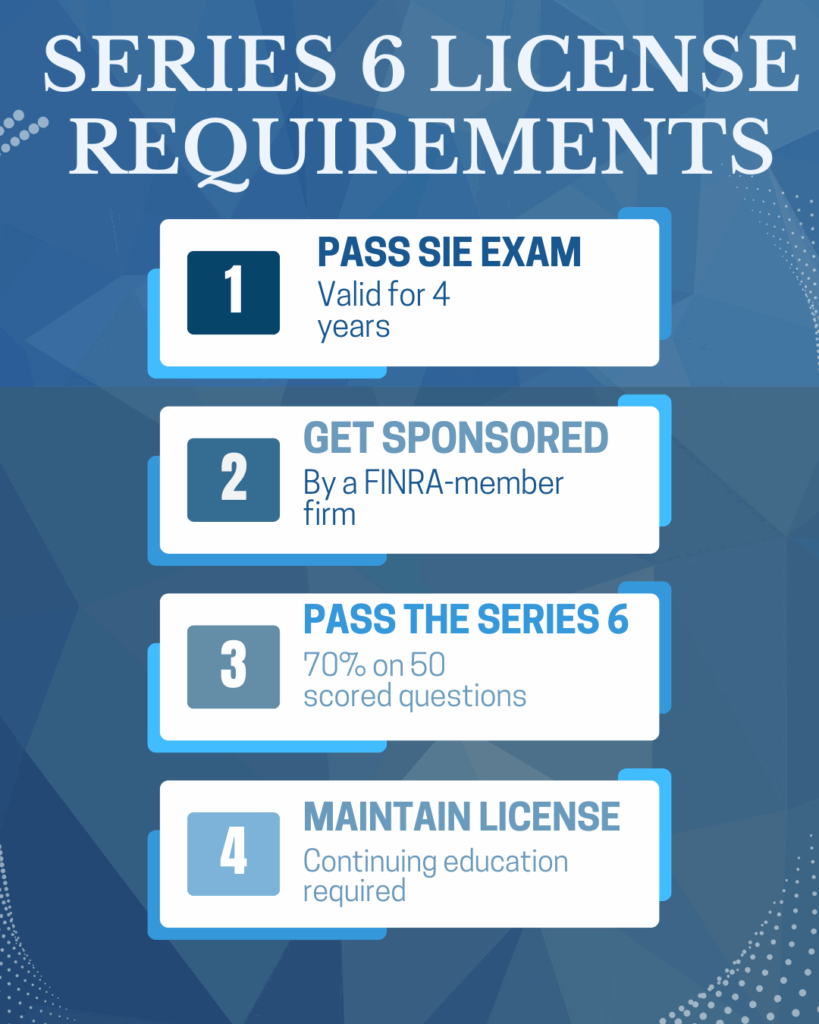
You can take the SIE without a sponsoring firm at Prometric testing centers. Once you pass, your score stays valid for four years, giving you time to find the right company to back you for the Series 6 exam.
Getting Sponsored by a Firm
Alright, here’s where things get official. After your SIE exam, you’ll need a sponsoring firm, basically your work “wingman.” This can be a broker-dealer, insurance company, or financial institution that’s a FINRA member firm.
Your sponsor handles the admin side:
- File your registration through FINRA’s security industry registration process
- Pays your exam fees
- Confirms your spot as a Variable Contract Products Representative
Once that’s done, FINRA gives you your testing window for the Series 6 exam. Time to lock in and prep.
Study and Pass the Series 6 Exam
The Series 6 exam tests your ability to apply investment knowledge to real-world client situations.
Exam Details:
- 50 scored questions + 5 unscored
- 90-minute test time
- 70% passing score
- Offered through Prometric testing centers
You’ll be tested on these four job functions:
- Seeks business for the broker-dealer
- Opens and maintains customer accounts
- Evaluates customer financial profiles and investment objectives
- Processes and confirms transactions, and keeps accurate records
Pro Tip: Focus your study time on understanding client suitability. I’ve seen candidates lose points because they memorized facts instead of learning how to match products to client needs.
Keeping Your License Active
Passing the exam isn’t the end of the road. To stay licensed, FINRA requires continuing education through two parts: the Regulatory Element for rule refreshers and the Firm Element for company-specific training. If you leave your firm, your license stays valid for two years before expiring, so plan ahead. Many pros also pick up the Series 63 to work with investment advisers and expand their reach across states.
Is the Series 6 License Worth It?
If you want a solid start in finance, absolutely. The Series 6 license opens doors to careers in financial advising, insurance sales, and investment services, without needing to trade individual stocks. It’s perfect if you like building client relationships, earning commissions on mutual funds and variable annuities, and helping people invest long-term.
Pro Tip: Many professionals use the Series 6 as a launchpad, later adding the Series 63 or Series 7 to expand their opportunities and boost income potential.
My Final Thoughts
Earning your Series 6 license is your official entry into the world of finance. Once you’ve passed the SIE exam, secured a sponsoring firm, and proven your understanding of mutual funds, variable contracts, and investment company products, you’ll be ready to help clients make smarter financial decisions. Choose your path, and let your Series 6 license be the move that launches your career in the securities industry.
FAQs
The Financial Industry Regulatory Authority manages the Series 6 license, regulating broker-dealers and registered representatives in the securities industry.
You’ll need a 70% passing grade on 50 scored questions that cover investment objectives, ethical practices, and sales instructions.
You can sell mutual funds, variable life insurance, unit investment trusts, municipal fund securities, and variable life insurance, which are considered investment company products.
Yes. Series 6 license holders must complete continuing education to stay active, including FINRA’s Regulatory Element and their firm’s Firm Element training on updated rules and securities products.
They include evaluating customers’ financial profiles, recommending investment products, and following ethical practices when processing transactions or giving advice.