The path to becoming a CMA is pretty straightforward. However, “simple” doesn’t always mean “easy.”
According to the Institute of Management Accountants, only 45-50% of candidates pass the CMA exam—and that’s just one step in the process.
But don’t bail on this article just yet!
I created this step-by-step CMA guide to walk you through the five crucial steps of earning your certification, from eligibility requirements to acing those tests.
Key Takeaways
- Career-Boosting Credential: The CMA certification is highly respected in finance and opens doors to roles in corporate planning and strategy.
- Eligibility Essentials: To become a CMA, you’ll need a bachelor’s degree, two years of relevant work experience, and membership with the Institute of Management Accountants (IMA).
- Two-Part Exam: The CMA exam covers both financial planning and strategic financial management, so be prepared to study both areas.
- Ongoing Education: CMAs must complete annual continuing education (CPE) and keep their IMA membership active to maintain their certification.
- Diverse Career Paths: A CMA certification paves the way to higher salaries and exciting roles in management accounting, corporate finance, and more.
What Is a CMA?
A Certified Management Accountant (CMA) is a financial expert with a focus on strategic management and decision-making. CMAs work in management accounting, financial planning, budgeting, and risk management; they often serve as a voice of reason and guidance within a corporation. Though they’re distinct from CPAs, many professionals will get both certifications to boost their resume and have a well-rounded skillset.
The CMA career is a dream for the person who loves getting to use their brain, dig deep into a company’s finances, and play a major role in an organization’s success thanks to their strategic decision-making skills.
Benefits of Becoming a CMA
Earning the CMA credential offers several long-term benefits, such as:
- Higher Earning Potential: In 2023, CMAs earned 21% more on average than their non-certified counterparts.
- Expanded Career Opportunities: CMAs work in diverse fields, including management accounting, financial analysis, corporate finance, and strategic planning.
- Job Security and Professional Growth: CMAs play a crucial role in organizations, providing invaluable expertise in budgeting, risk management, and decision-making.
Step 1: Make Sure You Meet the Basic CMA Requirements
To start, make sure you have (or are on your way toward earning) these credentials required for CMAs:
- Education: A bachelor’s degree from an accredited college or university.
- Professional Experience: At least two years of relevant work experience in management accounting. Experience in financial management will also suffice. This experience can be completed before or after passing the CMA exam as long as it’s done within seven years.
- Join the IMA: The Institute of Management Accountants (IMA) administers the CMA certification, so you’ll need to become an IMA member. The membership fee ranges between $49 and $295 annually.
Step 2: Enroll in the CMA Program and Pay the Fees
After verifying your eligibility, you’ll need to enroll in the CMA program through the IMA officially:
- CMA Entrance Fee: A one-time fee to join the program, which ranges between $225 and $300.
- Exam Fees: There are separate fees for each of the two exam parts, which you’ll pay when you’re ready to schedule your exams. These range from $370 to $495 per part.
Step 3: Study for the CMA Exam
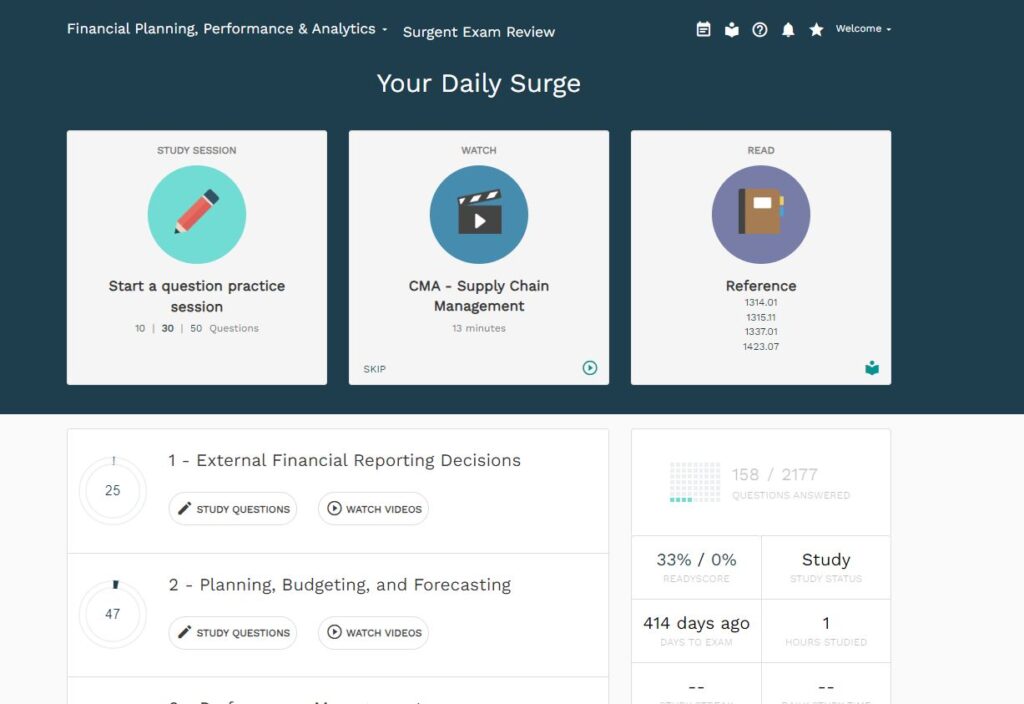
The CMA exam is a crucial part of the certification journey, covering two main areas:
- Financial Planning, Performance, and Analytics: This section focuses on budgeting, cost management, performance analysis, and internal controls.
- Strategic Financial Management: This part covers financial statement analysis, risk management, corporate finance, and decision-making.
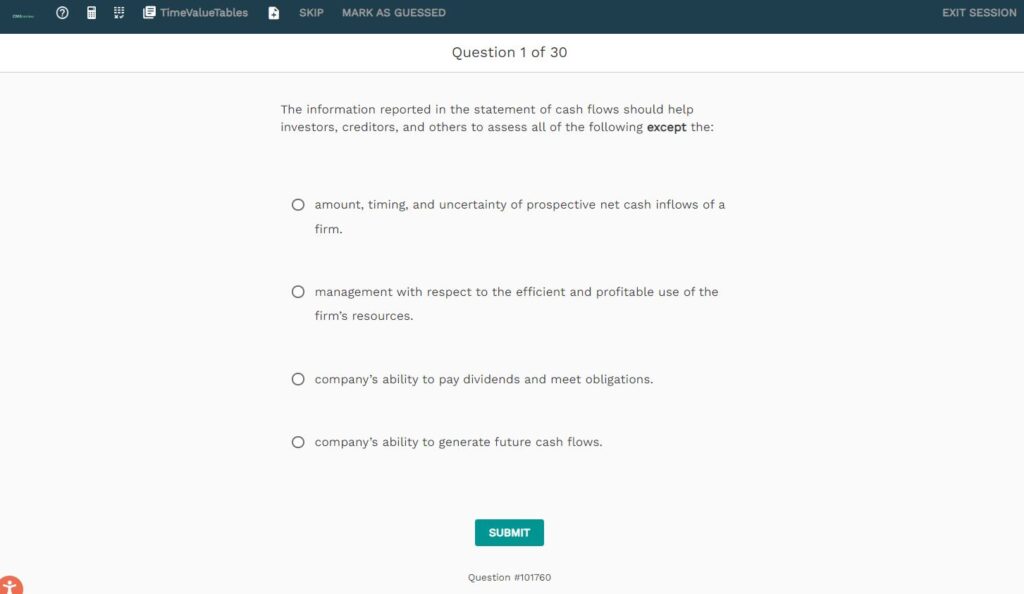
While preparing, consider investing in a CMA review course with practice quizzes to help you organize your study efforts and familiarize yourself with exam content.
Step 4: Schedule and Take the CMA Exam
When you’re ready, choose an exam date that fits your schedule:
- Exam Windows: The CMA exam is offered in January/February, May/June, and September/October at Prometric testing centers worldwide.
- Exam Format: Each part of the exam includes 100 multiple-choice questions with a time limit of three hours and two case study question sets with a cumulative time limit of one hour.
- Pass to Proceed: Candidates need to pass the multiple-choice section to move on to the case-based questions portion in the same exam sitting.
Step 5: Submit Proof of Education and Experience
Once you’ve passed parts one and two of the CMA exam, you’ll need to finalize your certification:
- Submit Transcripts: Send proof of your degree to the IMA.
- Provide Work Experience Verification: Submit documentation verifying your two years of relevant experience to complete the certification.
After Certification: Maintaining Your CMA
Congratulations! Once certified, you’ll need to maintain your CMA designation:
- Continuing Professional Education (CPE): Complete at least 30 hours of CPE to keep your certification active, including two hours in ethics, every year. This requirement varies by state. CMA review courses sometimes include a year-long CPE subscription in their premium packages, so keep an eye out!
- IMA Membership Renewal: Maintaining your IMA membership gives you access to resources, networking, and continued professional development.
Choose Your Career Path
Now that you’ve got your CMA certification, it’s time to decide where you want to take your career. CMAs have unique skills that make them valuable in roles beyond typical accounting jobs. While CPAs might focus on auditing and compliance, CMAs often play strategic roles, helping guide a company’s financial future. Here’s a look at a few paths you can explore:
- Financial Analyst – Use data and insights to help companies make smart financial moves. CMAs add strategic value here, offering analysis with a big-picture view.
- Corporate Finance Manager – Step into high-level decision-making. In this role, you’ll analyze budgets, manage financial risks, and help shape company strategy.
- Management Accountant – Focus on the internal financial health of a company. CMAs in this role monitor budgets, costs, and performance metrics to streamline operations.
- Strategic Planner – With expertise in financial management, CMAs can help organizations plan for growth, offering advice on long-term goals and company direction.
Whether you’re drawn to planning, analysis, or leadership, your CMA certification opens doors in corporate finance, strategic planning, and beyond—making it an excellent step toward a fulfilling career in business management.
Conclusion
Figuring out how to become a CMA is a fantastic career move that can set you apart in the finance world. The path may not be easy, but it’s certainly worth it. With dedication and careful planning, you’ll get through the eligibility steps, pass the exams, and gain experience that puts you on the map as a strategic financial professional. From here, you can explore a range of high-impact career paths, from financial analysis to corporate strategy.
Keep going! With your CMA in hand, you’re well on your way to a rewarding and influential career in business and financial management.
FAQs
It typically takes 6-18 months to complete the exam and two years of work experience, depending on your schedule and preparation time. In total, excluding the time it takes to get your bachelor’s degree, you’re looking at 2-3 years.
The CMA exams are challenging, with pass rates around 45-50%, but thorough preparation and a structured study plan increase your chances of success and nabbing your shiny new professional certification.
A CMA can work in roles like financial analyst, management accountant, corporate strategist, or finance manager, often within a company’s finance department.
No, CMA candidates can take the exam first and complete their work experience afterward, as long as it’s within seven years of passing the exam.
Expect to pay for the CMA entrance fee, exam fees, and IMA membership, plus any CMA exam prep review course you choose, making the total cost roughly $1,000–$2,000. However, the overall can vary quite a bit depending on the CMA course you choose and where you live.