If you have a strategic mind and a passion for making savvy financial decisions, it’s no surprise that becoming a Certified Management Accountant is on your career radar.
After all, not only does certification open the pathway to a six-figure salary (and that’s before bonuses), but according to the IMA 2023 Global Salary Survey, around 75% of respondents said they love their job.
And, when you spend over 90,000 hours at work in your lifetime, you deserve a job you love.
However, becoming a CMA isn’t easy. First, you must pass the notoriously difficult CMA exam—one of the most challenging professional tests in the world.
But what exactly is the CMA exam, and how can it help you reach your career goals? Let’s dive in!
Key Takeaways
- Two-Part Exam: The CMA exam is split into two parts: Financial Planning, Performance, and Analytics, and Strategic Financial Management, testing skills in financial analysis, management, and ethics.
- High Earning Potential: Earning the CMA designation can lead to higher salaries and expanded job opportunities in various industries.
- Strict Requirements: Candidates need a bachelor’s degree, two years of work experience, IMA membership, and must pass both exam parts to earn the CMA certification.
- Testing Windows: The exam is offered in three testing windows each year: January/February, May/June, and September/October, giving candidates flexibility in scheduling.
- Challenging But Achievable: The CMA exam is known for its difficulty, with a pass rate around 45%, but a dedicated study plan and preparation resources can make a big difference.
What is the CMA Exam?
The CMA (Certified Management Accountant) exam is a professional certification test designed for those looking to advance in management accounting and financial management. Offered by the Institute of Management Accountants (IMA), it’s aimed at professionals who want to excel in strategic financial management and decision-making within businesses.
The CMA exam tests a wide range of skills that go beyond traditional accounting and auditing. It’s focused on financial planning, analysis, control, and decision support—all crucial to helping businesses succeed.
To summarize, the CMA exam is a rigorous test that confirms your expertise in financial management and management accounting.
Why Pursue the CMA Certification?
The CMA designation is one of the most respected credentials for management accountants. With this certification, you’ll have proof of your advanced skills in strategic management, making you a top choice for employers. Here’s why many professionals consider the CMA a career game-changer:
- Six-Figure Salary: In 2023, the average salary for CMAs was $129,961.
- Higher Earning Potential: CMAs earn 21% higher salaries on average than their non-certified peers.
- Respect and Admiration: Over 80% of American CMAs say that they feel valued, respected, and supported by their employers and workplaces.
- Career Flexibility: CMAs work in various industries, from manufacturing to government to finance. Over 80% of American CMAs report that their certification improved available job opportunities.
- In-Demand Skills: You’ll master key areas like financial planning, strategic financial management, and corporate finance, making you an invaluable asset to any employer.
CMA Exam Structure: Two Parts, One Goal
The CMA exam consists of two parts. Each part is focused on different areas of financial management and decision-making. Here’s a breakdown of the exam structure:
Part 1: Financial Planning, Performance, and Analytics
- External Financial Reporting Decisions
- Planning, Budgeting, and Forecasting
- Performance Management
- Cost Management
- Internal Controls
- Technology and Analytics
Part 2: Strategic Financial Management
- Financial Statement Analysis
- Corporate Finance
- Decision Analysis
- Risk Management
- Investment Decisions
- Professional Ethics
Each part is a four-hour exam, including multiple-choice questions and two essay questions. You’ll need to score at least 360 out of 500 to pass each part. The CMA exam is known to be challenging, with a global pass rate averaging around 45%, so thorough preparation is essential.
CMA Exam Requirements
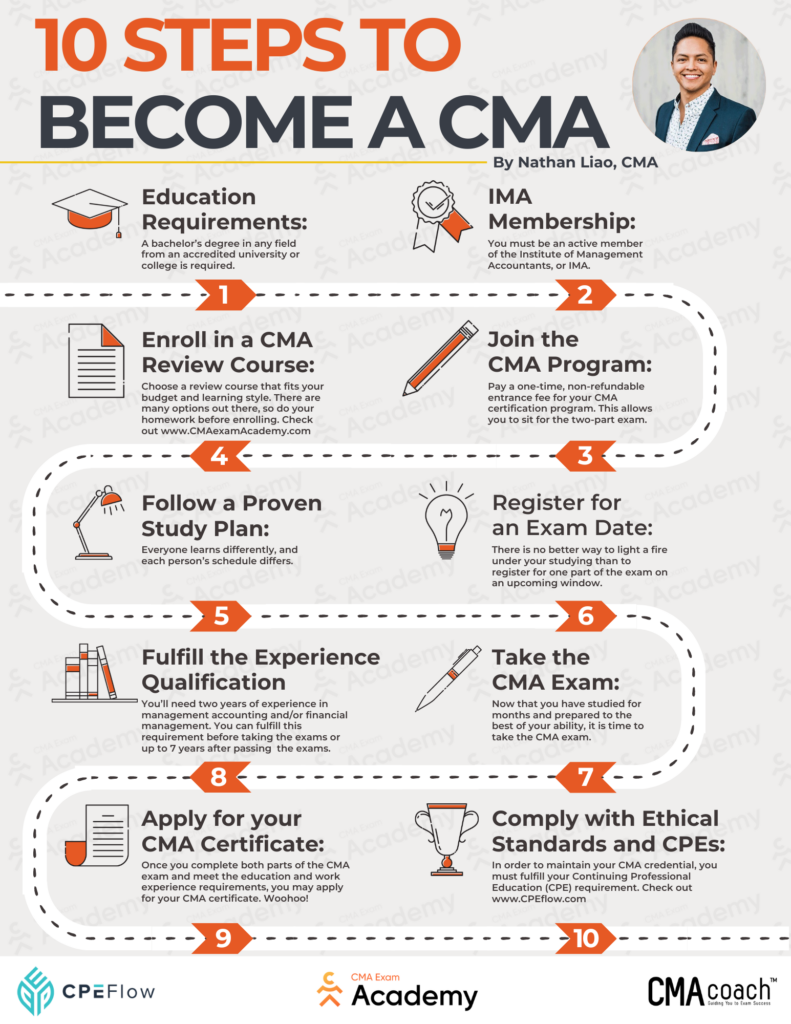
To qualify for the CMA certification, candidates must meet several requirements:
- Education: A bachelor’s degree from an accredited university is required.
- Professional Experience: You need two years of work experience in management accounting or financial management.
- IMA Membership: Since the exam is administered by the IMA, you must become an IMA member before registering.
- CMA Entrance Fee: There’s an entrance fee to begin your CMA journey, which covers registration, access to study resources, and exam-related support.
When Can You Take the Exam?
The CMA exam is offered three times a year in what are called testing windows. Each window is two months long, allowing you to pick the time that works best for you. Here are the CMA exam testing windows:
- January/February
- May/June
- September/October
It’s a good idea to register well in advance, as these slots can fill up quickly. Knowing the testing windows also helps you plan your study schedule effectively.
How Much Does CMA Certification Cost?
Preparing for the CMA exam involves several costs:
- IMA Membership Fee: This is an annual fee required to join the IMA.
- CMA Entrance Fee: This one-time fee allows you to register for the CMA program and access official materials.
- Exam Fees: Each exam part has its own registration fee, which can vary based on your membership type (student, professional, or academic).
All in all, expect to spend anywhere from $1,000 to $2,000 on the entire process, not including prep courses and study materials. Some companies offer financial support to employees who pursue certifications, so it’s worth checking with your employer.
How to Prepare for the CMA Exam
Due to the exam’s difficulty, most candidates spend 12-18 months preparing for the CMA exam. Here’s a roadmap to help you stay on track:
- Set Up a Study Schedule: Determine how many hours you can dedicate each week and stick to it. A solid study plan can make all the difference.
- Use a CMA Exam Review Program: Top prep programs like Becker CMA courses provide structured courses, practice exams, and study resources. Having expert guidance can boost your confidence and focus.
- Practice with Past Exams: Familiarize yourself with the exam format by taking practice tests. This is crucial for managing time and understanding how questions are framed.
- Focus on the Essays: The essay section can be challenging for some candidates. Practice writing out your responses, focusing on clear, concise answers that show your understanding.
- Join Study Groups: Many candidates find it helpful to connect with others preparing for the exam. Study groups can be motivating and a good way to exchange knowledge and tips.
What’s Life Like After Becoming a CMA?
After passing the CMA exam, you’ll have a well-respected credential that demonstrates your expertise in areas critical to business success. Here are a few roles CMAs often move into:
- Management Accountant: Specialize in budgeting, forecasting, and performance analysis.
- Financial Analyst: Assist companies in financial planning and investment decision-making.
- Corporate Controller: Oversee financial reporting, compliance, and internal controls.
- Strategic Planner: Work closely with senior leadership to guide a company’s long-term strategy.
Your CMA designation opens doors to these roles and more, giving you opportunities for career growth, higher earnings, and greater job satisfaction.
Conclusion
The CMA exam is a professional certification that proves your expertise in management accounting and strategic financial management.
The CMA designation can be a major boon to your career, offering new job opportunities in diverse fields and increased earning potential.
And yes, it’s difficult, with a pass rate hovering around 45%. However, with the right preparation and dedication, I know that you can become a Certified Management Accountant.
Good luck!
FAQs
The CMA exam is a professional certification test for management accountants, covering advanced skills in financial planning, analysis, and strategic planning.
Expect to spend around $1,000 to $2,000, including the IMA membership, CMA entrance fee, and exam fees for each part of the test. However, this doesn’t include prep course costs.
Candidates need a bachelor’s degree from an accredited university and two years of relevant work experience to qualify.
The CMA exam dates are available during three testing windows each year: January/February, May/June, and September/October.
Becker tends to be recognized as the best CMA course for candidates preparing for the CMA exam. Other options include Surgent, Gleim, and CMA Exam Academy.