
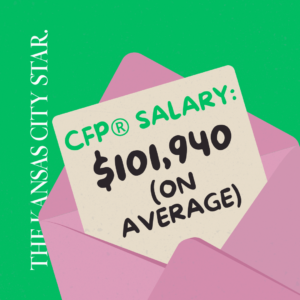
CFP® professionals earn an average of $101,940 as of this year, but that number only tells part of the story. In financial planning, income depends on experience, clients, certification, and whether you work for a firm or build your own practice with bonuses, profit sharing, or assets under management.
But what separates a financial planner who barely gets by from a six-figure earner?
In this guide, I’ll break down real CFP® salary data, career paths, compensation structures, and the factors that shape earning potential.
Key Takeaways
- Average CFP® salary: $101,940 per year; most earn between $87,000 and $114,500; top earners reach $137,500.
- Early-career CFP® compensation: Typically ranges from $87,000 to $114,500; higher in private wealth and larger firms.
- Experienced CFP® income: Often between $100,000 and $140,000; firm owners and partners can exceed $200,000 to $500,000+.
- Income depends on: Client type, company size, location, compensation model (salary, fee-based, commission, AUM), and years of experience.
- Financial advisors report: High job satisfaction, long-term income stability, and strong growth once client relationships are established.
What Do Certified Financial Planners® Do?
Certified Financial Planners® help clients build and protect their wealth through financial planning, investment strategies, retirement planning, taxes, insurance, and estate planning.
To earn the CFP® designation, candidates must complete a bachelor’s degree, study for and pass the CFP® exam, meet ethics requirements, and commit to fiduciary duty, always acting in the client’s best interest.
Because CFP® professionals combine financial expertise with legally required fiduciary responsibility, they often earn higher compensation than other finance roles that don’t require certification.
Entry-Level CFP® Salary
| Percentile | Annual CFP® Salary |
|---|---|
| 25th Percentile | $87,000 |
| 50th Percentile (Median) | $101,940 |
| 75th Percentile | $114,500 |
| 90th Percentile | $137,500 |
These numbers include base salary, plus bonuses, commission, and in some cases, profit sharing.
Top 10 Highest-Paying States for CFP® Professionals
Where you practice financial planning can make a major impact on your CFP® salary. These states offer the highest average annual earnings for financial planners and CFP® professionals:
| Rank | State | Average Annual Salary |
|---|---|---|
| 1 | Washington | $115,456 |
| 2 | District of Columbia | $115,194 |
| 3 | New York | $111,525 |
| 4 | Massachusetts | $111,331 |
| 5 | Alaska | $109,783 |
| 6 | Vermont | $108,388 |
| 7 | North Dakota | $107,860 |
| 8 | Oregon | $107,779 |
| 9 | Colorado | $107,191 |
| 10 | Hawaii | $105,911 |
These states typically have higher costs of living, but they also offer greater access to wealth management firms, high-net-worth clients, and financial advisor roles with higher pay structures and assets under management (AUM).
Job Titles and Typical Salary Ranges in Financial Planning
| Job Title | Typical Annual Salary Range |
|---|---|
| Wealth Manager / Financial Advisor | $90,000 – $120,000 |
| Asset & Wealth Management Associate | $80,000 – $100,000 |
| Legislative Assistant (Finance/Policy, Entry-Level) | $55,000 – $70,000 |
| Registered Wealth Management Client Associate | $50,000 – $65,000 |
| Entry-Level Wealth Management Support | $45,000 – $55,000 |
These roles are typical in advisory firms, wealth management companies, and financial institutions. As professionals gain experience, earn the CFP® certification, and begin managing their own clients, they often transition into higher-paying advisory roles or private practice.
What Impacts CFP® Salary and Compensation?
| Factor | Impact on Earning Potential |
|---|---|
| Company size and type | Banks and insurance firms offer stable salary + benefits, while RIAs and independent firms offer higher revenue share. |
| Clients and assets under management (AUM) | More clients = more revenue, higher bonuses, equity, and recurring income. |
| Location and current company | Advisors in major cities or high-income areas earn more, but the cost of living is higher. |
| Experience and credentials | A CFP certification, CPA, CFA, Series 7, or tax expertise can lead to higher pay. |
| Compensation structure | Salaried, fee-only, or commission-based plans result in different income levels. |
| Benefits and perks | Many companies offer retirement plans, vision insurance, paid time off, and professional development stipends. |
How to Increase Your CFP® Salary
- Earn the CFP® certification and additional credentials like CFA® or CPA.
- Specialize in retirement planning, tax strategy, investment management, or business-owner planning.
- Work for a Registered Investment Advisory (RIA) or private wealth firm rather than a bank.
- Grow assets under management (AUM) to increase recurring revenue and bonuses.
- Build strong client relationships (this is one of the most valuable assets in this profession).
- Track performance, meet revenue targets, and negotiate compensation as you add more value.
Final Verdict
Becoming a CFP® takes effort, education, exam preparation, passing the CFP Board requirements, and years of practical work experience. But once you build trust with clients and prove your expertise, this career can offer higher pay, steady compensation, and meaningful work.
If you want a career where you help people make smart financial decisions, build wealth, and find long-term security, I’m here to show you what you can earn and how to get there. The earning potential is real. The demand for trustworthy financial advisors is growing. And with the right steps, this profession can give you both income and purpose.
Ready to get started? Check out these top CFP® prep courses and pick the one that’s right for you.
FAQs
CFA® professionals usually earn more, especially in investment management, asset firms, or hedge funds.
CPAs often start with higher pay, but experienced CFP® professionals with high-net-worth clients can earn more over time.
Yes. Many financial advisors and CFP® professionals work with clients starting around $250,000 to $500,000 in investable assets.
The CPA exam is more technical and has lower pass rates. The CFP® exam is broader and more application-based.
Yes. Senior advisors, firm partners, or financial planners with substantial assets under management often exceed $200,000 to $500,000+.