
Brooke Palmer: Diversity and inclusion at Paseo Academy
Growing up, we are taught that America is a “melting pot” and that diversity and inclusiveness are unique characteristics that help keep our country strong. Yet, how many times in our lives are we able to truly experience the melting of different ethnicities, ages, races, socio-economic statuses and sexual orientations without extreme dissidence or discomfort?
In our mostly segregated American lifestyles, we must make a conscious effort to integrate with others of a different demographic. If we are lucky enough as children to be circumstantially placed with those different from ourselves, then we are more likely as adults to live in a way that embraces diversity and inclusion, and in so doing, we enrich our own personal experience as well as the greater social experience.
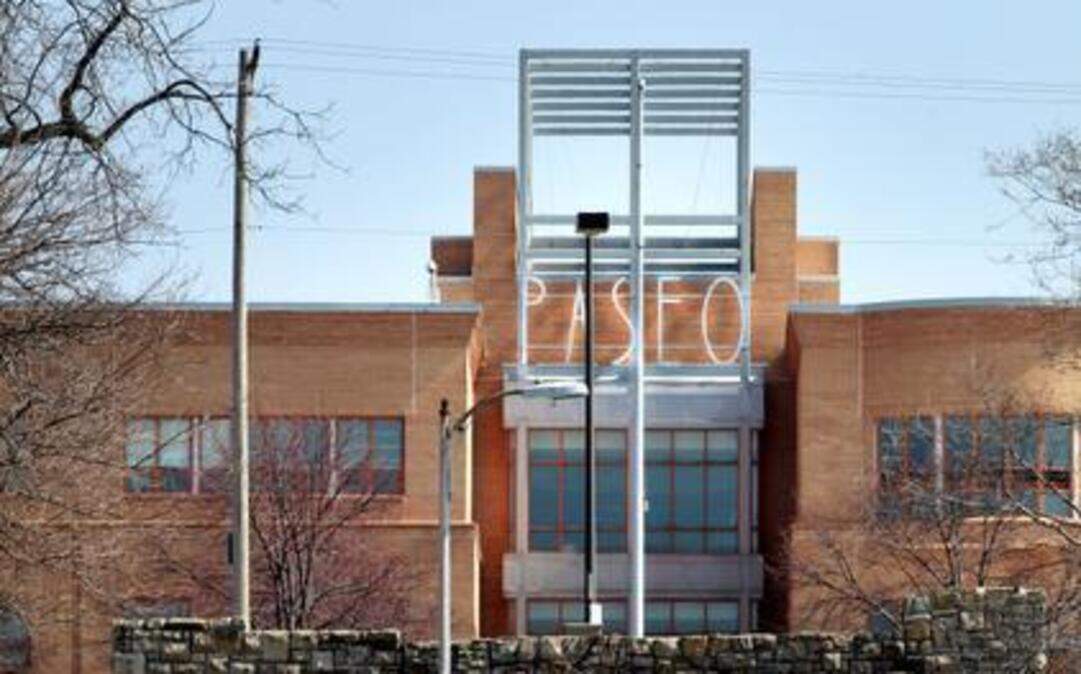
One such authentic melting pot experience that brought this notion to life took place at my recent 19-year high-school reunion for Paseo Academy of Fine and Performing Arts. At the outset, the reunion was more inclusive than most: it was an official 20-year reunion for the class of 1994, but organizers Charles Covington, Christina Sullivan and LaShanna Thomas opened its celebratory doors to any and all Paseo alumni. And all of us who walked through those doors exemplified the melting-pot-by-way-of-childhood-circumstantial-integration.
The organizers and attendees alike represented variety in every sense: adults of different genders, races, sexual orientations, ideologies, and skin tones enjoyed a three-day event that started with barbecue and drinks, progressed to a prom re-enactment and concluded with a family picnic at the park.
As descendants of our childhood years at Paseo, when it was a magnet school during the desegregation effort, we came, we represented, and we partied like a true melting pot of artsy-fartsy adults. Although I lacked the confidence on my actual prom night in 1994 to participate in the urban line dancing that dominated the night, I used my second-chance opportunity to twerk with the best of ’em, gaining respect among my former classmates all these years later.
Unlike suburban high school reunions and most inner-city high school reunions, our Paseo reunion attendees lacked the legacy of social cliques that define most school memories. Instead, grown-ups from the classes of ’93 through ’96 reacquainted with one another over memories of concerts and plays produced and acted in together, quotes by teachers famous for their idiosyncrasies, or tales of organized “walk-outs” over perceived injustices (as well as the occasional—OK, not so occasional—memory of sneaking out and running wild during morning period).
Admittedly, we often self-segregated as high-schoolers and spent our lunch hours near those with whom we felt closest. Nonetheless, our years of institutionalized academic and creative integration developed in each of us a lasting comfort in the presence of the “other.”
For most of us, this mature comfort graduated to a conscious world view that recognizes both the value and, I dare say, the necessity of diversity and inclusion. For when we apply those values — through conscious integration within our neighborhoods, jobs, recreational and artistic endeavors — the benefits never cease to amaze. Exposure to different perspectives leads to greater knowledge, self-awareness and human interaction.
On the other hand, when we reject diversity and inclusion, we become culturally and intellectually stunted and more inclined to the types of incidents and aftermath that have put Ferguson, Mo., on the world map.
Brooke Palmer is a writer who resides in her native Kansas City and works in educational publishing.
This story was originally published October 19, 2014 at 10:00 AM with the headline "Brooke Palmer: Diversity and inclusion at Paseo Academy."