
Washed out: The mystery behind the demise of iconic Kansas City brand Baldwin Denim
READ MORE
Washed Out
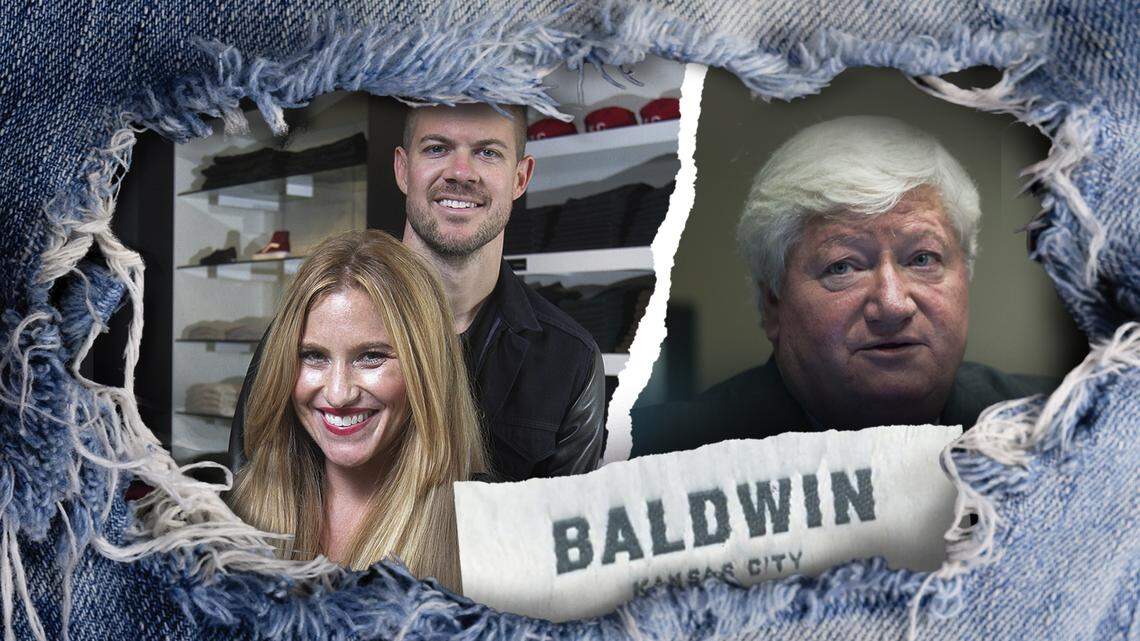
Baldwin Denim, a local billionaire and the demise of a beloved KC brand.
Expand All
Washed out: The mystery behind the demise of iconic Kansas City brand Baldwin Denim
Timeline: The rise and fall of Kansas City’s Baldwin Denim
A.JPG)
‘Gross negligence, bad faith’: Read the Baldwins’ claim against Cliff Illig’s firm
Baldwin Denim’s founders were a ‘detriment of its success,’ Illig’s attorneys claim
In August 2019, two of Kansas City’s most popular brands announced a collaboration: Baldwin Denim would create a line of limited-edition hats and shirts for Sporting KC.
It had been a decade of dizzying success for both local organizations.
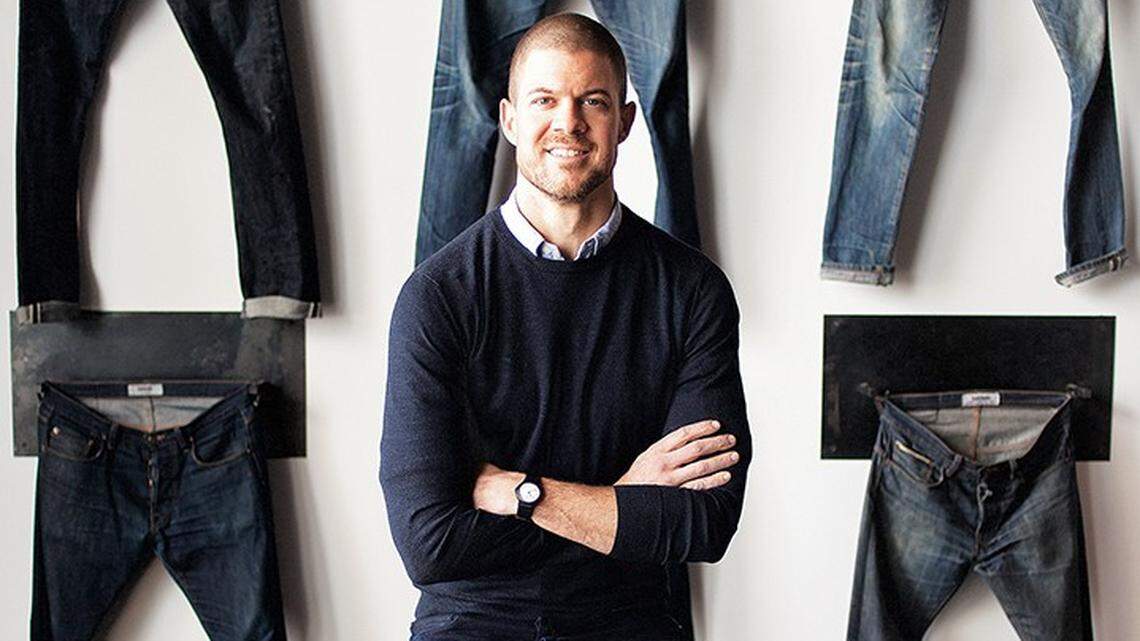
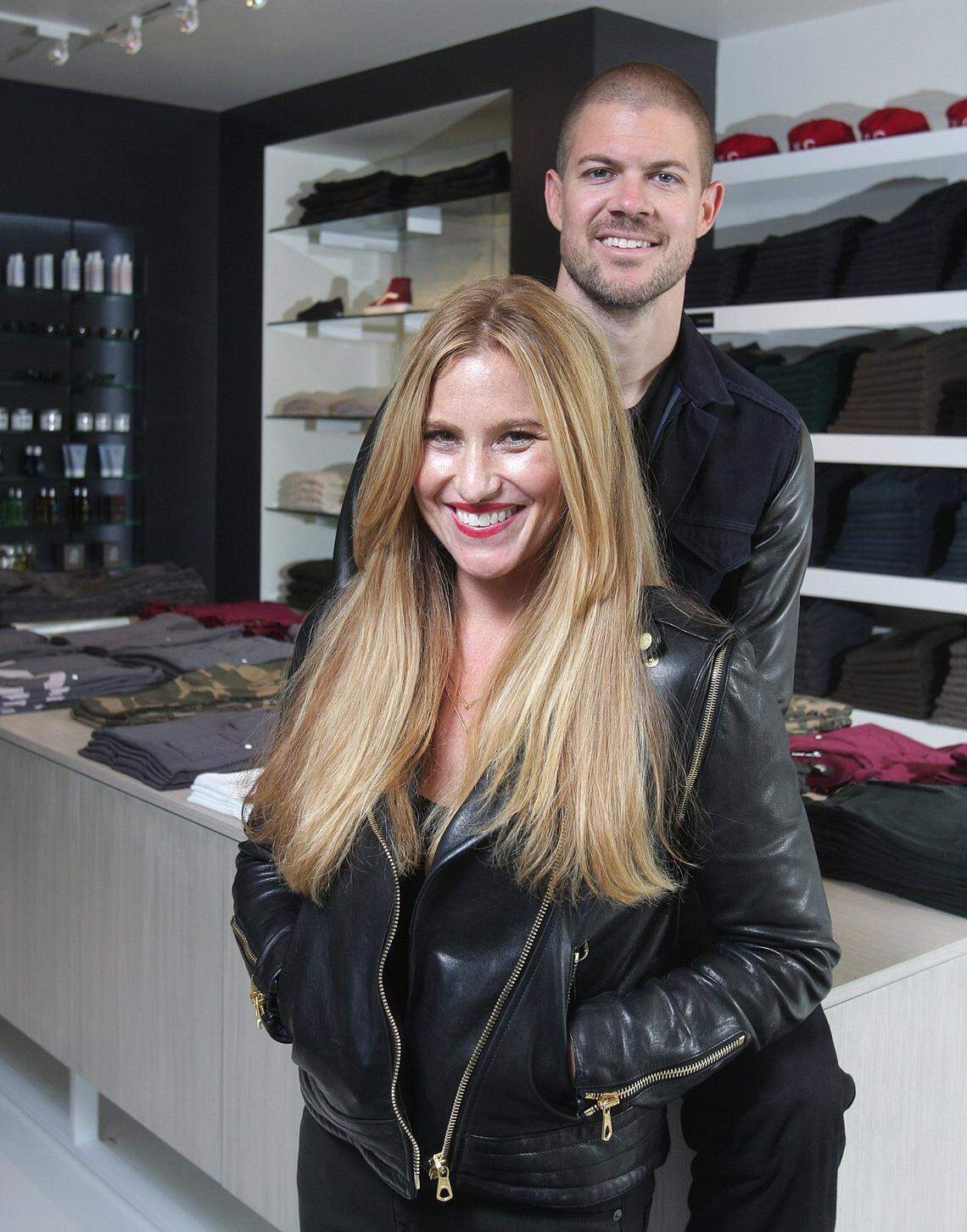
Matt Baldwin founded Baldwin Denim in 2009, six years after he and wife Emily opened a boutique clothing store in Leawood. Baldwin’s luxury garments soon won the notice of GQ and The Gap, of Jay-Z and Jason Sudeikis. Its all-wool KC hats were ubiquitous, found on the heads of stylish locals and international celebrities alike, the two letters an advertisement in miniature for a low-key Midwestern city that suddenly seemed to have some unexpected momentum.
Around that same time, the once-sleepy soccer club known as the Kansas City Wizards rebranded, moved into a state-of-the-art stadium in Wyandotte County, won a Major League Soccer championship and sold out 100 straight matches.
“Given the brand’s Kansas City roots and strong connection to the community, there is a significant crossover between our customer and Sporting Kansas City,” Baldwin’s then-president Johnathan Crocker said in the announcement at the time. “It was a natural decision to partner together.”
In fact, the partnership was far more natural than it appeared. Unbeknownst to the general public and reported here for the first time, a family investment office controlled by Sporting KC’s owner, Cliff Illig, had been the majority owner of Baldwin LLC for two years. The billionaire co-founder of Cerner Corp. had by then sidelined the Baldwin family, removing Matt Baldwin’s father, Ron Baldwin, from the board and demoting Matt and Emily Baldwin from their executive positions.
Six months after the 2019 Sporting KC collaboration, the company Matt Baldwin had been building for 16 years was unceremoniously shuttered by one of the wealthiest men in Kansas City.
The competing narratives explaining the demise collided in Jackson County court in 2021, after a bank sued Baldwin LLC over unpaid loans. The Baldwins then filed a counterclaim against Illig’s company, saying the debts were its responsibility. As the months passed, a mild dispute over three-quarters of a million dollars curdled into a bitter and at times personal exchange, laying bare lingering hard feelings among those involved.
Illig’s attorneys allege that the Baldwins “begged, implored, and pleaded” for him to invest millions of dollars into their struggling company and lacked the business acumen to make their namesake clothing brand a success.
The Baldwins’ lawyers tell a different tale. Illig, they say, “effectively turned a profitable company with multi-million-dollar revenue and national brand recognition into a valueless company facing significant debt in less than four years.”

Flyover fashion
If you were going to launch an ambitious, high-fashion clothing store in the early 2000s, there were more obvious places to do it than a Kansas suburb.
But a young Matt Baldwin saw opportunity beyond the prairie landscape of Hot Topic teens and dads in Dockers. After graduating from the Fashion Institute of Design and Merchandising in Los Angeles and working for a few California designers and manufacturers, the Wichita native returned to his home state with his wife to start a family and open Standard Style Boutique in Leawood’s Town Center Plaza.
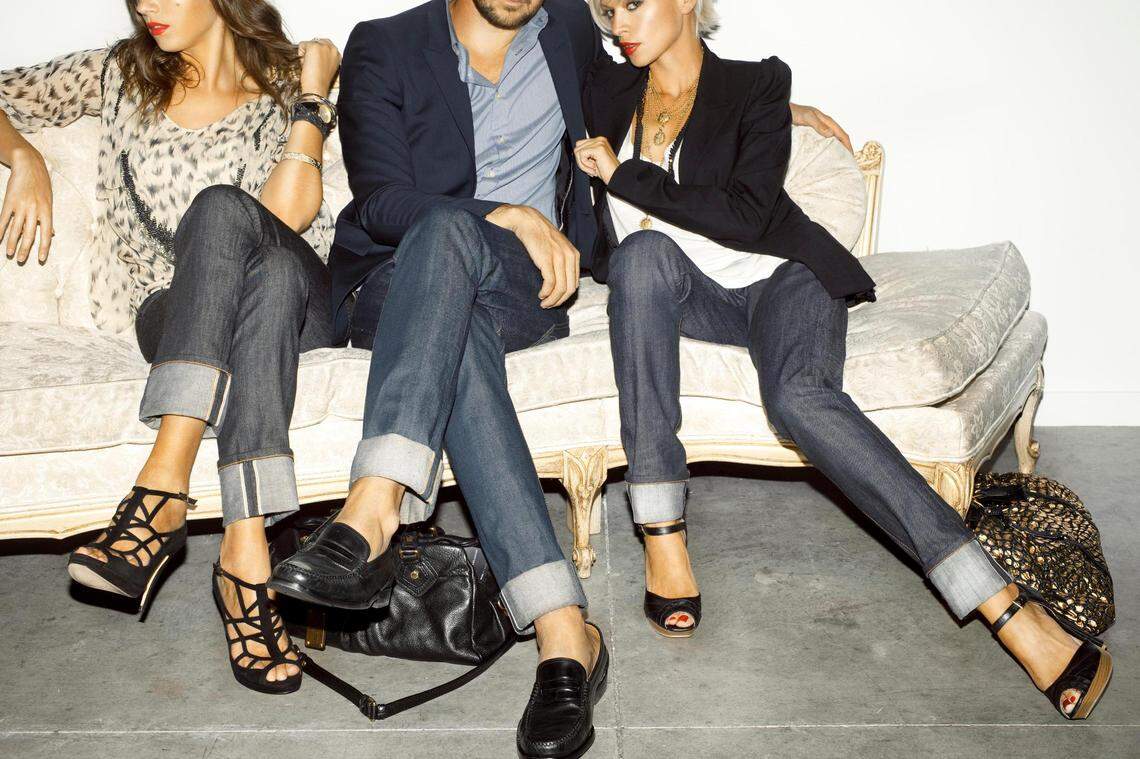
It was unlike anything in the Kansas City area at the time. The Baldwins curated their selection of designer labels by doing extensive, and expensive, research into what celebrities were wearing. They traveled the country, attending fashion shows and L.A. nightclubs, forecasting trends and placing bets on brands that, say, Jennifer Lopez or Paris Hilton might be wearing next season. They stocked their store with brands that were previously hard to find between the coasts: True Religion jeans, Rebel Yell vintage shirts, Juicy jackets, Seychelles pumps, Tracy Reese tops.
“We were an anomaly right out of the gate,” Matt Baldwin told The Star last week. “Beyond Halls, there really wasn’t anywhere else in town you could find designer goods at the time. We did a couple million in sales that first year, and within a few years we had taken over the space next door.”
Standard Style’s website quickly drew notice from fashion-world gatekeepers of the day like industry bible WWD, Lucky and InStyle magazines. The Baldwins also leveraged their Hollywood connections to dress pop stars such as Usher and Britney Spears when they rolled through town. Jessica Simpson wore a pair of $200 jeans onstage during a Kansas City tour stop, and Standard Style sold 45 pairs of them the next day, Baldwin told The Pitch in 2005. As momentum built, a second Standard Style Boutique opened on the Country Club Plaza in 2006.
A.JPG "2009 matt baldwin .jpg(2)A.JPG")
The 2008 recession marked a turning point in fashion, a pivot away from what Baldwin called “the embellished-pocket era of 2003 to 2007” toward a simpler, more understated aesthetic in high-end denim.
“It was a time when people were beginning to rediscover heritage brands and a kind of classic American style rooted in workwear, which is America’s main fashion contribution to menswear,” said Michael Williams, the founder of A Continuous Lean, a style website and newsletter that covers menswear. “It was values-driven in a lot of ways: making things in America again, sourcing locally. It was similar to the trend toward farm-to-table restaurants, which was happening at the same time.”
Suddenly, a home base in America’s heartland wasn’t necessarily a drawback for a clothing line; it was even, in some ways, on trend. Baldwin rode the wave, launching his first denim line, Baldwin Denim, in 2009.
“It was perfect timing,” he said. “I had been right in the pocket of the denim industry for six years. We sold 30 different premium denim brands in our store. I knew the industry. And being in Kansas City — which has these great historical roots in the denim industry through Lee Jeans, which was one of the first three denim companies in the United States — I felt like I was picking up this 100-year narrative in the city.”
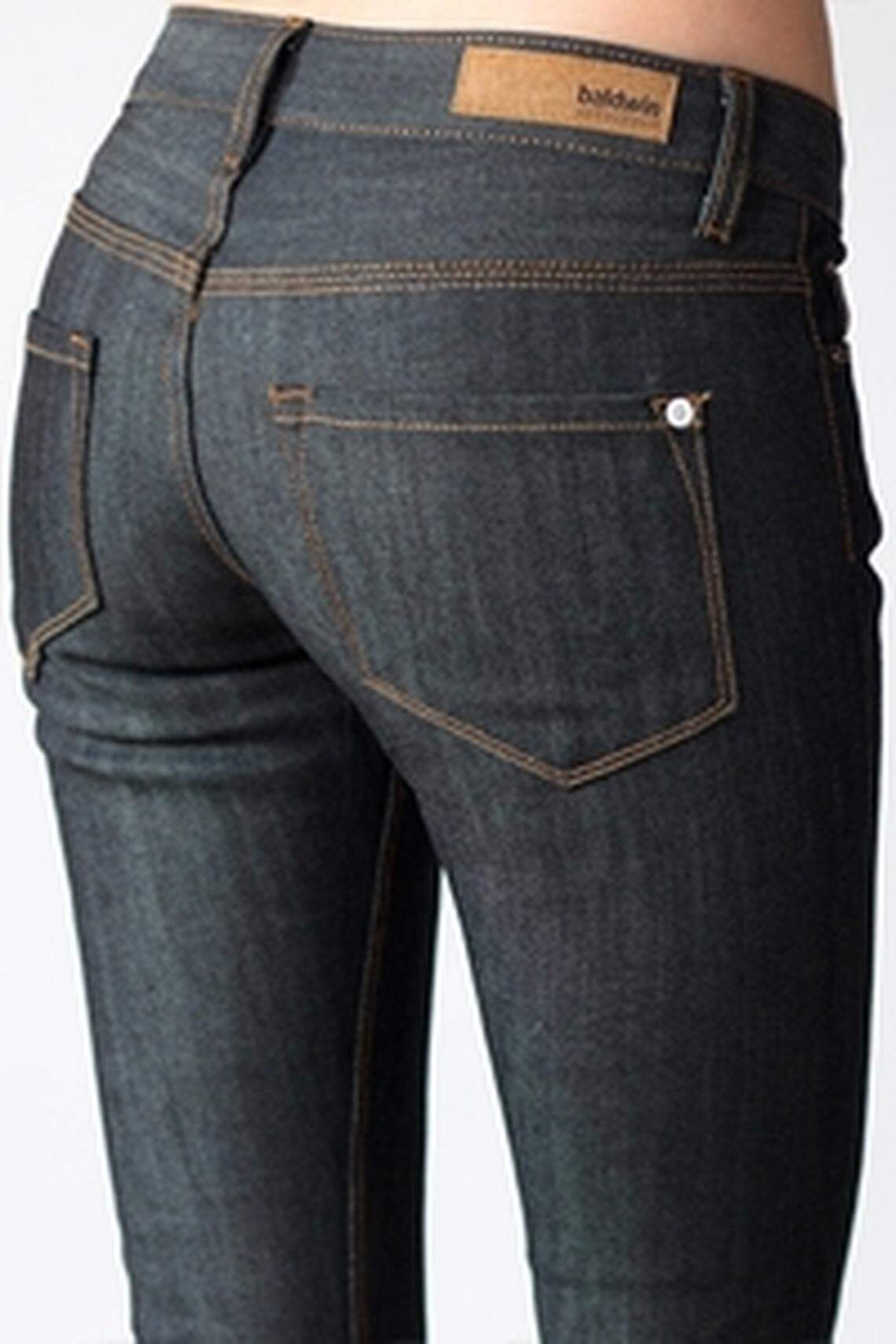
Baldwin Denim highlighted its craftsmanship and artisanal touches. The high-quality selvedge denim was produced on rare shuttle looms in places like North Carolina and Japan. (“It is literally made the exact same way that Levis made their product back in 1883,” Matt Baldwin told The Star in 2009.) The back patches were hand-stamped with the Baldwin logo, the leather sourced from Missouri steer hides.
Purchasers of the $220 jeans were advised to wait as long as possible before washing them so as to preserve the indigo and allow for natural fade patterns to emerge in the denim.
In 2010, he expanded into a full menswear line called the Baldwin Collection. His shirts, pants, jackets and KC hats could now be found in boutiques and retailers across the country (Nordstrom, Barneys New York, Bloomingdale’s), in addition to a new Baldwin Mens’ Shop, which opened in Leawood in 2011. The following year, GQ named his shop one of the 25 best men’s stores in America.
“The beauty of Baldwin is that they only do a handful of styles, and they do them well,” Matthew Sebra, GQ’s associate fashion editor, told The Star that year. “This is clean, pure denim, and that’s why we’ve gotten behind them. They removed all the bells and whistles and really made denim that is true to the spirit of what denim should be.”

Celebrities began to discover the brand. Jay-Z wore Baldwin’s camo pants practically everywhere he went for a year, from the south of France to courtside at Brooklyn Nets games. George Clooney and Ellen DeGeneres were fans. Jason Sudeikis and then-girlfriend Olivia Wilde were constantly photographed in Baldwin’s KC hat, trumpeting Sudeikis’ hometown to the world.
“It was really nice, because we had the right (celebrities) repping the look across the country,” Matt Baldwin said. “It happened really naturally. In a lot of cases we didn’t gift the clothes to them. They found it on their own.”
Locally, Baldwin designed the employee uniforms for Port Fonda in Westport and Woodside Health and Tennis Club. The Baldwin KC hat became a $42 signifier of local pride and good taste.

Tyler Enders, one of the co-founders of Made in KC, a local goods shop with 10 locations in the metro, said he thought Baldwin’s KC hat in particular kickstarted a boom in civic pride in Kansas City in the 2010s that paved the way, in some respects, for his company and others, like Charlie Hustle.
“It’s hard to know exactly what’s a catalyst, but there’s no doubt those hats were instrumental — they preceded a lot of the apparel we sell,” Enders said.
GQ doubled down on Baldwin in 2013, with editor-in-chief Jim Moore declaring Matt Baldwin one of the four top menswear designers in the country.
“We don’t like to give people this honor right out of the gate because we don’t know if they will make it,” Moore said at the time. “Matt is going to have made it in a very short period of time. He will continue to grow and become one of this country’s biggest menswear talents. … He makes one of the best pairs of jeans in the world.”
As part of the GQ award, Baldwin was given the opportunity to design a collection that would be sold at more than 200 Gap stores across the globe.
“This thing is going to be everywhere,” Baldwin said of his line at the time. “It will be KC worldwide.”
Size matters
Baldwin LLC began as The Standard LLC and changed its name in 2017; for clarity, The Star is calling it Baldwin LLC. From its inception, it was a family business. Its primary investor was Matt’s father, Ron Baldwin, a Wichita banker who served as president of Bank IV and Intrust Bank and later founded CrossFirst Bank.
Initial investors included Matt and Emily Baldwin; Matt’s parents, Ron and Cindy Baldwin; Emily’s parents, William and Jana Woods; and a few family friends. In 2007, state filings show, Ron and Cindy owned a majority stake in the business: 60% to Matt and Emily’s 20%. By 2010, Ron Baldwin was the sole owner of the company.
With the GQ winds at its back and sales soaring in 2014, Baldwin Denim and Collection was looking to level up. The plan was to open a store in a new city each year for the next five years, starting in New York and Los Angeles. Its aspirations were now international.
The clothing business is notoriously risky and capital-intensive. Even good sales can be a burden. More people buying your jeans means you must project out larger and larger future outlays on fabric and production — a delicate dance in a complicated global industry. Being well-capitalized goes a long way to smoothing out some of those unpredictable wrinkles.
“We put off growing our capital team as long as we could,” Matt Baldwin said. “But when we started selling to Saks and Nordstrom, you have to fund that upfront. And we had outgrown our original investment premise. So then it’s about trying not to take the wrong capital. That’s the biggest challenge.”
In 2014, the Baldwins put together a business growth plan and began looking outside their family and circle of friends for new investors. They found quite a few. Over the next few years, several people from the Kansas City and Wichita areas invested in the company.

The most well-known of them was Sudeikis, who owned at least 5% of the company by the end of 2014, according to Kansas state filings. Sporting KC co-owners Robb Heineman and Greg Maday got a piece of the action through an LLC called 1511 Ventures. A Leawood holding company owned by John and Robert Brandmeyer — heirs to a fortune derived from the $490 million sale of a medical devices company in 2008 — kicked in. So did Murfin Inc., a Wichita-based company whose holdings include oil and gas concerns, farm equipment dealerships and real estate. Michael Fox, a co-founder of Kansas energy giant Inergy, also invested.
The largest and most prominent investor by far, though, was an entity called TIFEC LLC. The acronym stands for The Illig Family Enterprise Co., and it is 99% owned by Cliff Illig, the billionaire principal owner of Sporting KC and the co-founder of the health care IT juggernaut Cerner Corp., Kansas City’s largest private employer.
“The Baldwins understood that the company lacked the executive talent, business sophistication, and capital necessary to transition to a worldwide clothing company,” Illig’s attorneys write in court filings. “So, the Baldwins sought investors and more experienced business talent, including from TIFEC.” Illig’s LLC first invested in 2015, records show.
In addition to taking on new investors, all four Baldwins — Matt, Emily, Ron and Cindy — had in 2014 taken out two business loans totaling roughly $2 million from Citizens Bank and Trust Co. (formerly Summit Bank). By 2016, according to Illig’s attorneys, Baldwin LLC was in danger of defaulting on the notes. The Baldwins then “pleaded with TIFEC to inject $5-7 million into its struggling business, and to provide TIFEC’s substantial entrepreneurial expertise to lead Baldwin LLC’s growth plan.”
In the fall of 2017, Baldwin LLC was quietly reorganized. When the dust settled, the Baldwin family owned just 6% of the firm compared to Illig’s approximately 80%. The Baldwin era of Baldwin LLC was coming to a close.
Bad fits
From the outside, there was little that indicated much had changed at the company since it began seeking outside investors.
Paparazzi continued snapping pics of celebs running errands in Baldwin’s premium denim garments. Matt Baldwin had been selected as a finalist for the 2015 Fashion Fund Competition, a prestigious nod from the editors of Vogue and the Council of Fashion Designers of America. He even appeared with his children, Sudeikis and model Kendall Jenner in a spread in Vogue’s November issue that year.
Baldwin brick-and-mortar retail shops opened in New York, Dallas and Los Angeles in 2016 and 2017. And The Gap partnership resulted in 60,000 sales of the KC hat, the Baldwins said, to customers from Dublin to Dubai.
“We had always tried to be such champions of Kansas City, so seeing it out in the world like that was really fun, really cool,” Emily Baldwin said.
Inside the company, though, a metamorphosis was underway. Shortly after the reorganization, Ron Baldwin was ousted from the new five-person board of directors. Matt and Emily Baldwin were stripped of their roles as CEO and president and asked to sign employment contracts, “all at TIFEC’s request and to the surprise of the Baldwins,” their attorneys write.
“TIFEC engaged in a concerted and intentional effort to ensure the Baldwins were excluded from all financial, strategic, and growth-related decisions affecting the company,” actions that “amounted to oppression” of the Baldwins. From 2017 to 2020, the Baldwins’ attorneys write, TIFEC “engaged in gross negligence and malfeasance” in connection with various financial and management decisions, including ones about “inventory, branding, and executive leadership.”
Illig’s view of things, as expressed in court, is markedly different. The Baldwin family members were “replaced by experienced and competent executive leadership,” his attorneys write, and the reorganization was necessary to “repair the damage to Baldwin LLC caused by the Baldwin family’s management.”
The upshot was that Illig’s team was now running the show. That team included George Hansen joining as managing director of the company. Hansen is an experienced corporate executive, with stints leading Kansas corporations including Carstar and Zave Networks, the latter of which was sold to Google in a deal Hansen engineered.
One of the new guard’s first moves was to appoint a new president and creative director of the company. In January 2018, WWD broke the news that Johnathan Crocker, a former vice president of global communications for the high-end denim company AG Jeans, was taking the helm. Crocker would be overseeing “all aspects of the brand’s creative services, design, product development, communications, sales, and retail.”
Matt and Emily Baldwin would be staying on with the company as “inspiration guides,” WWD reported.
“It was a slow choke,” he said. “It wasn’t our choice. We did our very best to be available in a very tough scenario. But we’d lost control of the board. We respected the capital and had to go along for the ride.”
He said he had recommended Crocker to Hansen for a marketing position prior to the shakeup. “Then George hired him to run the whole company.”
“I do think it was a challenging and difficult process for Matt and Emily to be removed from their previous roles,” Crocker told The Star recently. “And I tried my best to keep them involved. As co-founders of the brand, I always felt there was definite value in having them around.”
But, Crocker continued, “I had also been given a clear directive from TIFEC, communicated to me through George (Hansen), that Cliff felt the brand had reached a plateau and that the existing leadership wasn’t performing at a level that was giving TIFEC the confidence to continue to invest. That’s why I was brought in, to pivot the brand and make these larger changes that I felt were necessary. And eventually, there came a point where I had to have a conversation with (Matt and Emily) where I said, you know, as great as it would be to have you involved, we’re going to have to remove you from the day-to-day operations of this.”

Baldwin becomes BLDWN
In September 2018, Crocker announced in Vogue that the company was rebranding and moving to Los Angeles, leaving its vowels behind in the Midwest. The headline said it all: “BLDWN, the Erstwhile Kansas City Denim Brand, Is Now a Ready-to-Wear Label Out of L.A.”
Crocker characterized his vision as “building a modern American fashion brand which represents a natural evolution from BLDWN’s Kansas City roots.” Elevating the company from a regionally focused Baldwin to a global BLDWN necessitated a move from Kansas City to California, he said.
“We were trying to reposition the brand and evolve past being just a premium denim brand to being a ready-to-wear men’s and women’s company, and to scale like that and build a national brand is incredibly challenging,” Crocker told The Star. “That’s why I felt we needed headquarters in L.A. where there’s more resources and better access to talent. If you want to sample a new zipper from Kansas City, that process takes weeks. In L.A. you can get it done in an hour. And think of that for every category: cut-and-sews, wovens, outerwear, denim. In L.A., you call your rep, who’s also in L.A., and you get it done that day. It just really helps to be where the industry is.”
Of Illig’s involvement in the company, Crocker said: “Cliff didn’t get to where he is in his career professionally to not have a point of view on how to run a business he’s invested in. But he also understood that his own fashion industry knowledge was fairly limited. We made recommendations and presented them to him and others at TIFEC, and they had insight and feedback. And we’d go from there.”
In L.A., Crocker hired dozens of new BLDWN employees and set about building on the “solid foundation” the Baldwins had started. The company presented at New York Fashion Week for the first time in 2018 and received positive reviews from Vogue and WWD. By mid-2019, BLDWN had added two more retail locations, in Austin, Texas, and San Jose, California, for a total of seven shops in the U.S. BLDWN also got some of its clothes back into several key specialty stores as well as Nordstrom, perhaps the most influential retail partner in America.
“We made a huge shift in a very short period of time — a year and a half,” Crocker said. “In terms of rebuilding an entire brand, the marketing, the design, the tech, e-commerce, retail, the editorial recognition we were getting — what we did was remarkable, I feel. We were moving quickly in the right direction.”
Until, that is, the day in October 2019 that George Hansen came into town and fired Crocker.
“I was 100% caught off-guard,” Crocker said. “In my nearly two years there, I’d never received any concerns about my performance or my team’s performance or the brand’s performance. There was no specific reason they pointed to for why they let me go. George just said he and TIFEC felt there needed to be a change in leadership.”
Hansen told The Star that, despite Crocker’s job title, Crocker was a “consultant” and that “with the capable team we had at that point, there was no need for another consultant.” He declined to comment further.
The company never hired a replacement for Crocker. Tommy James, the chief financial officer, filled in until March 2020. (James declined to comment.) On March 22, with the world entering COVID-19 lockdowns and uncertainty, the entire BLDWN staff was let go. WWD reported that included 33 people in corporate roles and another 45 workers at its seven retail stores. “The investors decided it was time to shut it down,” the company’s spokesperson, also laid off, told WWD.
In an Instagram post at the time, Matt Baldwin wrote: “I left Vail to return home to KC this March 2020 to the news of our financial and operating partner calling an emergency board meeting to shut down the company and stop all operations.”
“We were absolutely shocked,” Emily Baldwin said. “Seventeen years and then you just find out one day that it’s gone. And all the employees too: the employees had always been like family to us. It hurt.”
Karen Virgillito, general counsel for TIFEC, told The Star in an email that the Illig family invested over $40 million in Baldwin LLC between 2015 and 2020.
But, she wrote, “Despite the concerted efforts of Johnathan (Crocker) plus a talented group of retail, design, and marketing executives that he assembled in the LA office, the company continued to suffer significant losses. In late 2019, it became clear that the company was at a crossroads and difficult decisions needed to be made regarding the future of the company. Further, Covid outbreaks overseas and in the U.S. shut down supply chains and retail sales were severely impacted due to mandated brick and mortar retail store closures, making a turnaround much more challenging and costly than under the best circumstances.”
Virgillito declined to comment on specific personnel matters and operations, citing TIFEC’s status as a privately held company.
Virgillito also said that, contrary to what WWD reported at the time, Baldwin LLC didn’t file for bankruptcy. “Our adviser recommended against bankruptcy court as a solution. There weren’t many assets for the court to administer. We instead tried to do an orderly wind-down, albeit with some complexities as you might imagine.”
Among those complexities was the matter of the $2 million in loans the Baldwin family had borrowed from Citizens Bank back in 2014. Even after the company liquidated its assets in June and July 2020, Baldwin LLC still owed the bank $760,000. The Baldwins, who were on the hook for the guarantees, soon defaulted on the debt. Citizens then sued to collect.
The Baldwins responded by suing TIFEC, claiming its “gross negligence, bad faith, and malfeasance” in managing Baldwin LLC had increased the risk of the loans. Their attorney cited TIFEC’s “excessive use of expensive and unnecessary outside consultants” and the hiring of “incompetent and/or unqualified management and other key personnel with little to no experience in the retail, apparel, and fashion industries,” among other breaches of fiduciary duty to the Baldwins.
“Matt and Emily Baldwin suffered reputational damage in an industry for which they have dedicated their professional careers, the destruction of their eponymous brand, termination of their employment contracts without severance, and loss of past and future income,” the Baldwins’ attorney wrote.
Illig’s attorneys were unsparing in their response, calling the Baldwins’ counterclaim against TIFEC “rich in irony.”
“After the Baldwins’ failure to manage a national expansion of its clothing business, they are now, for a second time, demanding that someone else pay their debts and relieve the family of the consequences of its entrepreneurial limitations,” Gregory Leyh, counsel for TIFEC, wrote in its response.
That was in August. Two months later, an agreement was reached, and the cases were dismissed. Both sides declined to comment on the lawsuit, citing nondisclosure clauses in their settlement.
The fashion cycle
These days, Matt and Emily Baldwin live with their three children in Malibu, California, where last year they started their next venture, Unity Service. It’s part creative studio, where he consults with musicians, artists and entrepreneurs on making merchandise for their brands, and part designer clothing lab, where customers can get garments dyed or screenprinted.
“Personalization and customization is going to be the trend for the next decade ahead,” he said. “It’s about making things in your life more your own. So you pick up a vintage Lee denim jacket from 1982, or casual classic shoes, or a hoodie, and we can print on it, embroider it, dye it. Turn it into something that’s more yours.”
The “made in America” trend that Baldwin Denim was identified with has lost momentum in recent years, he acknowledged. Williams with A Continuous Lean agreed.
“Fashion today is really driven by youth culture, and the generation that’s come up behind the wave Baldwin was a part of — Generation Z, basically — has really different thoughts on things,” Williams said. “They’re much more willing to buy something and sell it on the resale market, and to use apps to do that stuff. It’s a different world than the one where the prevailing mentality was to invest in one really nice pair of jeans.”
Baldwin was also founded in an era when direct-to-consumer brands didn’t yet exist. Over the last five to seven years, businesses have migrated away from wholesaling, instead bypassing traditional retail stores and selling straight to customers over the internet. Think Everlane, Mack Weldon and Allbirds. Or Buck Mason, a successful L.A.-based denim and clothing company whose classic American menswear line is not unlike the one BLDWN was rolling out before it closed.
“They’ve grown very slow,” Williams said of the company. “And they don’t wholesale. If you sell to department stores or boutiques, whoever, those stores have to mark up your stuff to get the margin. So a Baldwin customer has to pay that markup. Whereas Buck Mason can price their jeans at $125 or $150 because they’re selling straight to you. And you can do more volume that way. There’s a big difference between $125 and $200.”
Crocker said that part of the 2018-2019 pivot he undertook at BLDWN was toward direct-to-consumer sales, but that there’s still value in getting your products in the Nordstroms of the world.
“Every smart clothing company is trying to grow their (direct to consumer) sales, and we absolutely were as well — that’s just where the world is headed,” he said. “But wholesale is still important. It was the biggest part of our business. People still shop at malls and local specialty stores. And we saw a lot of loyalty from our customers there. We wanted to continue to build on that.”
Matt Baldwin said he didn’t have any particular insights about business strategies pursued in the final years of the company he founded. At least none he felt he could share.
“All I can say is, that was BLDWN — that’s TIFEC, that’s Cliff Illig,” he said. “That wasn’t us. Matt and Emily and Ron — that’s Baldwin.”
Illig has moved on. He retired from the Cerner board two years ago and has lately been campaigning to bring soccer’s World Cup to Kansas City in 2026. Through TIFEC, he continues to invest in a broad range of industries: tech, real estate, agriculture, animal sciences. Baldwin — or BLDWN — was ultimately one bet among many, a line item in TIFEC’s vast portfolio.
Letting go meant something different for the founders of the company. The Baldwins said they are grateful, looking ahead, excited about building something new from scratch. The horizon looks bright out on the California coast. But they still grieve for the company they lost back home.
“It was like letting your baby go 15 years into raising it,” Emily Baldwin said. “It was tough. It was really tough.”
This story was originally published January 5, 2022 at 5:00 AM with the headline "Washed out: The mystery behind the demise of iconic Kansas City brand Baldwin Denim."
