
Sporting Kansas City at 25: Besler, others recall humble beginnings, rise to glory
The boy was 9, and that’s a great age to be a sports fan. At that age you’ve seen enough to be amazed, but not so much to be cynical. You can be in awe of the scale of sports and not yet immune to the magic.
This particular boy remembers the first Major League Soccer game in Kansas City history, even now that he is a man — 25 seasons ago, the anniversary hitting next week.
He remembers the logos, cartoonish with colors. He remembers his dad telling him to hope a player named Digital Takawira scored, because if he did, he’d see the Digital Crawl. He remembers playing soccer with his friends in the parking lot before games, and often after. Sometimes he’d get as sweaty as those MLS players.
He remembers the Papa John’s Minute, when the whole stadium erupted with anticipatory hunger for a free pizza if the Wiz (more on that soon) scored. He remembers dancing to the Macarena (what a time to be alive).
Those memories stick, even now, as the boy is a man with a unique look at a quarter-century of a franchise that later rebranded as Sporting Kansas City and took hold of a growing and passionate chunk of our sports landscape.
“I don’t want to overplay anything here,” Matt Besler said. “I really was just a regular 9-year-old kid. I went to the games because I loved soccer and hanging out with my friends. It’s not like I was sitting there studying Preki when I was 9.”
Besler, of course, is now Sporting KC’s star defender with World Cup experience. And the experience that night at Arrowhead Stadium did leave a mark on Besler — just maybe not the one you’d expect. We’ll get to that soon, too.
First, it’s worth going through some of what happened between then and now. Sporting had planned a celebration this summer — the 25th season, the 20-year anniversary of its first MLS Cup and 10th anniversary of the rebrand. Former players would come back. Videos would play. Stories would be told. That’s on hold now, obviously, along with virtually everything else in sports.
But it doesn’t have to be on hold here. It’s OK to remember the fun. Maybe it’s more important than ever. The franchise that used to be the Wizards, and before that the Wiz, has a lot of fun stories to tell.
Vodka in the eyes
Have you heard the one about Preki, Kansas City’s first outdoor soccer star, pouring vodka in his eyes?
Happened in San Jose. Let’s just say that training and fitness habits were different back then, and some guys on the bench planned on going out after the game. They thought they could get a head-start — pre-gaming during the game, you might say.
Preki came to the sideline, sweaty and gassed, hoping to cool off. He grabbed a water bottle. You can guess what happened next. Vodka burns the eyes.
MLS was different back then. It was a startup, an attempt to build off the momentum of the 1994 World Cup played in the United States and a groundswell of youth participation in the previous decade or so.
“This was our big chance to do it right,” said Guy Newman, an assistant on the Wizards’ first team. “We all felt like, ‘We better not mess it up.’”
But a two-year gap between the pageantry of the tournament and the inaugural MLS game, little knowledge of the sport in mainstream America and unstable funding made the whole operation an enormous risk. Indoor soccer teams — including the Comets in Kansas City — had often outdrawn NBA teams in the 1980s, but their novelty wore off.
At least two outdoor leagues had recently failed, and the reasons were plentiful — funding, media exposure, talent, culture and disagreement about whether to build deliberately or spend wildly.
MLS hoped to learn from those mistakes, most notably with a single-entity system in which all player contracts were with the league and not individual teams. The Wizards, in fact, would have a franchise-altering personnel swap come from this system. More on that in a minute, too.
The Wiz — renamed the Wizards after being sued by an electronics-store chain called The Wiz of “Nobody Beats The Wiz” fame, and if you’re too young to remember, no, that’s not a joke — began as a cause more than a business.
“I don’t think there are any shortcuts for credibility,” said Diego Gutierrez, a Blue Springs High and Rockhurst College grad who played on that first team.
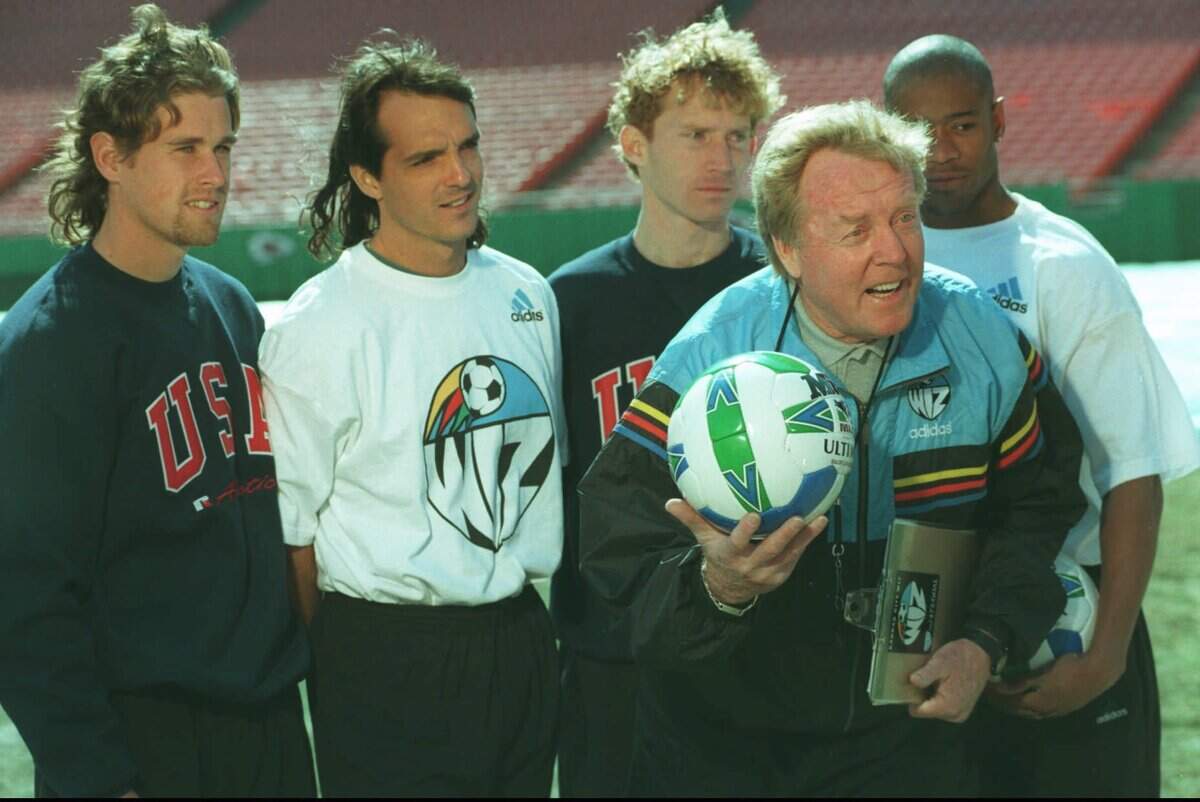
Lamar Hunt, the Kansas City Chiefs’ founder and a longtime soccer believer, knew he’d lose money as a founding investor in MLS. That was OK. He believed in the product and thought it could grow. If American sports fans didn’t know much about soccer, then maybe they and MLS could grow together. The new league would meet them halfway.
They used a countdown clock kept on the scoreboard and not the field, for instance, with no stoppage time. The league had no ties, holding hockey-style shootouts where the attacking player could dribble before shooting. Music played during the action, such a constant part of the background noise that players sometimes found themselves humming along.
The Wiz’s first practice was at UMKC. They also occasionally trained in parking lots, a basketball court at a local gym and public parks while on the road. Some players made as little as $12,000. The team held an open tryout, and though nobody made the team that day the field of hopefuls — one wore blue jeans — was a sign of the area’s knowledge of, and respect for, the sport.
“Every now and then somebody would come up to you and go, ‘Oh yeah, you’re the guy who kicks that funny ball,’” Newman said.
He was joking, but only kind of. Kansas City was a tough sell, sometimes even for players. Alexi Lalas, a defender on the US Men’s National Team, played briefly for the Wizards before forcing his way out of Kansas City.
With the mechanics of the league’s single-entity system, the Wizards brought in a replacement: Peter Vermes. A case could be made for this as one of the franchise’s all-time fortunate breaks.
A time of growth
MLS operated with something that could be described as productive desperation.
At one point, the Wizards pitched a story idea to The Star — dinner at Preki’s house, with the star player cooking. The assignment was originally given to a high school reporter but then yanked for reasons that still escape the high school reporter (me).
Logos were, basically, what the league hoped to be: big, bright and eye-catching. The Wiz’s first uniform featured a full frontal rainbow, and the broadcast was something like speed dating.
“We’ll throw those numbers out at you periodically,” broadcaster Randy Hahn said early in that first game. “Like I, you are getting familiar with the Wiz, no doubt.”
.JPG "SOCCER WIZ MASCOT CHOPPER OPENING DAY(2).JPG")
The franchise hoped for 15,000 fans that first game. More than 20,000 showed up. It was the first public event at Arrowhead Stadium after the Chiefs lost the Lin Elliott playoff game. A sign hung behind one goal: “WANTED: PLACEKICKER.”
“We talked about wanting this to last,” said Sean Bowers, a defender.
“I was afraid there was only going to be family and a few friends there,” Newman said.
“The question was, ‘Would these people come out, watch a game, and never come back?’” Gutierrez said.
“We were nervous,” Takawira said. “Would it last? But for me, it was seeing the kids there. We saw lots of kids at the games, lots of kids asking for autographs. That told me a lot. Because that right there, that’s the future. The kids.”
The kids. Lets go back to the 9-year-old, and how his experience then left a mark on Besler now.
How times have changed
The franchise now known as Sporting KC was close to being contracted in the early 2000s, and its future remained precarious through Hunt’s sale to a group led by Cerner founders Neal Patterson and Cliff Illig.
All sports face some level of unknown at the moment, but Sporting KC is by now an established triumph. MLS commissioner Don Garber has called it one of the league’s all-time success stories.
Besler’s contract pays him more than a half-million per season. The vast majority of games he’s played at Children’s Mercy Park have been sellouts. All Sporting KC games are televised, including some nationally, though ratings remain low. In normal times, it’s hard to drive or walk around town without seeing a Sporting T-shirt or bumper sticker or hat.
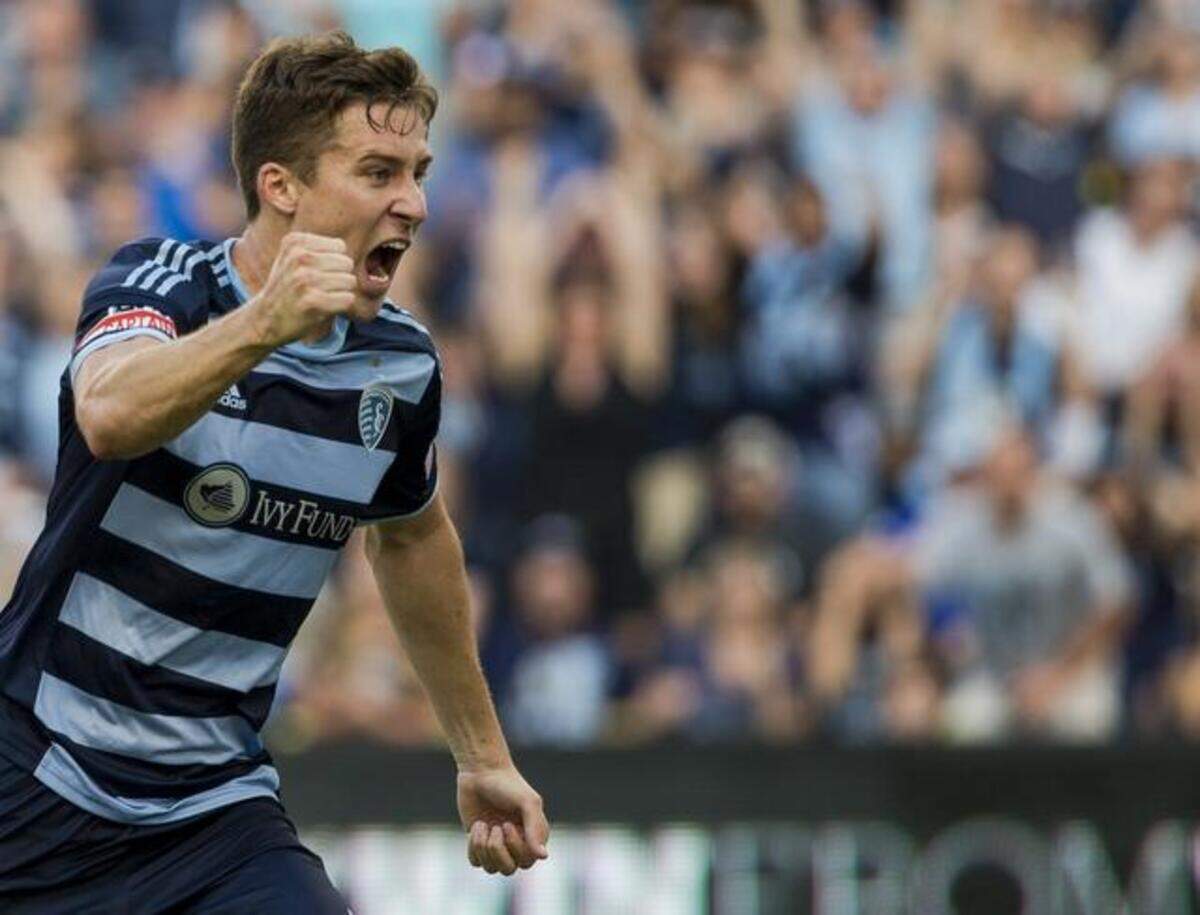
Besler is, in other words, a star player for his successful hometown team. He doesn’t carry the ticket stub from that first game with him, or tell stories about being motivated by the first glimpse of players on the field. But the moment sticks with him in different ways.
“It helps to have that perspective, and being able to experience what it was like in 1996,” he said.
Once, Besler and one of his best friends served as the team’s All Sport Energy Drink — this is so long ago it was carbonated — hydration experts. OK, maybe that title is made up. But you get the idea. Besler and his buddy needed to keep those cups on the sidelines full.
They got shiny blue jersey tops to wear and were on the field a few hours before the game. Besler remembers racing his buddy from one goal to the other, feeling like a king.
If this was a movie, and one of the most decorated players in franchise history not only grew up in town but attended the team’s first game as a grade-schooler, he’d have definitely walked away from that day telling his dad he wanted to play for that team.
But in some ways, Besler’s reality is better. He thinks he might’ve played more soccer in the parking lot after the game was over, and he keeps his memories in mind now when he’s the one other 9-year-olds are watching.
“You understand what the kids see,” Besler said. “If they’re enjoying what you’re doing and come to be entertained, whatever it is — could be the warmup or saying hi at the tunnel or an autograph or whatever — those are the memories they’ll hang onto.
“Those are the memories I have from when I was a kid. Those are the memories I try to make now.”
This story was originally published April 10, 2020 at 5:00 AM.