
High-schoolers spread joy to the elderly and sick one fold at a time | Opinion
Editor’s note: Akshat Agarwal, a graduating senior from Olathe North, is one of seven winners this year in the SevenDays Kindness Action Scholarship competition. The Star has run the winning essay for several years.
The sterile environment of a hospital is often defined by what is missing: the warmth of a home, the resonance of a familiar voice, and the simple knowledge that one hasn’t been forgotten by the world outside. I first felt this void in the fluorescent-lit hallways of the University of Kansas Medical Center. After my father suffered a stroke, I lived in that silence alongside my mother.
We navigated a terrifying landscape of neurological uncertainty, and in those long hours of waiting, I found myself wishing for a sign, any small gesture, to let us know we weren’t alone in our struggle. This personal encounter with the isolation of a medical crisis was the seed; however, the ripple did not truly begin until I stepped into the role of a caregiver myself.
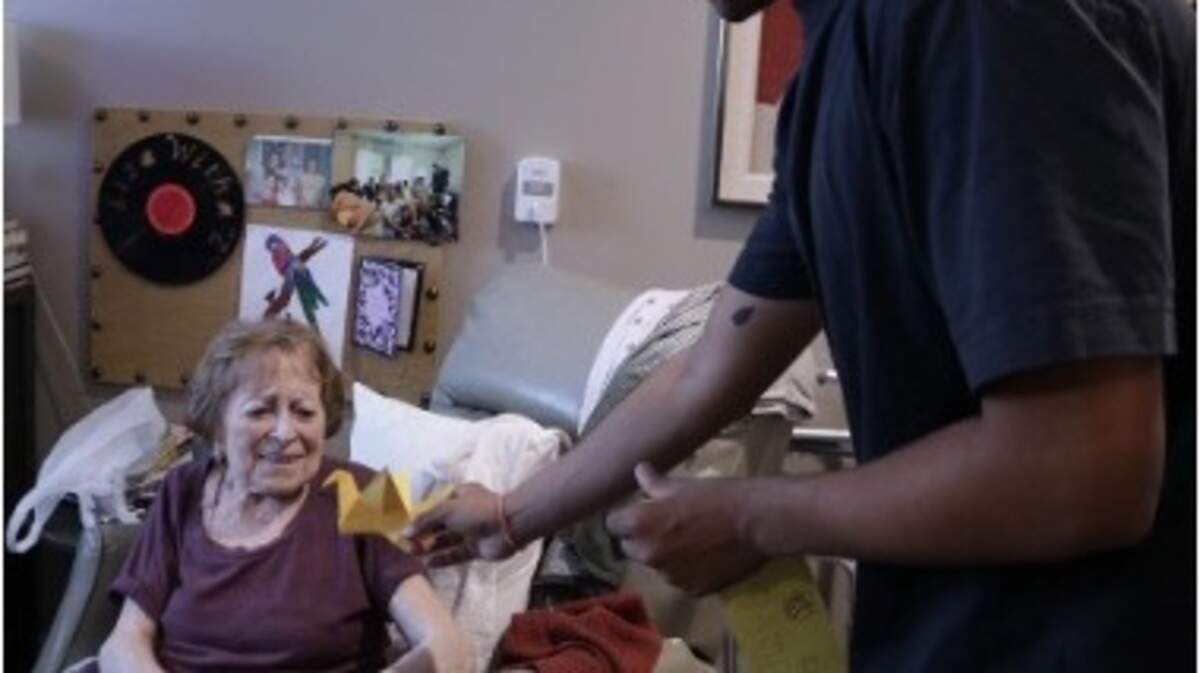
During my CNA clinicals, I moved through facilities performing the essential, yet often mechanical, tasks of healthcare. I saw firsthand that while medicine can address a physical ailment, it often leaves the soul untouched. One afternoon, during a rare quiet moment, I sat with a resident who seemed particularly weighed down by the heavy fog of isolation. Almost by instinct, I began folding a square of paper. With a few precise creases, a small origami crane took shape. When I placed it in her hand, the transformation was instantaneous. Her reaction, a mixture of surprise, recognition, and deep, tearful joy remained with me. Her words served as a call to action: “Us old people need more people like you; we don’t get visitors often.” It was a revelation: kindness does not require an exhaustive blueprint; it requires intentionality.
The inception of the ripple
On August 31, 2025, I decided that this singular moment of connection needed to be scaled. I founded Cranes of Care with a specific mission: to ensure that the elderly and the ill in our community feel valued, appreciated, and seen. I began by recruiting ten students from my school, but the movement quickly transcended the walls of a single institution. To date, we have mobilized over 60 volunteers from across the Kansas City metro, creating a diverse network of young leaders committed to the art of empathy.
.jpeg "Akshat Agarwal (1).jpeg")
Our project is deceptively simple but deeply profound in its execution. We gather to fold origami cranes and write personalized letters, which we then hand-deliver to residents and patients. We chose the crane because, in many cultures, it is a symbol of healing, longevity, and hope. But more than the paper itself, our project is about the visit. We recognized that the elderly often suffer most from a sense of social isolation. By bringing a flock of color into a beige hospital room, we are providing a tangible reminder that they are still part of our community.
Crisis of social disconnection
The choice to focus on the elderly was not accidental; it was a response to a documented public health crisis. According to the U.S. Surgeon General’s Advisory on Loneliness and Isolation, social disconnection is as dangerous to human health as smoking 15 cigarettes a day. In long-term care facilities, this loneliness epidemic is even more acute. Research indicates that nearly 40% of residents in these facilities experience symptoms of depression, often exacerbated by a lack of consistent social engagement with younger generations.
By bringing high school students into these spaces, Cranes of Care creates intergenerational ripples. These interactions provide what psychologists call “social buffering,” where positive social encounters can actually lower cortisol levels and improve the immune response in elderly patients. We aren’t just delivering paper; we are delivering a clinical necessity.
Partnerships: KU Medical Center, Children’s Mercy
The strength of a ripple is defined by the depth of the community it touches. Since our inception, we have served over 1,200 patients across ten different facilities, including high-acuity environments like Children’s Mercy and the KU Medical Center, as well as local retirement homes. This scale was made possible by the support of our local ecosystem. We have partnered with local businesses such as Sarpino’s Pizzeria and Hy-Vee, whose contributions have fueled our volunteer sessions and community events.
Furthermore, we believe that kindness is most effective when it is collaborative. We have worked alongside established non-profits like The Gift of Life, which focuses on organ donation, and the Zcharia Memorial Foundation, which supports Leukemia patients. These partnerships ensure that our “ripple” contributes to a larger wave of support for Kansas City families.
Our impact is also seasonally responsive. In October, our volunteers shifted their focus to breast cancer awareness, folding hundreds of vibrant pink cranes to symbolize solidarity with those in oncology wards at the KU Cancer Center. Similarly, during the holiday season, we hand-delivered cranes made from festive wrapping paper while singing carols at retirement homes, an initiative we coined “Cranes of Care-oling.”
Beyond our physical visits, our impact has taken a financial form. Through community outreach, we have raised $300, which was donated to Hope Lodge KC and the KU Cancer Center. These funds were specifically raised to provide transportation for cancer patients, addressing the physical barriers to care while our cranes address the emotional ones.
Before Cranes of Care, I struggled to find service opportunities that truly resonated with me. Many felt like box-ticking exercises that lacked a heartbeat. This project has rejuvenated my spirit and transformed my perspective on leadership. I have watched my peers evolve from hesitant volunteers into empathetic advocates. They have seen, in real-time, how their presence can visibly alter an individual’s state of mind. One moment that always motivates me is when a lady at Village Shalom sat us down and talked to us about her story and how grateful she was for over an hour.
Kindness is not a stagnant act; it is kinetic energy. When we fold a crane, we are not just creasing paper; we are folding our time, our empathy, and our respect into a gift for another human being. My father’s recovery and my subsequent CNA training taught me that the most difficult parts of life are made bearable by the presence of community.
Cranes of Care is my way of being the person I wish had walked into my father’s hospital room months ago. It is a reminder that while we cannot always cure the illness, we can always care for the person. As we move forward, this ongoing mission has no plans of stopping. The ripple will only grow wider, carried on the wings of thousands of paper birds and the hearts of students committed to the simple act of showing up.
SevenDays is a Kansas City-based nonprofit organization that overcomes hate by promoting kindness opportunities through education and dialogue. Each year, SevenDays has a Kindness Action Scholarship competition that graduating high school students may apply for; winners receive a $1,000 scholarship to apply to their post-high school education.