
Kansas Supreme Court rules against Legislature in separation-of-powers case
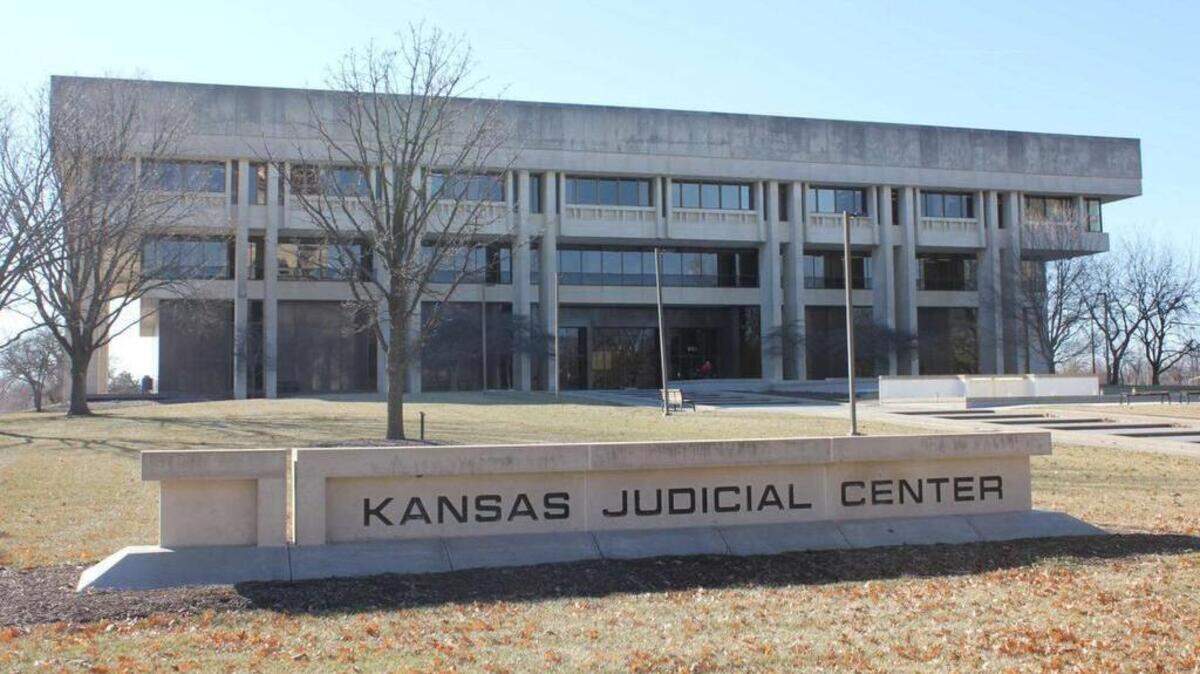
In a controversial separation-of-powers case, the Kansas Supreme Court on Wednesday struck down a 2014 law that altered the way chief district judges were selected.
The case, Solomon v. Kansas, was a face-off between the legislative branch and the judiciary.
Lawmakers had shifted the authority to select chief judges in each of the state’s 31 judicial districts. Rather than appointment by the Supreme Court, chief judges were to be elected by the judges of the district.
But the Supreme Court ruled unanimously Wednesday that such authority rests with the court.
“The means of assigning positions responsible to the Supreme Court and charged with effectuating Supreme Court policy must be in the hands of the Supreme Court, not the Legislature,” the court said.
The ruling Wednesday upholds a lower court opinion that the law is unconstitutional.
The dispute drew national attention earlier this year when the Legislature passed a law stating that if the new selection process were ruled unconstitutional, the budget for the state’s entire court system would be invalidated through June 2017.
The enforcement of that law was placed on hold. The justices said the funding cutoff law was not considered in the opinion.
“We note only that our holding appears to have practical adverse consequences to the judiciary budget, which the Legislature may wish to address, even though those concerns played no part in our analysis,” the ruling said.
To determine whether the 2014 law violated the separation-of-powers principle, the court applied a four-part test set out in 1976, including the degree of control sought by one branch of government over another.
The court held that the control the Legislature sought in changing the selection process encroached on the court’s administrative authority.
“The intervention by the Legislature in 2014 would result in removal from the Supreme Court of an essential component of its constitutionally mandated administrative authority,” the ruling said. “By taking the power to appoint chief judges away from the Supreme Court, the Legislature has exerted its power over a fundamental component of the judiciary.”
The statute’s objective was to fragment judicial power, in contrast to the unified court system required by the state constitution. the court said.
“Unlike previous legislation which was enacted in harmony with Supreme Court rules, (the statute) directly conflicts with the mission of the Supreme Court in establishing an efficient and unified administrative structure for the courts,” the court said. “Courts in other jurisdictions have reached analogous conclusions about legislative interference with the administration of courts.”
Attorney General Derek Schmidt noted in a statement Wednesday that the state Supreme Court is the final authority on the meaning of the Kansas constitution. The statute changing the chief judge selection process is void, he said.
Schmidt also said that the later defunding statute, which is the subject of another lawsuit, is under a court order and unenforceable until at least March 15.
“The Kansas constitution plainly forbids the complete defunding of the judiciary and, as I have said before, I do not think that was the intended result of the Legislature,” Schmidt said. “Therefore, in light of today’s decision, I again recommend the Legislature act before March 15 to sever the connection between funding for the judicial branch and today’s Supreme Court decision.”
Justice Eric Rosen wrote for the majority. In a separate opinion, Justice Caleb Stegall, the only justice appointed by Gov. Sam Brownback, concurred with the court’s conclusion but objected to the four-part test.
Stegall wrote that the Legislature had encroached on an essential judicial function, and he questioned any recognition of a blurring of lines between the branches of government. He cited separation-of-powers opinions by U.S. Supreme Court justices Clarence Thomas and Antonin Scalia.
His opinion also quoted poet Robert Frost: “Something there is that doesn’t love a wall/That wants it down.”
“There is something about power that doesn’t love a wall; that wants it down,” Stegall wrote.
In his statement, Schmidt highlighted Stegall’s opinion.
“For those who think the structures of our government are themselves vital bulwarks of liberty, the reasoning of Justice Stegall’s concurring opinion offered some degree of hope that the court’s separation-of-powers jurisprudence may someday become more principled and consistent,” Schmidt said.
Chief Judge Larry T. Solomon had challenged the 2014 law in Shawnee County District Court, saying it violated the separation-of-powers doctrine and was unconstitutional. The Shawnee County court judge agreed, ruling that the Supreme Court’s power to administer the judiciary was granted by the state constitution and the 2014 law interfered with that authority.
Pedro Irigonegaray, Solomon’s lawyer, said Wednesday he was pleased the court prevented the “power grab” by the Legislature and Brownback, who signed the law.
“Our Kansas courts have made it clear that in order for our democracy to function, the separation-of-powers doctrine has to be protected,” he said.
Irigonegaray also represents four judges in their lawsuit that challenges the defunding statute.
“My hope is that immediately upon the commencing of the Kansas Legislature’s 2016 session, this nightmare scenario be addressed and corrected,” he said. “It is also my hope that the Legislature and the governor fully fund the Kansas judiciary and they stop thinking of the judiciary as a twig as opposed to an independent branch of government.”
House Speaker Ray Merrick, a Stilwell Republican, issued a statement in response to the ruling: “This time the court found the concept of separation of powers to be compelling enough to rule in their own favor. I would hope the court continues to hold the concept of separation of powers with such reverence in future rulings.”
The Supreme Court heard oral arguments in the case earlier this month.
Irigonegaray told the court the move was “unconstitutional interference.” But Kansas Solicitor General Stephen McAllister argued that the Legislature created the chief judge position by statute and it was well within its rights to change the selection process, even a process established by the Supreme Court.
The state constitution gives the court “general administrative authority” over the judicial system, but not exclusive authority, McAllister said. He noted that the selection process created by the Legislature is similar to the process in other states.
Irigonegaray argued that the Legislature’s action not only substantially interfered in the judiciary’s operation but created a chaotic situation for the courts.
“We have a system that has worked well for 40 years,” he said.
Chief Justice Lawton Nuss recused himself from the case, and the court assigned retired Douglas County district judge Michael Malone. The state had requested that all justices recuse themselves, but the court issued an opinion that recusal wasn’t required.
Edward M. Eveld: 816-234-4442, @EEveld
This story was originally published December 23, 2015 at 9:49 AM with the headline "Kansas Supreme Court rules against Legislature in separation-of-powers case."