Nelson-Atkins Museum chooses design for $170M expansion. Here’s the new look
The Nelson-Atkins Museum of Art’s board of trustees has made a decision:
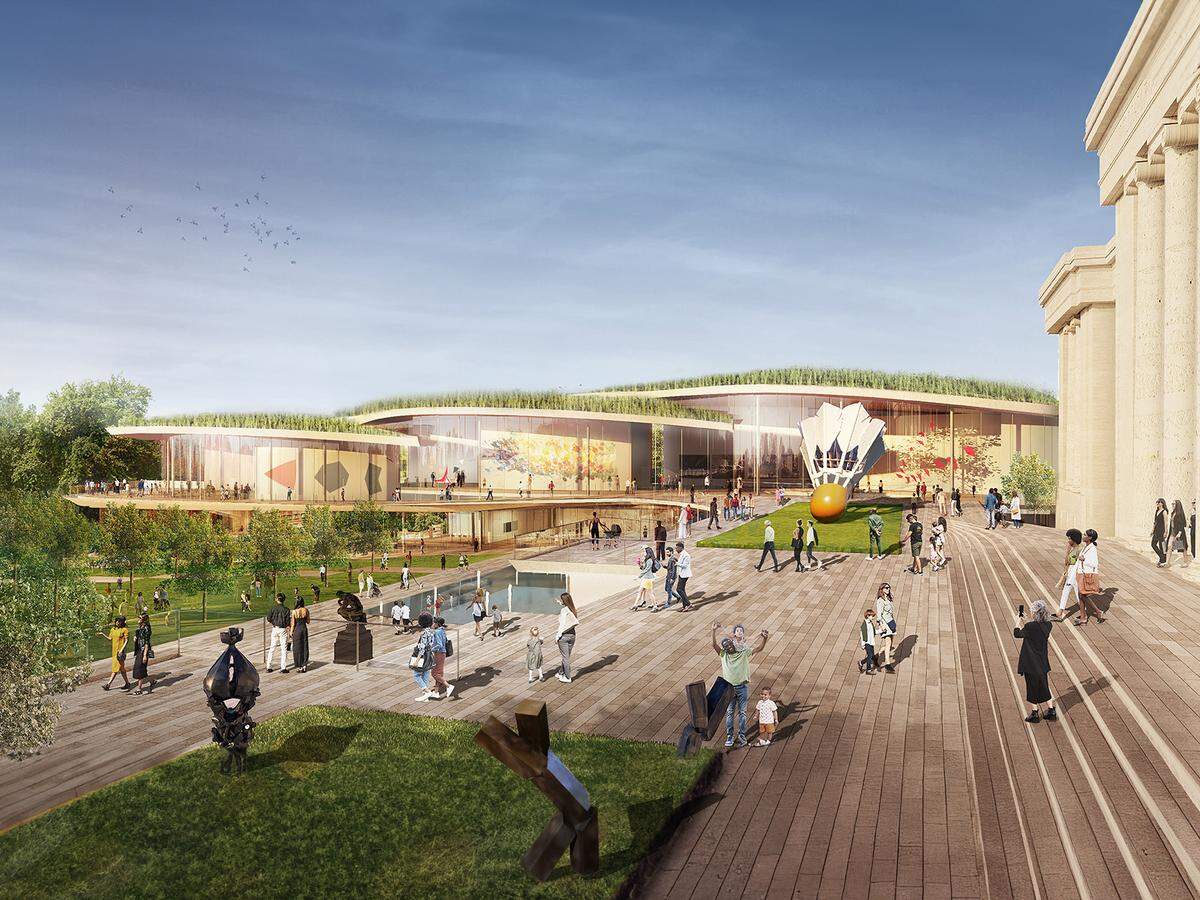
Kansas City’s premier art museum, centered in a Beaux-Arts building about to hit 92 years old, is expanding to the west, with the largest change being a two-tiered, glass addition with a green roof aimed to complement the Bloch Building to the east at a cost of between $160 million to $170 million.
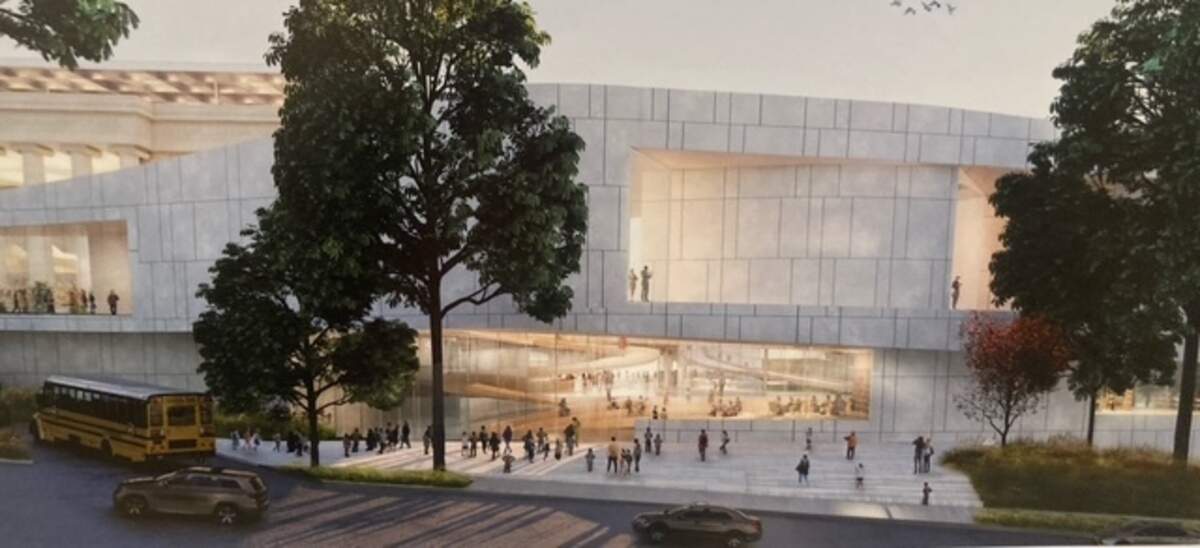
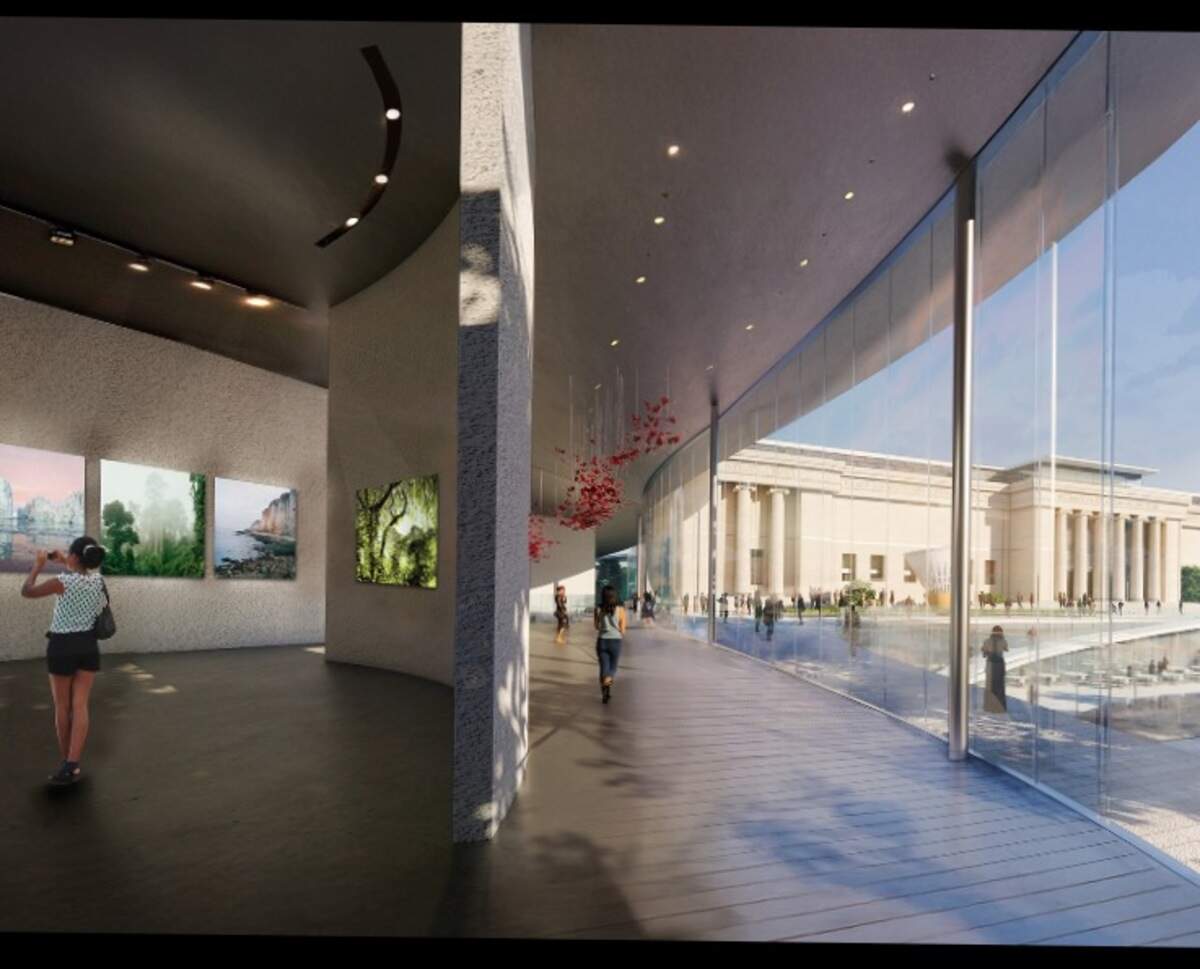
Concepts show extensive changes to the north, south and west sides of the museum, as well as to its roof. To the north: a seating amphitheater bordering the reflecting pool. Glass walls are to be placed between the museum’s neoclassical columns. The Nelson’s roof will be transformed into an open-air observation deck. The Italian Rozelle Court is to receive a glass ceiling.
On the south, a stone retaining wall is to come down and, again, be replaced with glass as a new south entry to the museum.
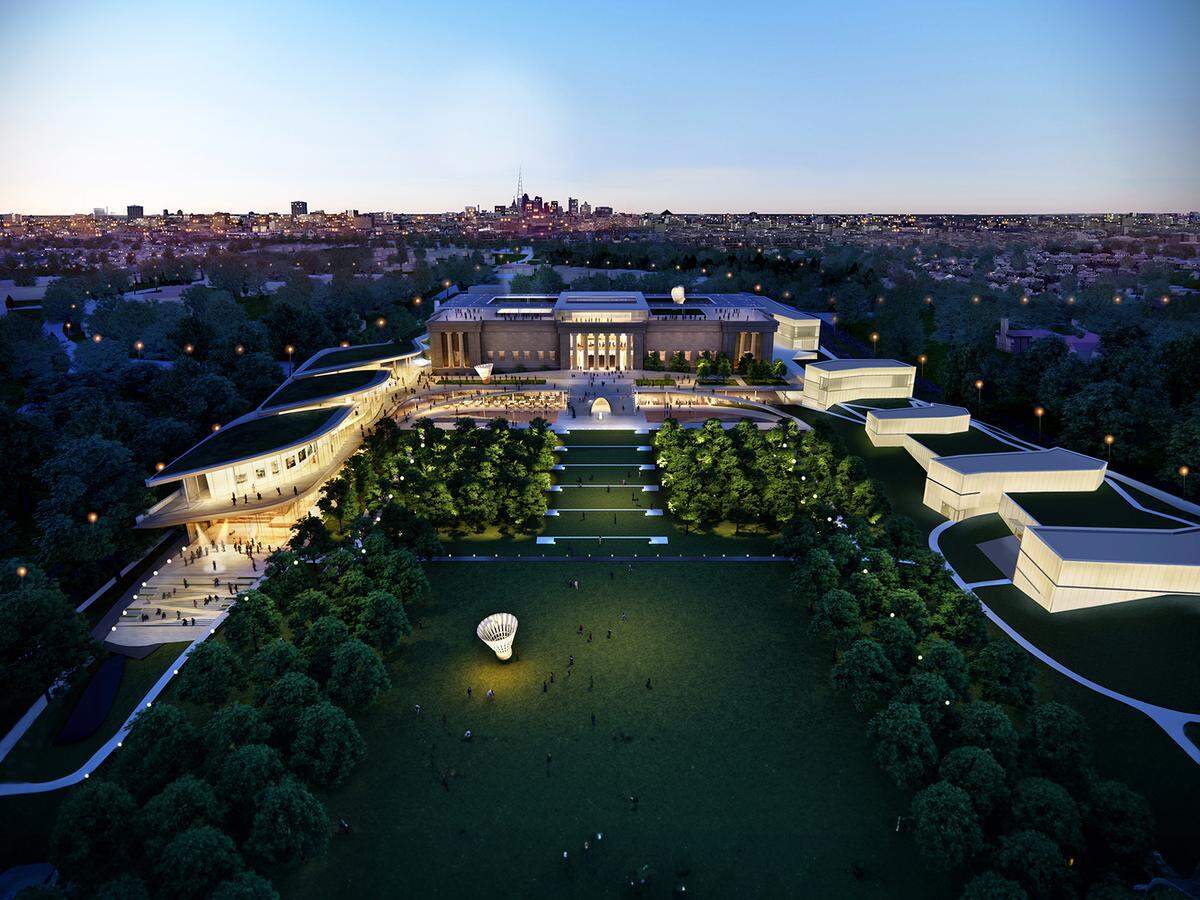
If the effect of the glass Bloch Building was to bring “illuminosity” to the Nelson, the architects at New York-based Weiss/Manfredi/Architecture/Landscape/Urbanism said, then the new addition will bring “transparency.”
The addition to the west will not only include exhibit space, but a new restaurant and theater space whose views open to the south lawn.
“Weiss/Manfredi’s concept absolutely blew us away as it captured the spirit of the museum while offering a bold vision for our future,” Julián Zugazagoitia, director and chief executive officer, said in a released statement.
“Central to our competition was the need to respect the Nelson-Atkins’ original, neoclassical building, as well as our beautiful Bloch building, while also bringing something new to our campus. This concept delivers all of that.”
Construction is anticipated to be paid for through privately raised funds. No specific construction start date was announced. The addition would be the museum’s second major expansion, following the opening of the cascading glowing “lenses” that is the glass Bloch Building, opened in 2007.
In March, the museum presented to the public six expansion designs submitted by six architectural firms which, themselves, were finalists culled from 182 entries from firms headquartered in 30 separate countries.
The museum in March had invited the public to offer their opinions of the finalists.
Besides Weiss/Manfredi, finalists had included Kengo Kuma and Associates of Tokyo, Renzo Piano Building Workshop of Genoa, Italy, Selldorf Architects of New York, Studio Gang of Chicago and Why Architecture of Los Angeles, California.
“We are deeply honored to work with The Nelson-Atkins Museum of Art on this transformative project,” Marion Weiss and Michael Manfredi, design partners at Weiss/Manfredi said in a statement. “It is a rare and meaningful opportunity to reimagine the museum as a place where art, architecture and landscape converge to reveal a place of discovery and delight, and we look forward to collaborating with the museum and community to create a more transparent and welcoming cultural campus.”
Nelson-Atkins Museum of Art
Since it opened to the public on Dec. 11, 1933, the Nelson — whose east wing was originally called the Atkins Museum of Fine Arts and the remainder the William Rockhill Nelson Gallery of Art — has been one of Kansas City’s prime tourist destinations. In 2024, attendance at the museum — which had had free admission since 1998 — was 558,000.
Perched at 4525 Oak Street, at the crest of an expansive and sloping lawn, it was built on the site of the former mansion of William Rockhill Nelson, the founder and publisher of the The Kansas City Star.
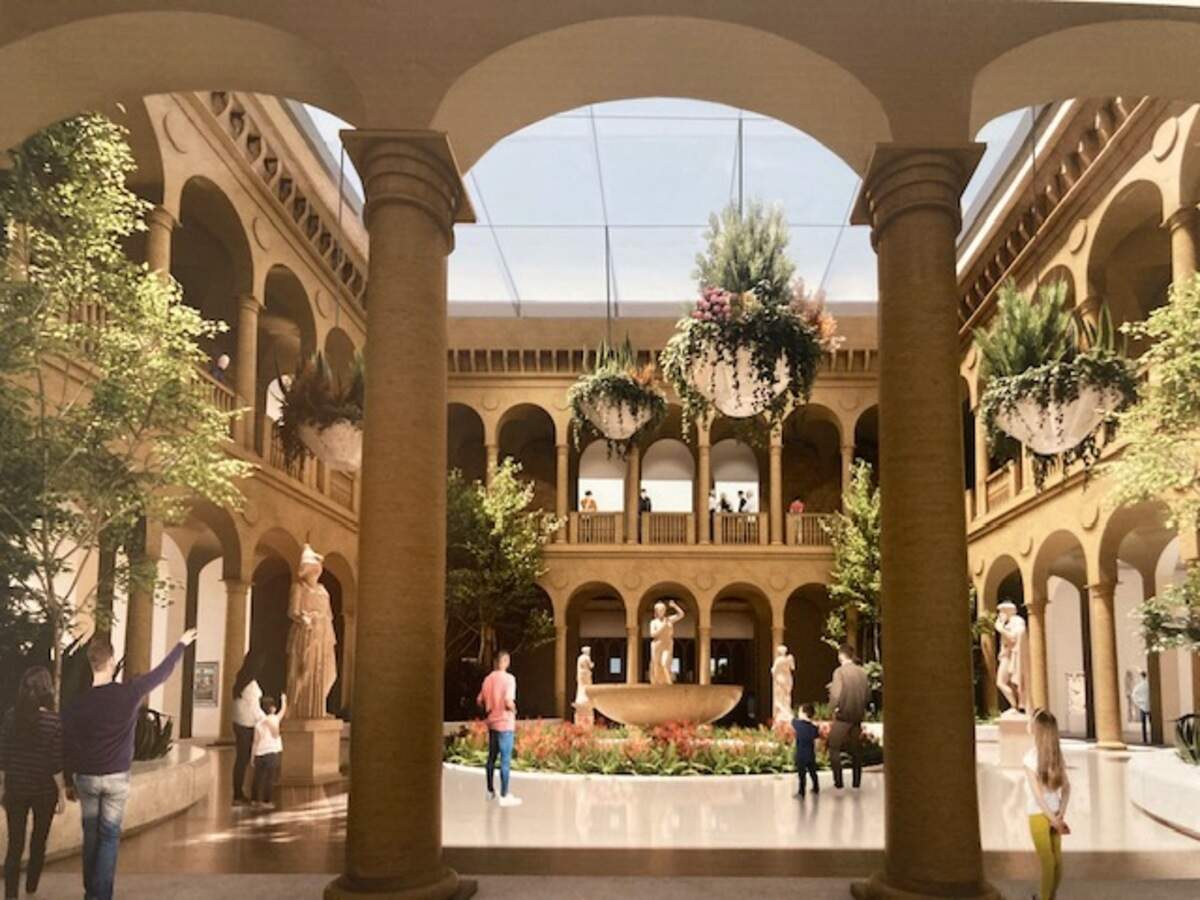
Housing some 42,000 works of art, the Nelson is particularly known for its Asian art, European and American paintings, photography, sculptures and Native American, African and Egyptian galleries.
However, at any one time, only between 6% to 7% of its total collection is ever on public display inside the museum’s 338,000 square feet. The newly announced expansion will provide the museum with an additional 61,000 square feet.
In March 2017, the museum opened The Bloch Galleries centered on the Impressionist and Post-Impressionists art belonging to H&R Block co-founder Henry Bloch, who died in 2019. His collection includes works by Claude Monet, Vincent Van Gogh, Paul Cézanne and others.
Shuttlecocks, Bloch Building as past additions
Just as art has its critics, additions to the Nelson have, historically, drawn mixed reactions, at least initially.
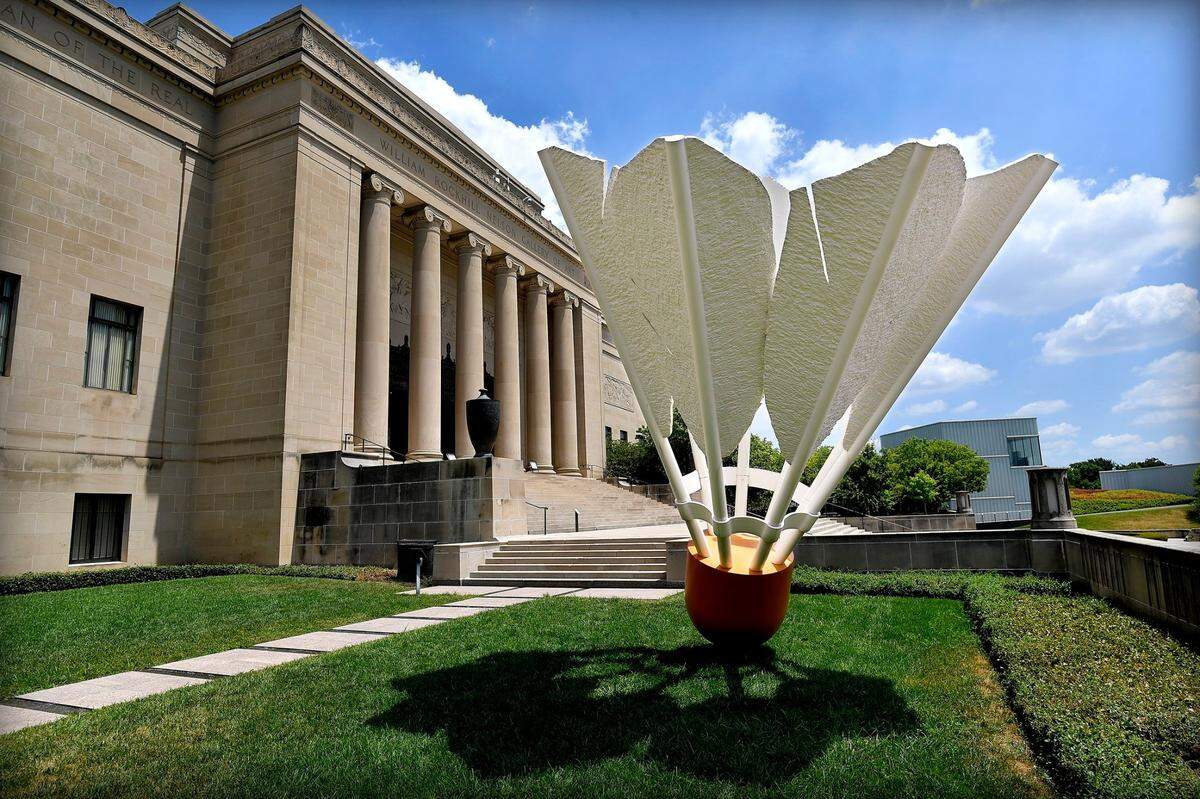
In 1994, when the Nelson’s now iconic shuttlecocks, created by Claes Oldenburg and Coosje van Bruggen, were placed on the north and south lawns, public reaction ranged from delight to disdain. The shuttlecocks have since become beloved symbols of the museum and of Kansas City.
Until it opened in 2007, the construction of the Bloch Building addition had drawn harsh criticism from both surrounding neighbors and the public. But once the opaque glass building was completed — glowing at night along the museum’s east side like Chinese lanterns — the addition, designed by architect Steven Holl, quickly became an object of civic pride.
In a piece written on June 6, 2007, just prior to the building’s grand opening, New York Times architecture critic Nicolai Ouroussof called the modern build “a breathtaking addition to the Nelson-Atkins Museum of Art,” saying that Holl had “produced a work of haunting power.”
“For the art world,” he wrote, “the addition, known as the Bloch Building, should reaffirm that art and architecture can happily coexist. The rest of us can draw comfort from the fact that public works of our own day and age can equal or surpass the grand achievements of past generations.”
This story was originally published April 24, 2025 at 12:24 PM.