


Thinking about becoming a licensed professional engineer? Then you’ve probably heard about the PE exam. If you’re not sure what it is or why it matters, you’re in the right place.
Pass rates show why this exam is such a big deal. First-time takers in fields like Fire Protection (76%), Mechanical: HVAC (75%), and Environmental (71%) do pretty well, but repeat takers often see their scores fall closer to 40% or below.
As an experienced exam reviewer, I’ve dug into how the PE exam works, what it covers, and who it’s for, and I’ll break it all down below.
Key Takeaways
- What the PE Exam Is: The PE exam is the Principles and Practice of Engineering exam—a key step to earning a PE license.
- Experience Requirement: You’ll need at least four years of post-degree professional engineering experience.
- Exam Format and Availability: It’s a computer-based exam available year-round through NCEES.
- Discipline Options: You can choose from more than 20 disciplines, including civil, electrical, and mechanical.
- Career Impact: Passing the PE opens the door to leadership roles, public trust, and advanced career opportunities.
What the PE Exam Really Tests
From what I’ve seen, the PE exam isn’t about memorizing formulas or acing trivia; it’s about showing you can put engineering concepts into practice in real-world situations. NCEES, the organization behind the exam, is focused on one core question: Can you practice engineering safely and competently?
One important note: this isn’t a one-size-fits-all test. The PE exam is offered in more than 20 disciplines, each tailored to a specific area of engineering. Some of the most common include:
- Civil Engineering – covers areas like structures, transportation, and water resources.
- Mechanical Engineering – includes HVAC, machine design, and thermal systems.
- Electrical and Computer Engineering – focuses on power systems, electronics, and control systems.
- Environmental Engineering – centers around water, air, and sustainability.
- Specialty Fields – such as nuclear, fire protection, and agricultural engineering.
No matter your field, the PE exam is designed to assess your readiness for professional practice in your specific discipline.
Who Can Sit for the PE Exam
You can’t just show up and take the PE exam. First, you’ll need to complete the Fundamentals of Engineering (FE) exam. Think of the FE as your entry-level credential, and the PE as the advanced certification that proves you’re ready for real-world engineering challenges.
Here’s what you need before you register:
- A degree from an accredited university in engineering.
- At least four years of verified professional experience in your engineering discipline.
- Approval from your state board of examiners.
Once you’ve met those requirements, you can submit your application through your NCEES account and select your exam date.
Inside the Exam: Format and Structure
Unlike the old days when this was a paper test, today’s PE exam is offered in a computer-based format. You’ll schedule it year-round at Pearson VUE test centers, which makes exam day a little less stressful.
Most exams are between 8 and 9 hours long. They include:
- A mix of multiple-choice and alternative item types (like fill-in-the-blank or point-and-click).
- Discipline-specific exam questions, so a computer engineering candidate won’t see the same material as someone in marine engineering.
- Approved calculators only. NCEES has a strict list you’ll need to follow.
You’ll see your exam results in your NCEES account once scoring is complete. While the exact passing score isn’t published, the process ensures fairness across exam subjects.
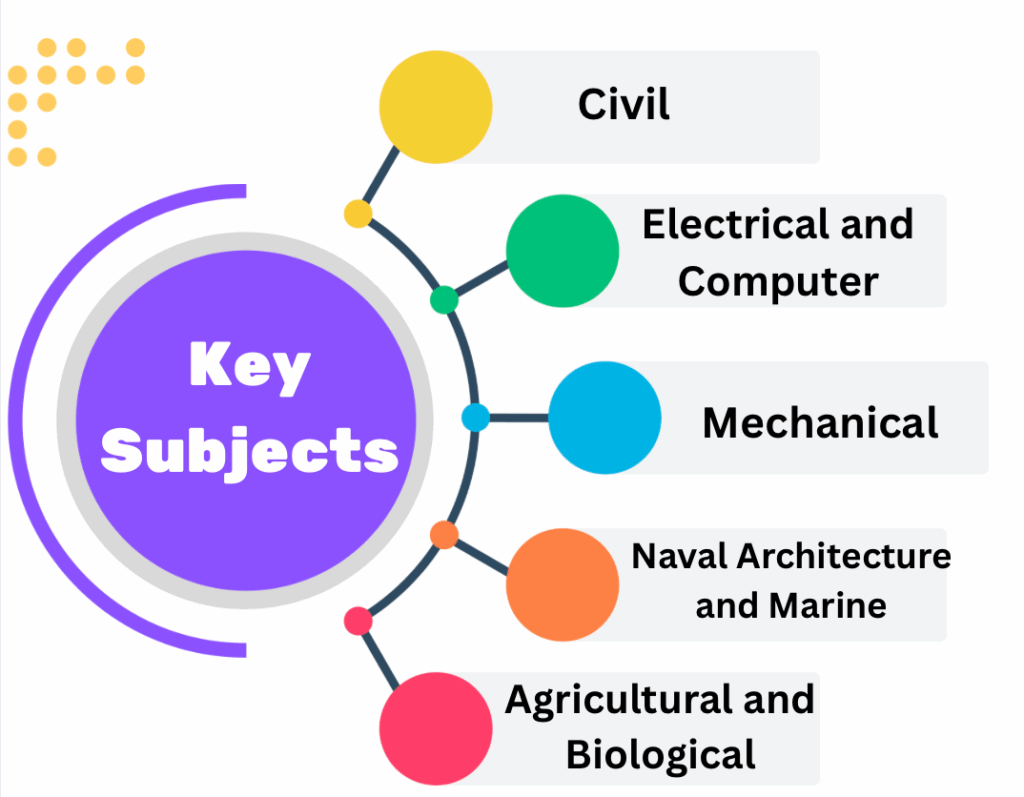
Key Subjects You’ll Be Tested On (Streamlined)
Each PE exam covers subjects tailored to the engineering discipline you choose. Here’s a quick breakdown of the core focus areas:
- Civil: structural design, geotechnical, water resources, and surveying.
- Electrical and Computer: circuits, signal processing, and power systems.
- Mechanical: HVAC, fluid mechanics, materials, and machine design.
- Agricultural and Biological: soil and water systems, biological processes.
- Naval Architecture and Marine: vessel stability, hydrodynamics, and ship structures.
NCEES publishes detailed exam specifications for each discipline. Reviewing these is a smart first step—they outline the exact topics and percentages covered on your version of the exam. Study materials are often organized around these specs to help you focus your prep.
PE vs FE Exam: What Sets Them Apart
When I first started looking into licensure, the big question I had was, “What’s the difference between the FE and PE exams?” Turns out, they serve entirely different purposes.
The Fundamentals of Engineering exam is usually the first hurdle. Most people take it right after college or near graduation. It checks if you’ve got the fundamentals down and earns you the title of engineer-in-training.
The PE exam is the opposite end of the process. You can only sit for it after you’ve gained real professional experience, at least four years in most states. It’s designed to test whether you can apply engineering principles in practice, not just on paper.
Here’s the simplest way I’d sum it up:
- FE exam: Education and fundamentals, usually right out of school.
- PE exam: Competency and applied practice, after years of professional work.
So while the FE gets your foot in the door, the PE proves you’re ready to take full responsibility as a licensed professional engineer.
Why Earning a PE License Changes Your Career
Passing the PE exam and earning your PE license is more than just a credential. It’s certification that you’re qualified to sign off on projects that impact public safety.
With a PE license, you can:
- Take leadership roles in engineering firms.
- Offer services directly to the public.
- Strengthen your resume with proof of competency.
- Move into specialized fields, like structural or environmental engineering.
The licensure process might feel long; you need education, training, and professional experience, but the payoff is enormous. Having “PE” after your name signals trust, expertise, and dedication.
My Final Thoughts
So, what’s the PE exam? Think of it as the final checkpoint to becoming a licensed professional engineer. From my research and extensive experience in the professional exam prep industry, it’s a tough test, but the effort pays off. Once you pick your discipline, line up solid study materials, and commit to the process, you’re setting yourself up for more than just a passing score.
Earning your PE shows you’re ready to take responsibility, protect the public, and step into leadership in your field. It’s not just another exam; it’s the move that can take your engineering career to the next level.
FAQs
A. The PE exam is delivered in a computer-based format at NCEES-approved centers. Candidates can use approved calculators and access digital reference materials on exam day.
A. Passing proves you meet the minimum level of competency to protect public safety and practice as a licensed professional engineer. It’s a key step in the licensure process.
A. Most state boards require at least four years of professional experience after earning a degree from an accredited university, plus registration through your NCEES account.
A. First-time pass rates range by discipline, with Fire Protection at about 76%, Mechanical: HVAC at 75%, and Environmental at 71%. For repeat takers, the average drops closer to 40% or below.
A. The PE exam is offered year-round at approved test centers; however, less popular disciplines, such as the PE Fire Protection exam, may only be offered once a year.




![PPI2Pass Review [FE and PE Exam Prep Courses]](https://www.kansascity.com/careers-education/wp-content/uploads/sites/7/2025/10/PPI2Pass-Review-feature-img.png)
