If you’ve ever thought about working in finance, you’ve probably seen the term Series 6 license pop up.
Over 634,000 people are currently registered representatives, and Series 6 holders are part of that group. With about 40 Series exams floating around, most professionals only ever need a few, and Series 6 is often the first.
When I reviewed it, I expected a maze of rules. The surprise? The surprise? It’s more like a starter key that lets financial professionals sell mutual funds, variable annuities, and other everyday investment products.
If you want to know what it lets you do, who it’s for, and whether it’s worth your time, stick around. I’ll give you my honest take on why the Series 6 works as both a stepping stone and a filter for this industry.
Key Takeaways
- Starter License: Series 6 is your entry pass to sell packaged products like mutual funds and annuities.
- Quick Exam: Just 50 questions in 90 minutes, pass with 70% and you’re in.
- Career Fit: Perfect for financial advisors and insurance pros who don’t need stock or bond sales.
- Keep Learning: FINRA requires continuing education, so your knowledge stays current.
- Stepping Stone: A solid first move before bigger licenses like Series 7 or CFP.
The Basics: What the Series 6 License Really Is
The Series 6 license is officially called the Investment Company and Variable Contracts Products Representative License. I know, it sounds like something only a lawyer would love. In practice, it’s a license from FINRA, the Financial Industry Regulatory Authority, that lets you sell packaged investment products.
That means you can handle things like:
- Mutual Funds
- Variable Annuities
- Variable Life Insurance Policies
- Municipal Fund Securities
- Unit Investment Trusts
What can’t you do? Sell individual stocks or bonds. That’s for Series 7 reps. When I reviewed this, I realized the Series 6 is more about being a guide for everyday investment products than playing the stock market hero.
Why the Series 6 License Exists
The financial services industry doesn’t just hand out the right to deal with people’s money. You need a license to show you know how to evaluate a customer’s financial profile, recommend products responsibly, and follow ethical practices.
The Series 6 tells employers and regulators that you can handle critical functions like:
- Opening accounts correctly
- Verifying purchases and sales instructions
- Keeping appropriate records
- Talking customers through investment objectives
Without it, you’d basically be the person in the office who can answer questions but not legally close the deal.
Who Actually Needs the Series 6 License?
This isn’t a license for Wall Street traders. It’s designed for people in roles like:
- Insurance agents selling variable contracts
- Financial advisors at banks
- Registered representatives at broker-dealers
- Professionals working with retirement plans and investment companies
If your work touches mutual funds or variable annuities, this is the ticket you need. If you’re only into selling individual securities, this isn’t your lane.
What the Series 6 Exam Looks Like
Here’s the fun part. The exam itself isn’t a marathon, and honestly, that surprised me. It’s only 50 scored questions, multiple choice, with five extra unscored ones tossed in. You get 90 minutes to finish it, and you need a 70 percent to pass.
The test is broken into four job functions:
- Seeking business and reaching out to potential customers
- Opening accounts after evaluating customers’ financial objectives
- Giving investment advice, transferring assets, and maintaining records
- Confirming transactions and making sure the sales process is complete
When I looked at this breakdown, I thought, “Wow, it’s basically testing whether you can actually do the job in real life.” It’s not about memorizing trivia.
How to Get a Series 6 License
Here’s the step-by-step process, boiled down:
- Take and pass the SIE exam first. Everyone entering the securities industry needs this.
- Get sponsored by a FINRA member firm. You can’t just sign up and go solo.
- Take the Series 6 exam and score 70 percent or higher.
💡Pro Tip: Line up your sponsor early, or you’ll be stuck waiting even if you’re ready.
How to Study for the Series 6
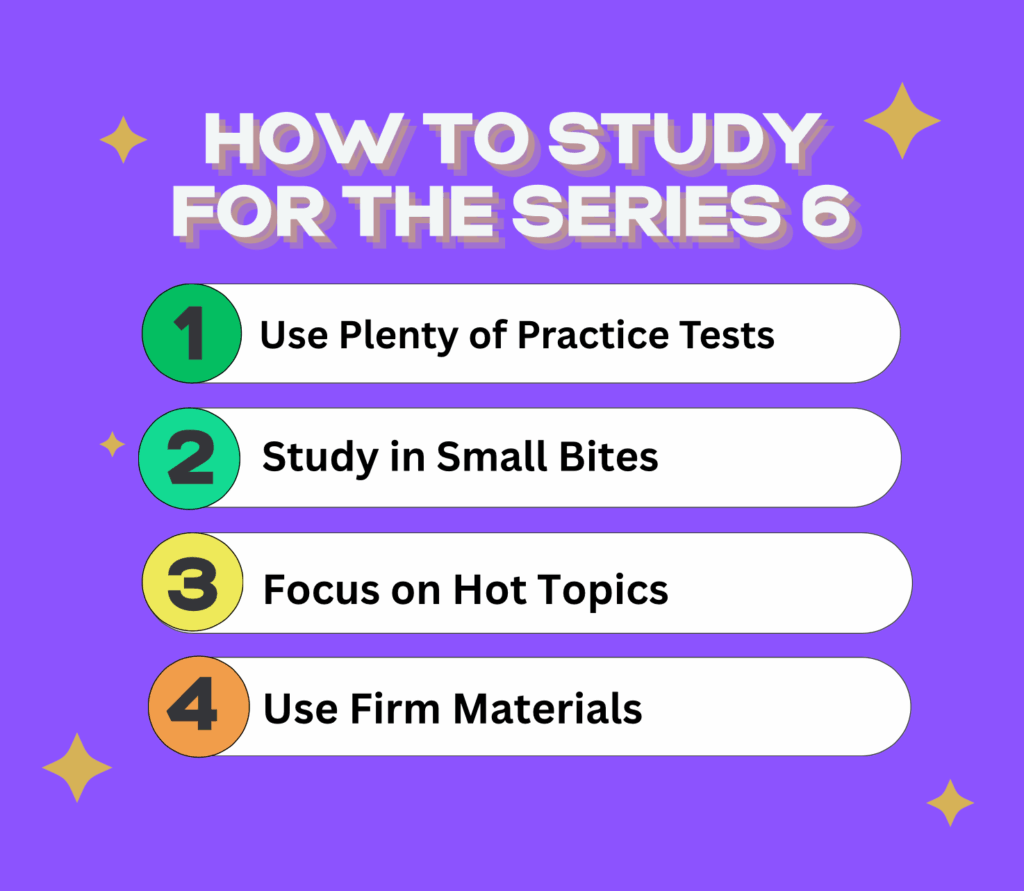
Don’t just grab a study guide and wing it. Here are my go-to study hacks that actually work:
- Practice Tests Matter: Get used to the style so exam day feels like a repeat, not a surprise.
- Study in Small Bites: Short sessions stick better than cramming for hours.
- Focus on Hot Topics: Investment company products and municipal fund securities pop up a lot.
- Use Firm Materials: Your sponsor’s guides are built for exactly what you’ll face.
- Try a Prep Course: Many students boost their chances by using a structured course from top providers like Securities Training Corporation, Securities Institute of America, or Achievable to stay on track.
What Happens After You Pass?
Passing isn’t the end. You’ll need to stay current with continuing education, which FINRA splits into a regulatory element and a firm element. That means even once you’re licensed, you’ll still be brushing up on rules, ethical practices, and industry changes.
I like to think of this as proof that the industry doesn’t let people coast. If you’re helping customers with investments, you’ve got to keep your skills sharp.
Series 6 vs Series 7: Which One’s Right?
I’ve reviewed both, and here’s the honest truth:
- The Series 6 is focused and lighter. It keeps you in the world of packaged products like mutual funds.
- The Series 7 is broad and intense. It covers stocks, bonds, options, and almost every other product.
💡Pro Tip: Series 6 works well for insurance and entry-level financial roles.
My Final Verdict: Is the Series 6 for You?
From my reviewer’s seat, the Series 6 is the starter kit for securities licenses. If your plan is to work with mutual funds, annuities, or life insurance at a broker-dealer or insurance company, it’s a smart move. You’ll gain credibility, get registered, and actually have the authority to help clients.
The catch? Some people outgrow it fast. If you already know you want stocks, bonds, and a wider menu of products, the Series 7 is your better bet.
Start your journey with Series 6, build your confidence, and then decide if you’re ready for the bigger leagues.
FAQs
Yes, you need to pass the Securities Industry Essentials (SIE) exam before taking the Series 6. The SIE is a corequisite and serves as the foundational prerequisite for the Series 6 license.
No, you cannot take the Series 6 without a sponsor. Candidates must be sponsored by a FINRA-member firm or another self-regulatory organization (SRO) to register for the exam.
The Series 6 license is required for jobs at broker-dealers, banks, or insurance companies where professionals sell mutual funds, variable annuities, and other packaged investment products.
Yes, the Series 6 license expires if you are not registered with a firm. To keep it active, you must remain associated with a sponsoring firm and complete FINRA continuing education requirements.
No, the Series 6 exam is not as difficult as the Series 7. The Series 6 is shorter and more focused on packaged securities, while the Series 7 is longer and covers a much broader range of securities and trading activities.