
Financial risk managers are like the safety net of the finance world, making sure companies stay steady when the unexpected happens. And the future looks bright—financial managers have an impressive job outlook, with a 17% increase in jobs projected through 2033, far outpacing the average growth rate of just 4% across all careers.
“Okay, that sounds cool, but what even is financial risk management?”
I’m glad you asked! Financial risk management is the art and science of keeping companies out of trouble when it comes to money. But I know you’re here for more than just a quick definition. So, welcome to Financial Risk Management 101—let’s dive in and see what a career in this field could mean for you.
Key Takeaways
- Financial Risk Management Defined: It’s about identifying, assessing, and addressing financial risks to keep companies stable and profitable.
- FRMs Are Problem-Solvers: Financial risk managers use data, tools, and strategies to tackle risks like market volatility, credit issues, and compliance challenges.
- High Demand, High Reward: The need for skilled FRMs is growing, offering diverse job opportunities and competitive salaries.
- FRM® Certification is Key: The FRM® program, recognized globally, is a must-have for professionals aiming to stand out in this field.
- Versatile Career Path: FRMs can work in banks, insurance companies, asset management firms, and more, making it a flexible and exciting career choice.
What’s Financial Risk Management All About?
In simple terms, financial risk management is about spotting potential money problems before they happen and coming up with a plan to handle them. It’s like being the steady hand on the wheel of a company’s finances—keeping things steady no matter how wild the markets get.
Here’s the deal: companies face risks every day. Markets can crash, borrowers might not pay back loans, or unexpected events (hello, 2020!) can throw everything off track. Financial risk managers put on their detective caps, figure out where those risks are hiding, and strategize how to remove or alleviate them.
As a result, FRMs are integral to corporations, particularly those with hefty wallets who are willing to invest money to protect their assets.
What Do Financial Risk Managers (FRMs) Actually Do?
If you’re wondering what a day in the life of an FRM® looks like, there are a few key tasks they participate in, such as spotting and measuring risks, developing solutions, and communicating those solutions to their employer or client. Here’s a quick breakdown:
- Spot Risks: FRMs dig into financial data and trends to find potential trouble. It might be a market that’s too volatile or a client who’s struggling to pay their debts. This process involves having a comprehensive understanding of the business in question, collecting and analyzing data, analyzing hypothetical scenarios, and monitoring key risk indicators to have their finger on the pulse.
- Measure Risks: Tools like risk models and spreadsheets help them figure out just how big or small a risk really is. Risk models are a little difficult to explain, but they’re often a combination of formulas, statistical techniques, and simulations. Often, they’re accessed via special software or run through programming languages like Python.
- Come Up with Solutions: Once they’ve found a risk, they suggest ways to fix or minimize it. For example, they might recommend diversifying a portfolio or using hedging strategies. This can be done through emails, 1-on-1 chats, formal reports, or even large presentations, depending on the importance of the issue and the audience who needs briefing.
- Keep Everyone in the Loop: FRMs explain risks and solutions to decision-makers, often acting as the voice of reason when things get tricky. As a result, communication skills are a huge bonus for aspiring financial risk managers.
Why Is Financial Risk Management a Big Deal?
Here’s why this field is so important—and why you might want to join it.
Companies Need Risk Experts
Every business, big or small, faces risks. Whether it’s a global bank managing billion-dollar investments or a small asset management firm handling portfolios, everyone needs someone who knows how to handle risks. That’s where FRMs shine.
It’s a Job That Pays Well
Let’s be honest—money matters when you’re choosing a career, and FRMs make good money. Their specialized skills mean they’re in high demand, and with certifications like the FRM® designation, they can command even higher annual salaries—$118,950 on average.
It’s Never Boring
No two days are alike for FRMs. One day, you could be analyzing how interest rate changes affect loans. The next, you’re advising on how to deal with a new government regulation. Plus, problem-solving is the core of this career, so if you love using your brain to strategize and develop solutions, this may be your perfect path.
Where Can FRMs Work?
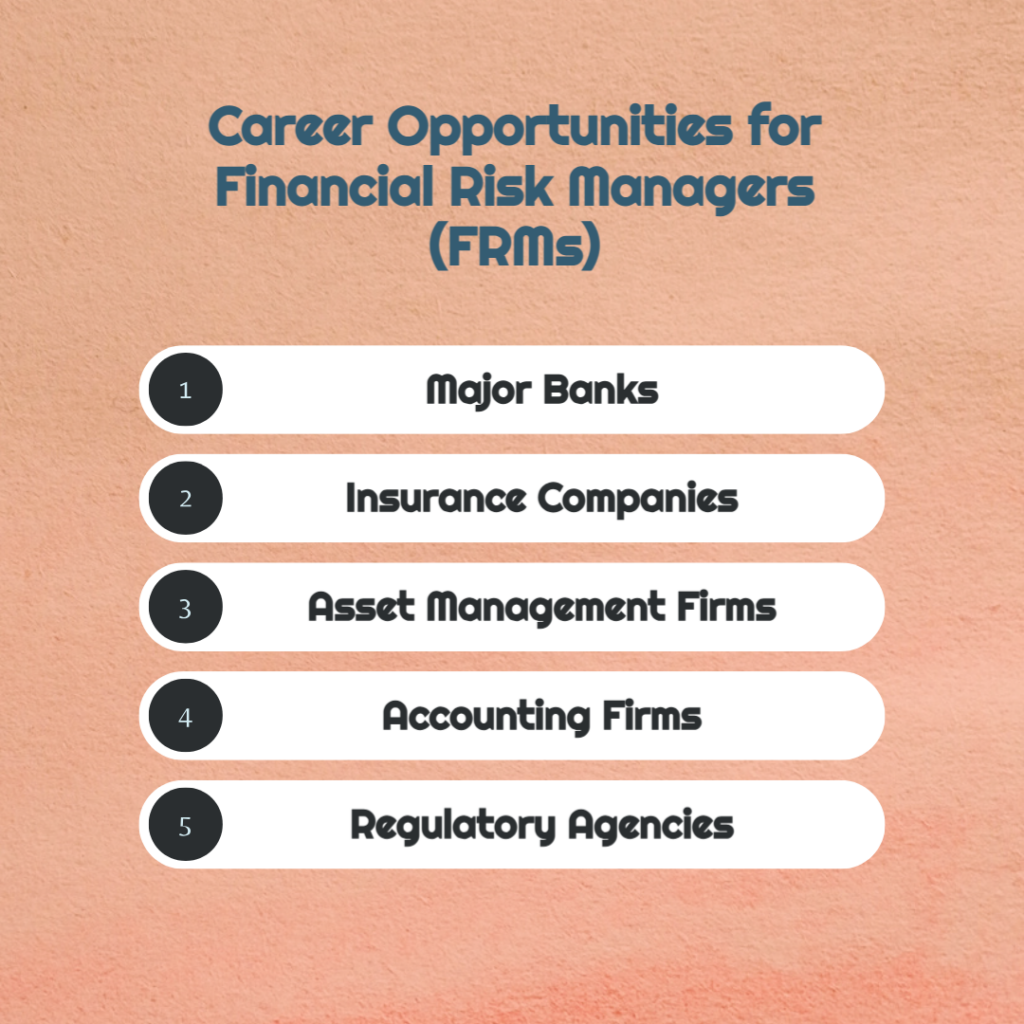
One of the best parts about becoming an FRM® is the flexibility. You’re not locked into one type of job or company. Here are a few places you could end up:
- Major Banks: Managing risks for loans, trading, and investments.
- Insurance Companies: Helping them navigate financial challenges and meet regulatory standards.
- Asset Management Firms: Keeping client portfolios safe from market swings.
- Accounting Firms: Advising on risk measurement and management.
- Regulatory Agencies: Ensuring companies comply with financial rules.
What’s the Job Outlook Like?
The demand for financial risk professionals is booming. Growth for financial managers is expected to grow a whopping 17% between 2023 and 2033. The average growth? A measly 4%.
With new regulations, market uncertainty, and global risks like cyber threats, companies are on the hunt for people who can keep their finances safe. If you’ve got the skills and certification, there’s no shortage of opportunities.
Why Financial Risk Management Might Be Right for You
Still on the fence? Here are a few reasons why this field could be a perfect fit:
- You love problem-solving and figuring out puzzles.
- You’re good with numbers and data but also enjoy making strategic decisions.
- You’re tech-savvy, adaptable, and a quick learner.
- You’re an excellent communicator, and people look to you for your clear, thoughtful advice.
- You want a career that’s challenging, rewarding, and always evolving.
Final Thoughts: Is Becoming an FRM® Worth the Risk?
Financial risk management isn’t just about numbers and math—it’s about analyzing data, making strategic decisions, suggesting creative solutions, and communicating with the heavy hitters in a company. Whether you’re keeping a bank out of trouble or helping an investment firm grow safely, your work as an FRM® will always matter… and fortunately, your paycheck will reflect that.
If this sounds like your kind of challenge, take the first step: look into the FRM® program, start building your skills, and get ready to step into a career that’s as dynamic as it is rewarding.
So, what do you think? Is financial risk management the path for you?
FAQs
Risk management is figuring out potential problems before they happen and making plans to handle them. In finance, it’s about protecting a company’s money from things like market changes or bad investments.
An FRM® analyzes financial risks, measures their potential impact, and develops strategies to reduce or handle them. They work in areas like market risk, credit risk, and compliance, helping companies stay financially secure.
It depends on your goals. The FRM® focuses specifically on risk management, making it ideal for roles in that area, while the CFA covers broader topics like portfolio management and equity research. Both are highly respected certifications.
Salaries for FRMs are competitive, with a mean annual wage of $118,950 or $57.19 per hour.
No, a bachelor’s degree isn’t required to pursue the FRM® certification. However, it is highly recommended for most roles in financial risk management. Degrees in finance, economics, or accounting are common starting points.
FRM® certification costs include exam and enrollment fees, which total around $2000, but you’ll save about $400 with early registration.